
Here's 5 things you should know at the end of this week:

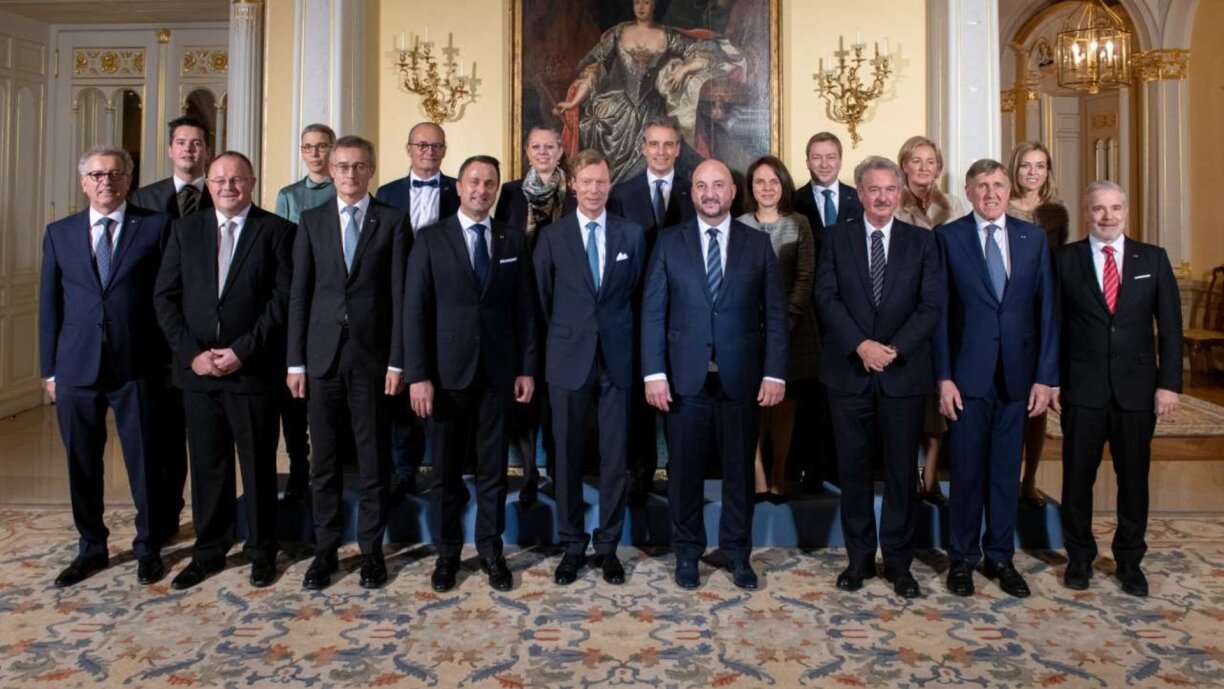
If the elections were held this Sunday, the current coalition would effectively retain its majority with 31 out of 60 available seats.
Xavier Bettel remains the people's favourite for prime minister with 30% of respondents saying they would like him to continue in his current role.
What is the poll about? - The poll, called "Sonndesfro", is a political statistical analysis conducted by Ilres on behalf of RTL and the newspaper 'Luxemburger Wort,' which analyses voting intentions of the Luxembourgish people if elections were held this Sunday.
1,885 eligible voters were interviewed over a period of just over two weeks. In total, 1,300 interviews were conducted by telephone and 584 via the internet.
Main results - Over the past six months things have changed on the political scene. While the Luxembourg Socialist Workers Party (LSAP) were still in the lead in November 2022, the tide seems to have turned: LSAP is losing 2.8%, resulting in 12 seats. The democratic Party (DP) is also losing 1.3% resulting in 11 seats in the government. The CSV, however, makes a come-back with +3.8% and keeps 17 seats in the government.
The coalition loser - The Greens are among the political parties whose work did not convince the participants in this survey (-0.4%). Only the Left Party (-0.7) and the Alternative Democratic Reform Party (adr) performed worse (-1.6%).
According to the Sonndesfro poll, only 9% of voters would like to see the current coalition reappointed. Instead, a DP-LSAP duo (24%) is preferred to the current trio (DP, LSAP, Green Party).
A people's favourite - Xavier Bettel seems to have executed his role well in the past years. In the survey, the current prime minister remains a favourite to keep his role for the next legislative period, with 30% of respondents saying they would like him to continue in his current role.
In comparison, Paulette Lenert (LSAP) and Luc Frieden (CSV) are 7 and 10 points behind the incumbent Prime Minister, respectively. Sam Tanson (die Gréng) is at the tail of the front-runners list.
Forecast? - When compared to the results of the 2018 legislative elections, everything seems to indicate that the current coalition could remain in place.
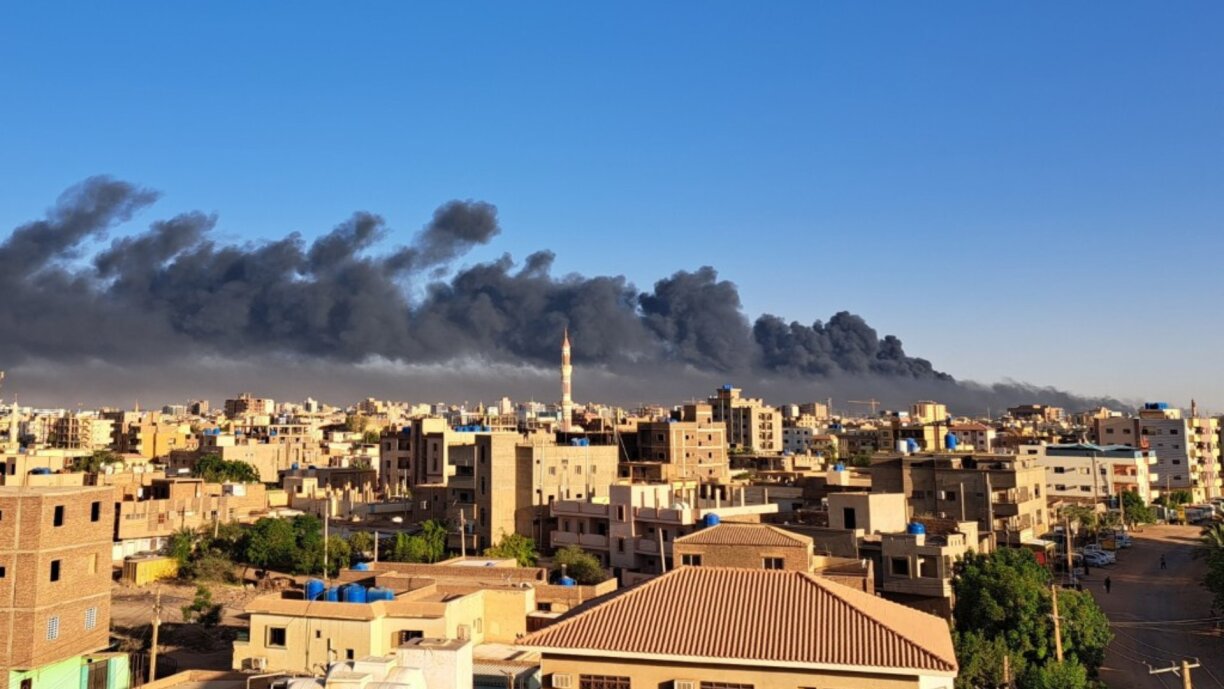
Fighting has broken out in Khartoum and other Sudanese cities, with powerful rival military factions vying for control, raising the risk of a nationwide civil war.
This happened after weeks of tensions between the army and the powerful paramilitary group, the Rapid Support Forces (RSF), who were allies when they seized power in a 2021 coup.
Said tensions increased after the proposed integration of the RSF into the military which raised the question of who is in control and would be the military's commander-in-chief.
'Marriage of convenience' - At its heart lies two rival generals, army chief Abdel Fattah al-Burhan and his deputy, Mohamed Hamdan Daglo, commander of the large and heavily armed paramilitary Rapid Support Forces (RSF), formed from members of the Janjaweed militia that led years of violence in Darfur.
Each general accused the other of starting the fight, and both have made claims they control key sites, which could not be independently verified.
In October 2021, Burhan and Daglo together orchestrated a coup, upending a fragile transition to civilian rule that had been started after the 2019 ouster of longtime autocrat Omar al-Bashir.
Emboldened by world leaders - The two warring generals were for years legitimised by an international community more focused on appeasement than on accountability, experts say.
Humanitarian pause? - The battles sparked an international outcry and regional concern, including border closures by neighbours Egypt and Chad.
The World Food Programme said it was suspending operations in the impoverished country after the killing of its three workers.
On the second day of fighting, three UN staff were among more than 50 civilians killed across the country.
Doctors say hundreds are injured, while the World Health Organization warned "several of the nine hospitals in Khartoum receiving injured civilians have run out of blood, transfusion equipment, intravenous fluids and other vital supplies".
Supposed ceasefire - On Tuesday evening, explosions shook Sudan, despite one side claiming a ceasefire on the fourth day of fighting that has killed nearly 200.
RSF commander Daglo, commonly known as Hemeti, announced support for an internationally-brokered 24-hour "armistice", which the army denied any knowledge of.
On Friday battles continued with heavy gunfire and explosions in the capital Khartoum and elsewhere in the country, as they ignored appeals by world powers for an end-of-Ramadan ceasefire.
No end in sight - By Thursday, thousands of residents fled from Sudan's capital where witnesses reported bodies in the streets and embassies said more than 270 civilians had been killed in battles between the army and paramilitaries.
Evacuation plans have been difficult to orchestrate, as foreign diplomats have been attacked and the UN received reports of sexual violence against aid workers.
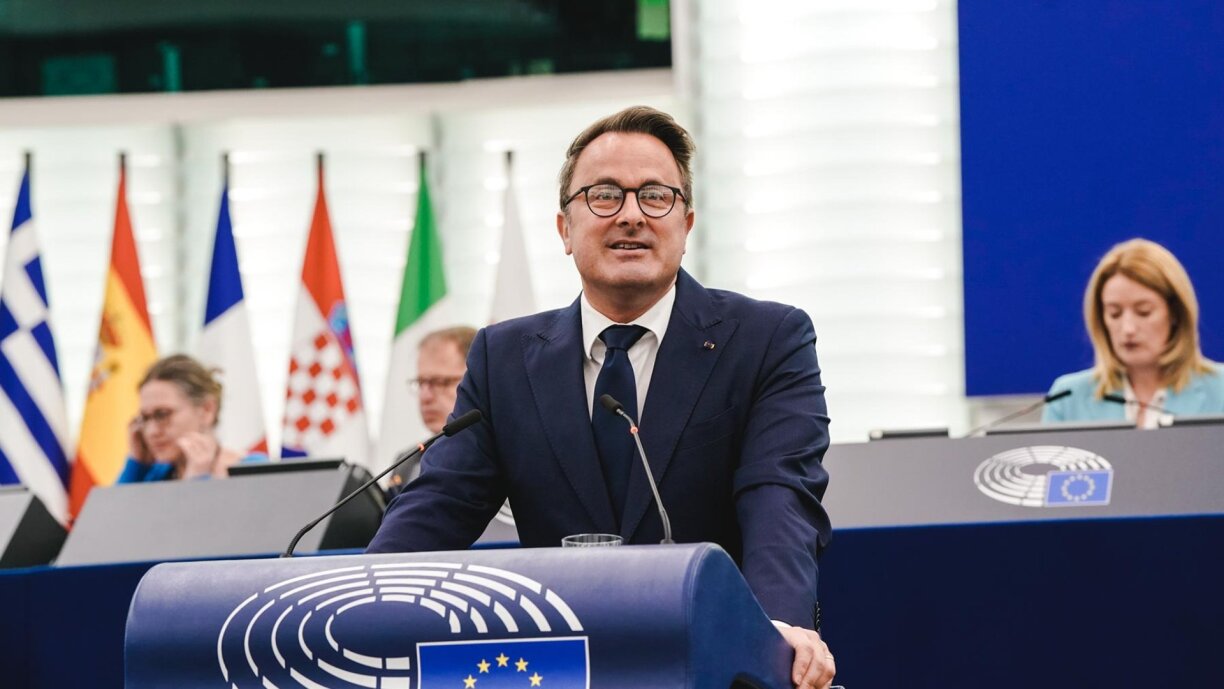
On Wednesday, Prime Minister Xavier Bettel delivered an impassionate speech at the European Parliament condemning an anti-LGBTQIA+ law that was recently passed by Hungary.
The law bans the "display or promotion" of homosexuality or gender reassignment to under-18s and is part of a broader "Anti-Paedophilia Act" which was originally limited to tougher action against child sexual abuse.
Self-acceptance - "The hardest thing for a gay man is to accept himself," the Luxembourger said, who is himself gay and heavily involved in defending the rights of the LGBTQIA+ community. "We are not asking for pity, we are not asking for solidarity, we are not asking for compassion, we are just asking for respect," he declared.
Stigmatisation - "I am ashamed that some colleagues want to win votes on the backs of minorities; we have already gone down that road once in our history," Bettel warned.
Violating EU treaty - When the Hungarian law was passed, several European leaders condemned it, with European Commission President Ursula von der Leyen calling it a "disgrace." The EU executive opened an infringement procedure against Budapest before referring the case to the EU Court of Justice in December 2022.
Fifteen EU countries, including Luxembourg, Belgium, the Netherlands, France, and Germany, have joined the Commission's case, which is also supported by the European Parliament.
The Commission believes that the law violates, among other things, Article 2 of the EU Treaty – in particular the respect of human rights and non-discrimination – and the EU Charter of Fundamental Rights.
Back in 2021 - In his personal statements to the press, Xavier Bettel noted that watching a film, advertisement, or television - or indeed sexual orientation being discussed in the classroom - does not turn someone gay.
He then also stated firmly that confusing homosexuality with paedophilia is unacceptable, going on to note that being allowed to be different is a core EU value, and that we cannot be judges of human rights elsewhere if they are going in the wrong direction closer to home and within our own ranks.
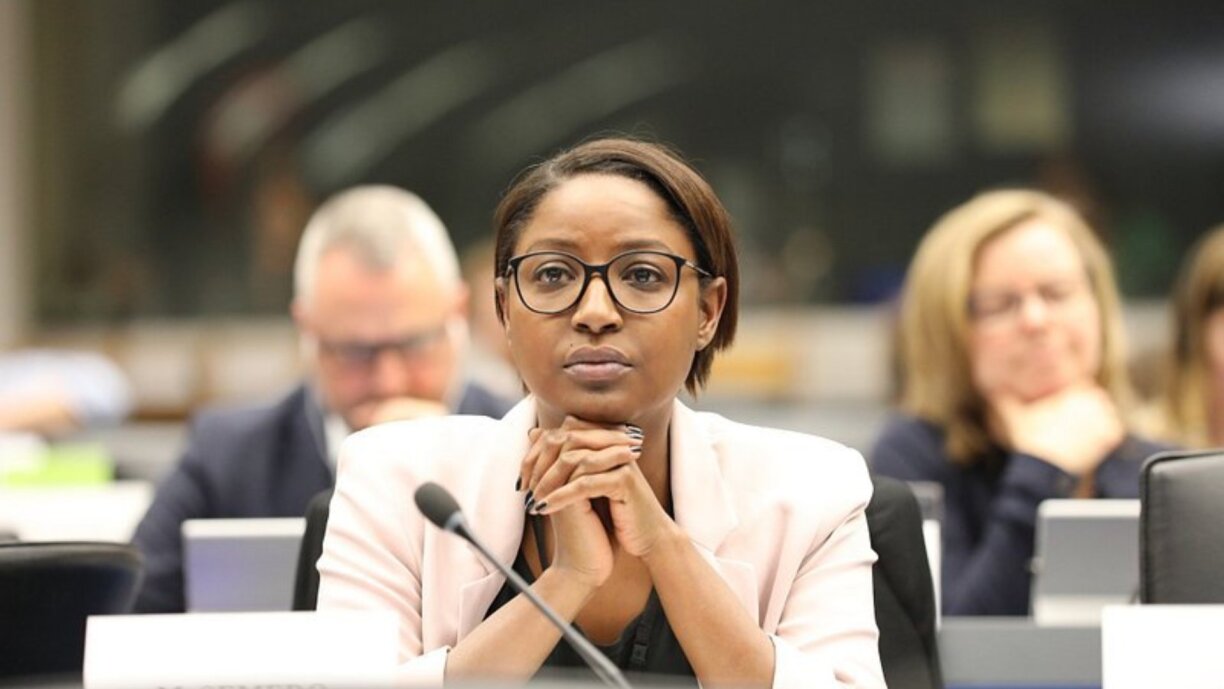
After new accusations of bullying, an investigation by the European Commission has found the allegations to be truthful.
Semedo will have to pay a fine of €3,380 to a former employee who had filed the complaint for bullying.
Some background- In March 2022, a second complaint for bullying was filed in the European Parliament against Luxembourgish MEP Monica Semedo. The Luxemburger of Cape Verdean descent stands accused of subjecting her staff to 'unrealistic expectations' and 'sabotaging their private lives’'
In November of last year, the MEP responded to the allegations made by one of her former staff members, claiming that they were untrue and unsubstantiated. According to Semedo, she launched a procedure in December 2021 to terminate the contract with the staff member in question due to 'unprofessional behaviour'.
Consequences - The President of the European Parliament Roberta Metsola and the plenary in Strasbourg confirmed on Tuesday, 18 April, that Monica Semedo would in fact be sanctioned once more. The MEP will have to pay a fine of ten days' compensation, or €3,380.
Not a first - The Member of the European Parliament has previously been sanctioned for allegedly bullying three staff members in 2021 when three of her former assistants filed complaints.
After a thorough investigation, the allegations were found truthful and Semedo was suspended from the European Parliament for a fortnight, during which she also received no compensation.
After leaving the Democratic Party (DP), she has represented the parliamentary group 'Renew Europe' in the European Parliament. Since the former Liberal politician has been in parliament, eight employees have allegedly come and gone.

19.8% of non-Luxembourg nationals in the Grand Duchy have registered to elect their local representatives in the municipal elections on 11 June.
In total, 50,084 non-Luxembourg nationals have registered to vote in the local elections.
In 2017, 22.8% of non-Luxembourg nationals registered to vote in the communal elections, which, of course, only included residents who had resided in Luxembourg for more than five years.
Grown by 18,000 voters - The Association for the support of Immigrant Workers reacted positively to the number of newly registered foreign voters for the municipal elections.
French, Portuguese, and Italians were among the most - Nevertheless the number of foreigners registered for municipal elections is almost twice as high as it was in 2017.
Underrepresented - In nine municipalities that vote according to the principle of proportional representation, non-Luxembourg nationals are in the majority but are severely underrepresented on candidate lists.
Luxembourg City, Strassen, Esch-sur-Alzette, Hesperange, Bertrange, Differdange, Walferdange, Mamer, and Kopstal: A majority of residents in all of these municipalities do not hold Luxembourgish nationality.
Unique situation - In six municipalities, not enough people ran for the municipal elections. How did this happen, and how do we then decide who becomes mayor and who becomes a lay assessor?
Read also: Here is all you need to know about the 2023 municipal elections
Business & Tech - https://today.rtl.lu/news/business-and-tech/a/2053684.htmlTwitter began the mass removal of its blue ticks on Thursday, as the symbol previously used to signify a verified account vanished from users including the Pope, Donald Trump and Justin Bieber.
Science & Environment - Greenpeace and other environmental organisations are taking legal action against the Europe-wide classification of natural gas and nuclear energy as "sustainable".
Entertainment - A new song created using AI software to imitate Canadian singers Drake and The Weeknd has been removed from streaming services after quickly racking up millions of listens and sparking debate over the new technology.
Late 2023 - Fifteen Coca-Cola vending machines are still in use in Luxembourgish secondary schools, but they will be gone by the end of the year.
Royal wedding - Preparations have been in full swing for the civil wedding of Princess Alexandra and Nicolas Bagory on Place Guillaume II this Saturday 22 April.
Moving away from repression - In conversation with RTL, Minister of Health Paulette Lenert recently showed herself confident that a concept for the legalisation of cannabis in Luxembourg will soon be presented to the government.
Ramstein Air Base - The United States will host a meeting in Germany on Friday to discuss further support for Ukraine after President Volodymyr Zelensky pushed Western allies to send more fighter jets and long-range missiles.

Your Weekly Recap is published every Friday at noon. Read earlier versions.
If you have any comments, questions, concerns on improving the Weekly Recap - contact me at alannah_meyrath@rtltoday.lu





