
Here's 5 things you should know about at the end of this week:

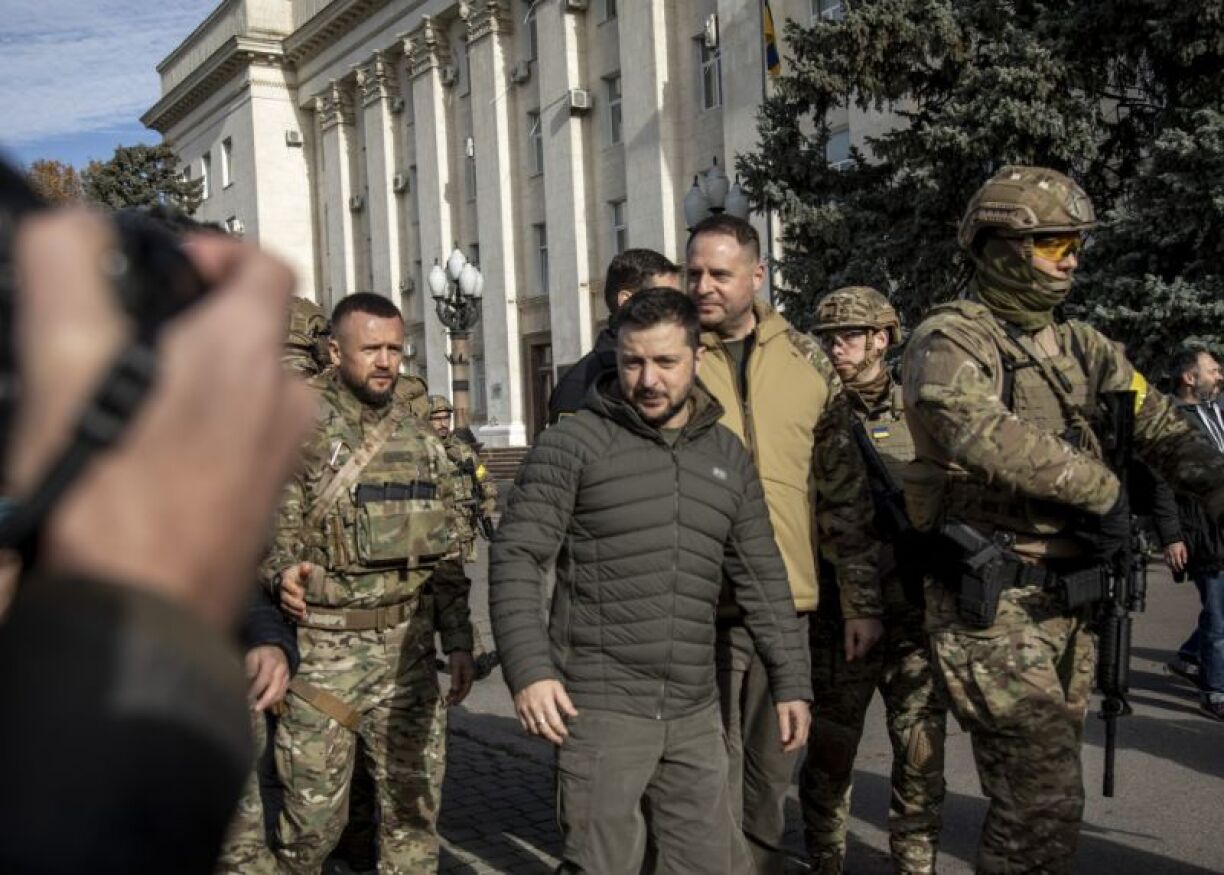
On February 24, 2022, Europe woke up to a war on its eastern flank as Russia invaded neighbouring Ukraine, sparking the worst conflict on the continent since World War II.
Ukrainians will hold ceremonies across their war-ravaged country Friday and pray, while simultaneously being ready for strikes.
China called on Friday for Russia and Ukraine to hold peace talks as soon as possible, while insisting that nuclear weapons must not be used in their conflict.
The world stands with Ukraine - Ukrainian President Volodymyr Zelensky promised victory against Russia on Friday on the one-year anniversary of Europe's largest conflict since World War II, as commemorations were held by Kyiv's Western allies.
Significant day - Putin has threatened an escalation of the conflict, 'reminding' people what Russia is capable of and stating that Russia remains determined to fulfil all its tasks in Ukraine.
Not close to a solution - Mark Evans, Head of News for Enex, argues that we are no closer to an end than we were a year ago.
Treaty with the US - Putin suspended Moscow's participation in a nuclear arms reduction treaty with Washington. Russia's step back from a key arms control treaty is a blow to efforts to cap nuclear stockpiles, but does not immediately heighten the risk of nuclear war, experts said Tuesday.
So what's next? - Evans explained that "there's two signficant things that I think may happen over the coming couple of weeks. One is an escalation of the kinds of weaponry that's being provided by the West to the Ukraine." The second is the visit of China's top diplomat Wang Yi's visit to Moscow on Wednesday this week, and President Xi's scheduled visit to Moscow in April or May.
Neutral party? - China was very careful about presenting itself as a kind of non-aligned witness in these proceedings. "What we're seeing now is that they are very obviously sticking at least one foot inside the Russian camp," Evans argues.
Read also: Putin trial for war crimes 'a possibility' - French minister

On Monday morning, Backes argued that adjusting the tax table to inflation would "not be responsible" at the moment.
The proposed adjustment would cost "more than €1 billion" and therefore burden the state budget for years to come.
Upcoming tripartite meeting - The politician from the Democratic Party has thereby made clear that she does not support one of the main demands made by unions.
Net salary doesn't increase as much - The wage indexation system increases employees' gross salary when inflation reaches 2.5%, the net salary however does not increase as much. The tax table is not indexed and therefore does not follow wage increases.
1.75% instead of 2.5% - "Without adjusting the table, this purchasing power is only compensated on the gross side while it continues decreasing on the net side", argue the unions.
Need for adjustment - "It is high time that this creeping and hidden increase in tax pressure comes to an end," they demanded in a joint statement.
Read also: Employees already 'pre-financed' future wage indexations, says Gilles Roth

At present, Luxembourg's economy is growing faster than its population, which is leading to staff shortages in several sectors.
According to the Chamber of Commerce, up to 265,000 new employees have to be recruited by 2030, out of whom 30% will likely cover entirely new posts.
On the other hand, factors like high costs of living, the housing crisis, and traffic are the most prevalent issues preventing people from moving to the Grand Duchy.
Being open to the outside world - The Chamber of Commerce plans on tackling these issue with a series of reforms focused on education and further training.
Luxembourg's attractiveness is on the line - Salary still plays a deciding role in bringing workers to Luxembourg in the first place, whereas, long commutes and the limits applied to working from home are seen as a negative factor.
Reduction in working time - Georges Engel, Minister of Labour, recognised this and while he is 'not against' working time reduction, he is hoping for a discussion based on facts based on a new study that will be published in March. The current coalition agreement does not foresee such reduction.
UK study - A four-day working week is more productive for most staff and companies than the traditional five days, one of the biggest trials of its kind conducted in the UK reported on Tuesday.
Read also: German and French politicians demand revision of tax agreements with Luxembourg
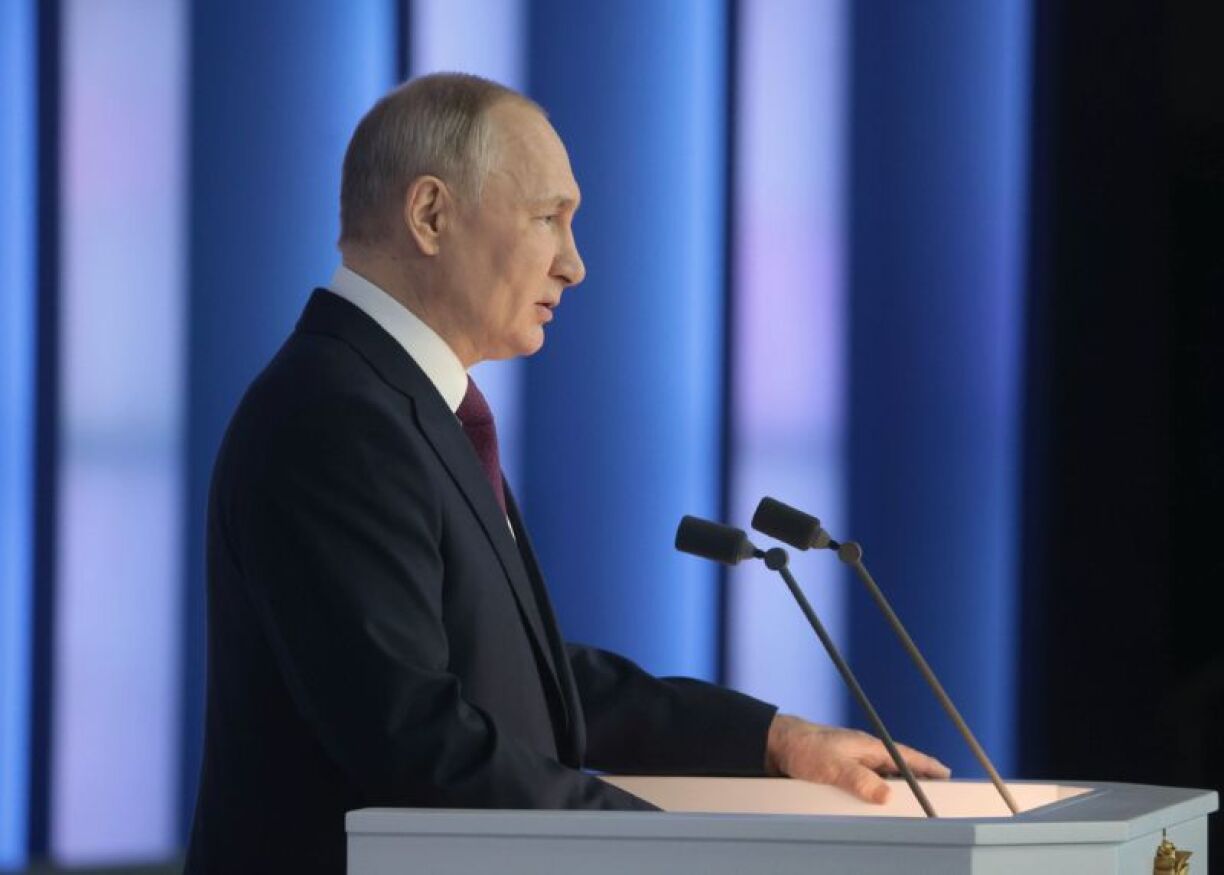
On Tuesday, Russian President Vladimir Putin held his state of the nation address, a few days ahead of the first anniversary of Moscow's offensive in Ukraine.
To ensure the security of his country, Putin claimed that Russia had to eliminate the threat that came from the neo-Nazi regime that emerged in Ukraine after the 2014 coup.
Biden's historic visit in Kyiv - In Kyiv, Biden pledged new arms deliveries and reiterated Washington's "unwavering" support.
'The world is facing a test'- Biden also poured praise on Poland for arming the Ukrainians and receiving their refugees; on NATO for staying united; and on the multitude of US allies that he said decided to "stand up for the right of people to live free from aggression."
Russia determined to fulfil its tasks - The Russian army has faced a long series of humiliating defeats over the past year, even after the mobilisation of hundreds of thousands of reservists last September. Putin did not elaborate on military losses, the West and Ukraine however say that Russia's losses are huge.
Due to lack of ammunition - Yevgeny Prigozhin, head of the Wagner mercenary outfit, on the other hand has said on Wednesday that Wagner is losing scores of men every day due to a lack of ammunition and on Wednesday released a picture of dozens of dead mercenaries lying in the snow.
Read also: Thousands of Russians cheer for Putin at patriotic rally

A petition calling for four times as many leave days for family reasons was being discussed by MPs in the Chamber of Deputies on Wednesday.
Leave for family reasons can be taken in the event a child is ill and no childcare options are available.
Up to 13 years old - This allowance should not be limited to parents of children below the age of four, but also expanded to children up to 13 years old, the petitioner argues.
Exceptions to the rule - There are supplementary allowances for serious illness or disability, but generally speaking this is the limit.
Working parents - In the event of a parent needing to attend to their sick child, the employee must notify their employer and provide a medical certificate. The employee will continue to receive their salary.
Per child or per parent? - However, the rules on 'leave for family reasons', i.e. to care for a sick child, have left many of our readers and the expat community confused. RTL Today took a closer look and contacted CNS.

A rich country like Luxembourg must set a global example - Norwegian Professor and Club of Rome co-author Jørgen Randers explains what is required of this world (and Luxembourg) for a cleaner future. One thing is sure, it's going to be costly.
Oceans are 'dying' - Actor and activist Jane Fonda on Monday warned that humanity is "losing the ocean," shortly before two weeks of negotiations are held at the United Nations on a treaty to protect the high seas.
Suing the government - Sven Clement from the Pirate Party conveyed to RTL Today that he is taking the Ministry of Health to court for failing to publish copies of the Covid-19 vaccine contracts that were signed more than two years ago.
Is Rwanda more gender equal than Luxembourg? - According to a recent Eurostat survey, only 32.7 % of all seats in national parliaments are held by women across the EU. In Luxembourg, Prime Minister Xavier Bettel announced already in 2015 that Luxembourg aimed "a minimum quota of 40 per cent of women on all executive boards in public establishments". That quota has not been reached in 2023.
Housing crisis - On Wednesday, the Minister of Housing hosted a conference to discuss possible solutions to Luxembourg's ongoing housing crisis, while the government is working on standard regulations that will facilitate the integration of tiny houses in municipalities.
Municipal elections - According to figures from the Ministry for Family Affairs and Integration, 11.7% of foreign residents eligible to vote have so far registered for the upcoming municipal elections.

Your Weekly Recap is published every Friday at noon. Read earlier versions.
If you have any comments, questions, concerns on improving the Weekly Recap - contact me at alannah_meyrath@rtltoday.lu





