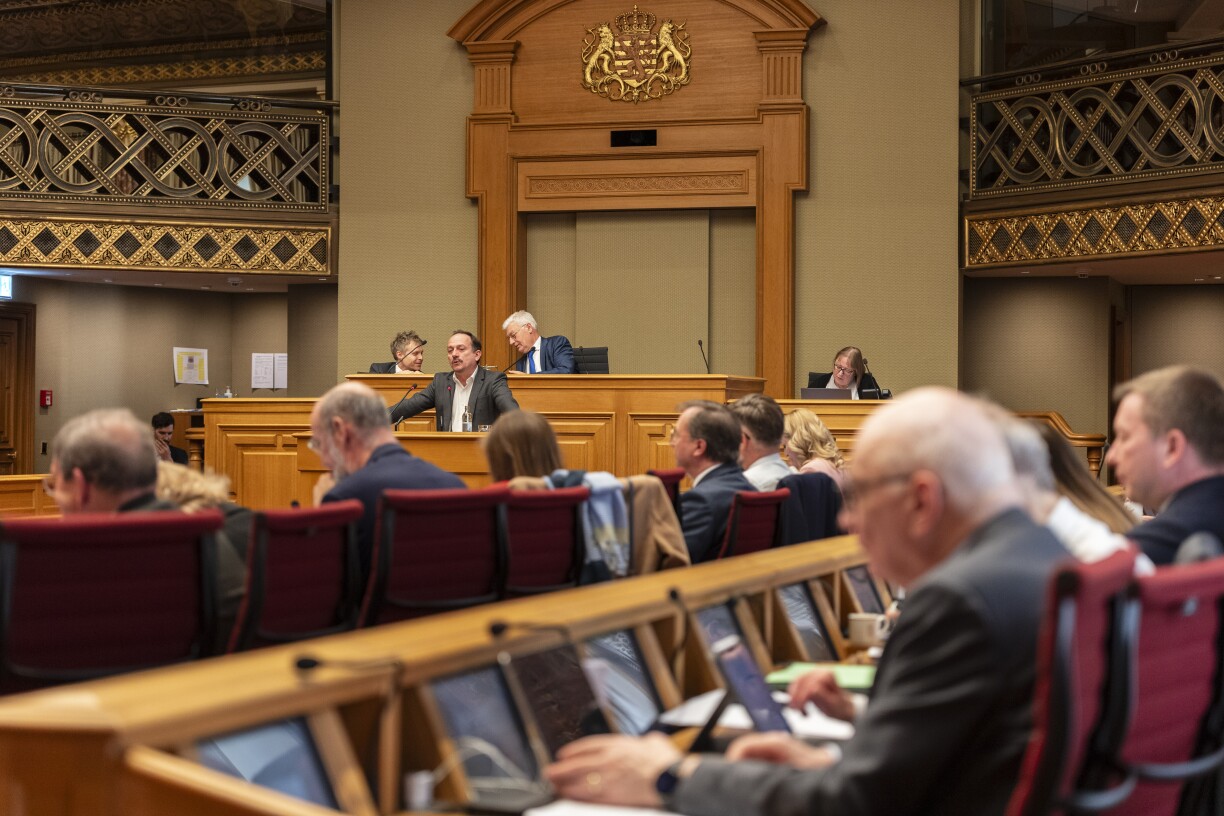
The timing of the debate may have raised eyebrows given months of anticipation, but it proved no less pointed for it. Wednesday morning saw the National Institute for Statistics and Economic Studies (STATEC) present revised poverty figures, with the poverty risk rate now standing at 14.8% rather than the previously cited 18%.
The Greens (déi Gréng) MP Djuna Bernard was quick to set the record straight from the outset: "It would be misleading to claim that poverty has decreased thanks to government policy. This is simply the result of a changed methodology."
From the Greens to the Alternative Democratic Reform Party (ADR), the opposition was united on one point: housing is the central driver of poverty in Luxembourg. ADR MP Dan Hardy put it plainly: "When you speak to people affected by the risk of poverty, that is the core of the problem. If we want to effectively combat poverty in this country, we need to get more affordable housing built faster."
Pirate MP Marc Goergen offered a concrete proposal on the question of high rents, arguing that the state is in fact the biggest beneficiary of soaring rental prices through the tax revenue they generate. His solution: a rent price index, with landlords who charge below that threshold paying a lower rate of tax than those above it.
The opposition also took aim at the government's reluctance to raise the minimum wage substantially. The Luxembourg Socialist Workers' Party (LSAP) MP Claire Delcourt was direct: "The minimum wage must be increased by €100 net now, and in the medium term by a further €100 to reach 60% of the median wage."
Labour Minister Marc Spautz pushed back, noting that over the past 21 years the minimum wage has been structurally increased only once, by former minister Dan Kersch, by 100€. "And that is the only structural increase ever made," he said.
"So when the people who ran that ministry for 10, 20 or 25 years now demand an immediate increase of 200€, I have to say: I accept the criticism that it is not easy to get by at the current minimum wage rate, but I am somewhat surprised that those who had the opportunity to make this change for 25 years and did not, are now asking for it all to be resolved in two years."
There was broad agreement across the Chamber of Deputies that the measures contained in Family Minister Max Hahn's poverty action plan were useful in themselves, though opinion differed sharply on whether they went far enough.
The Left (déi Lénk) MP Marc Baum raised a broader concern, warning that a well-functioning economy should not require wages to be topped up with social benefits. "We are turning an increasingly large proportion of working people into welfare recipients", he said. "And I think that is a real danger at the root of these models, because state benefits depend on the state of the economy, If it stops booming, they will be the first to disappear."
Housing Minister Claude Meisch pointed to increased public investment, noting that spending on the special fund for affordable housing more than doubled last year compared to the year before. "The challenge now is to maintain that level, increase it where necessary and guarantee the budgetary resources needed to build a genuinely sustainable broad stock of public housing where an active housing policy can be implemented for the long-term", he said.
Notably absent from the afternoon debate was Prime Minister Luc Frieden, who had declared tackling poverty the first priority of the new coalition even before it was sworn into office. He was at the Octave market with the press as the debate unfolded in the Chamber.





