
Here are five things you should know at the end of this week:


ING has confirmed that it will stop providing banking services to private individuals, shifting to a Wholesale Banking strategy that will focus on large clients such as corporations and institutions. The move came as a surprise, especially in the wake of 2023's announcement that the banking giant had seen its net profits nearly double.
A surprising move – ING's decision to stop providing services to private individuals caused some turmoil amid Luxembourg's banking circles, from long-time clients facing sudden warnings of account closures to competitors rubbing their hands in anticipation of an influx of new clients. The Dutch bank - which has been operating in Luxembourg since 1960 - stated that it is moving towards the Wholesale Banking market, which is mostly comprised of corporations, financial and governmental institutions, real estate developers and similar entities, leaving behind a multitude of individual accounts.
Weeks of speculation – Rumblings of something being amiss within the ING realm had been around for some weeks. Some RTL readers contacted us sharing their experience, others took to social media and other channels to voice their displeasure and confusion at the bank's decision. Some wondered if it was a matter of "weeding out" lower value clients, others speculated the bank could be on the way to closing down its doors in the Grand Duchy. What they all shared was a sense of lack of communication, as they were mostly kept in the dark as to the reasoning behind the decision.
Nico Hoffmann, head of the Consumer Protection Association, stated that "unfortunately, banks are allowed to close accounts without justification", as the contract's terms and conditions usually cover these circumstances. The situation made such waves that Minister of Finance Gilles Roth met with ING's CEO earlier in the week, demanding "clear communication" and a "proper solution" for the affected clients.
What now? – The full consequences of this decision might not be apparent for some time, as a big question mark now lingers over the job security of ING's workforce, which numbered around 1,000 employees as of 2023.
As for the clients, those with mortgage loans, other loans and investments will continue to be served by the bank; for the ones affected by the account closures, and who might be left wondering what is going on, this article might shed some light on the issue.
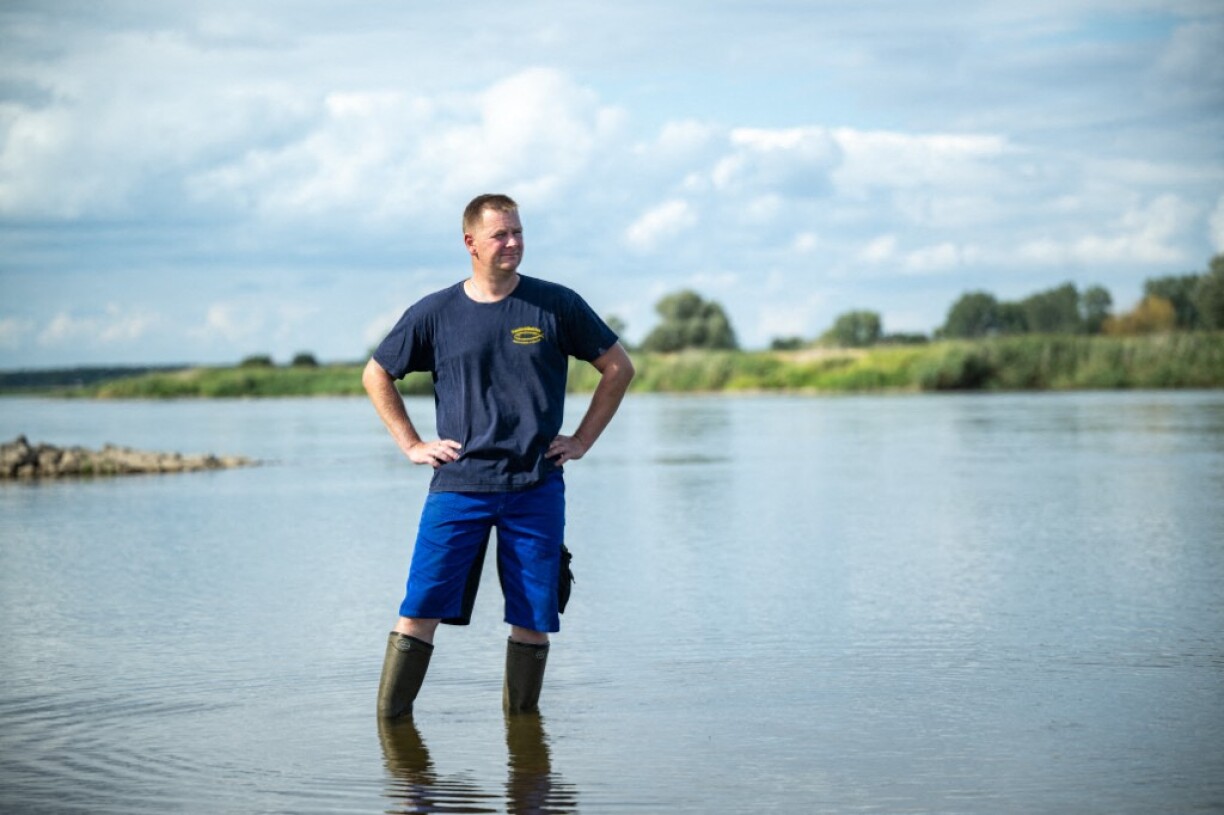
Europe-wide study finds water in Luxembourg and other countries to be contaminated by persistent chemical TFA, in what environmental associations call "the largest known contamination of water on a European scale by a chemical product manufactured by man."
In the wake of the study, environmental association Mouvement Écologique has called for policy changes regarding PFAS pesticides.
Luxembourg is no stranger to water issues, with several instances of river pollution reported in 2024, along with not-that-uncommon warnings about tap water quality throughout the years.
Polluted Europe – A recent study conducted by two European environmental organisations has found alarming levels of a hazardous chemical in Luxembourg's (and Europe's) waterways. The study, which included samples from the Alzette River and a drinking water source near Dommeldange, detected high concentrations of Trifluoroacetic acid (TFA), a degradation product of PFAS pesticides.
All 23 water samples and 6 groundwater samples showed the presence of the chemical, with 79% of the cases showing levels above the 500 ng/l limit proposed by the European Drinking Water Directive for all PFAS.
However, TFA is currently unregulated and classified as "not relevant" by European authorities, exempting it from the 100 ng/l limit for certain pesticides and their degradation products in groundwater - a status criticised by the associations.
Another investigation, with similar results, had already taken place early last year.
Policy changes required – The Ecological Movement is urging policymakers to acknowledge the dangers of this chemical and to ban the use of PFAS pesticides that release TFA. They denounce a lack of research in this domain and call for more action to be taken to identify and prevent the deterioration of water quality.
Recently, the US cracked down on "forever polluters", described as "hazardous material" mostly invisible to consumers and present in the water, soil and air. The decision puts the onus of paying for contamination clean-ups on those responsible for releasing it.
Luxembourg's water mishaps – While this Europe-wide study shines a new light on water pollution, the Grand Duchy has faced its share of issues with the vital liquid in recent years. Be it industrial malfunctions leading to river pollution, farming accidents, or various issues with the water network, it seems we are not always taking good enough care of the planet's most valuable resource.
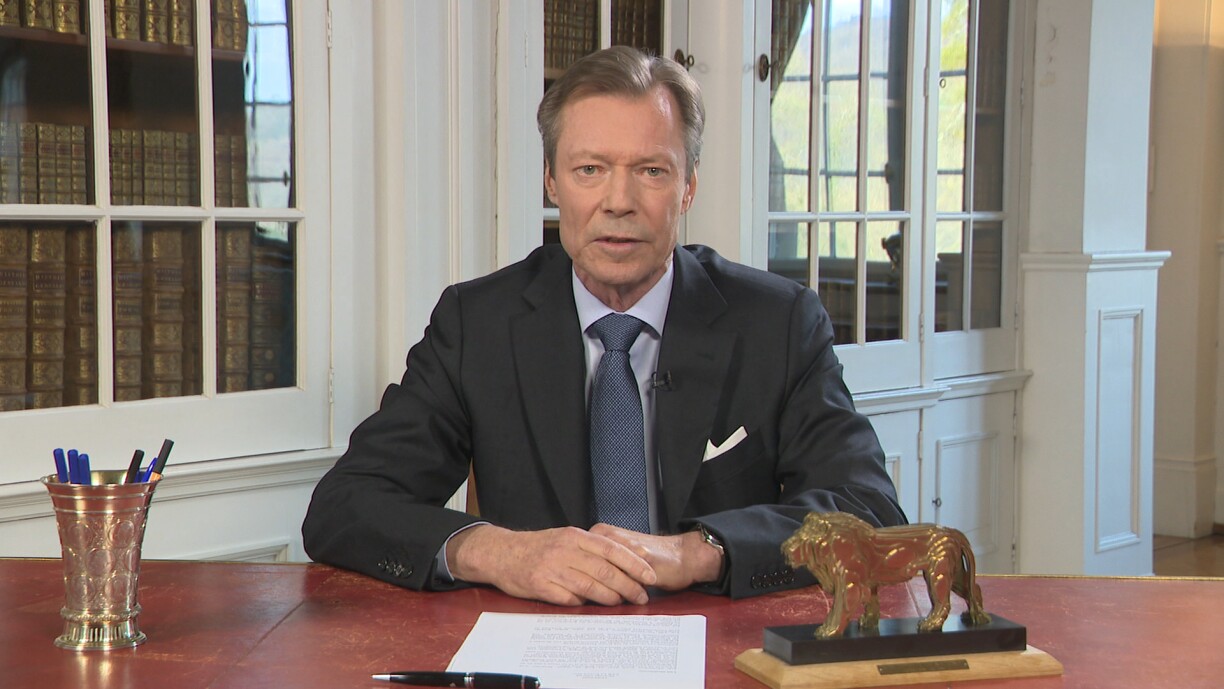
A fake video falsely depicting the Grand Duke advocating for dubious investment opportunities has surfaced, along with fraudulent RTL websites and accounts used to spread it.
The Maison du Grand-Duc has called for the videos to be taken down.
AI video and audio generation tech has been advancing at a vertiginous pace, and is under a constant spotlight in the media as a source of both admiration and criticism.
Invest in AI, says... the Grand Duke?! – The advancement of AI-based technologies has brought its share of problems, with one of most prevalent being the issue of deep fakes. These are videos that use AI generated content (video and/or audio), often superimposed on an existing 'real' video, to falsely depict a person speaking or acting in a certain manner. Actors, singers, celebrities and even royalty have fallen victim to manipulated media, as our very own Grand Duke Henri can recently attest.
The video in question (a manipulation of a 2020 video on the subject of Covid efforts) shows the Grand Duke apparently advocating for investment opportunities in the realm of artificial intelligence. Not true, of course. As if that wasn't enough, several fake RTL social media accounts and websites were being used to spread this and other pieces of misinformation.
Can't do that – The official house of the Grand Duke has promptly denounced the videos, calling for them to be immediately taken down. In their statement, the Maison du Grand-Duc recognises the global challenges of technology, saying that "Artificial intelligence is a fantastic innovation, when used responsibly", which was obviously not the case in this instance.
A blessing and a curse – It seems that not a day goes by without a new incredibly exciting/terrifying story about AI popping up. From developments in the drone industry to (shady) chat bots, it feels like we are living in the AI wild west - which is why legislation has been at the forefront of most major institutions. In a post-truth era, where facts seem to matter less than beliefs, an unchecked ability to clone or mimic someone to an increasingly startling degree of accuracy would be a major problem.
As always, though, there is room for interpretation. The above-mentioned Scarlet Johansson situation is an interesting example. Would it be a legitimate defence for someone to say they are using a voice that sounds like Johansson, and not actually her? It is a valid point, as surely there are multiple people around the world with similar voices. But even so, is that really in good faith? Where do we draw the line?
Can we make a film about Putin without Putin, and bring it to Cannes?
Considering the floodgates have been opened, and companies do not seem very interested in responsibility and moderation amidst the AI "arms race", the AI discussions are not going anywhere for quite a while.
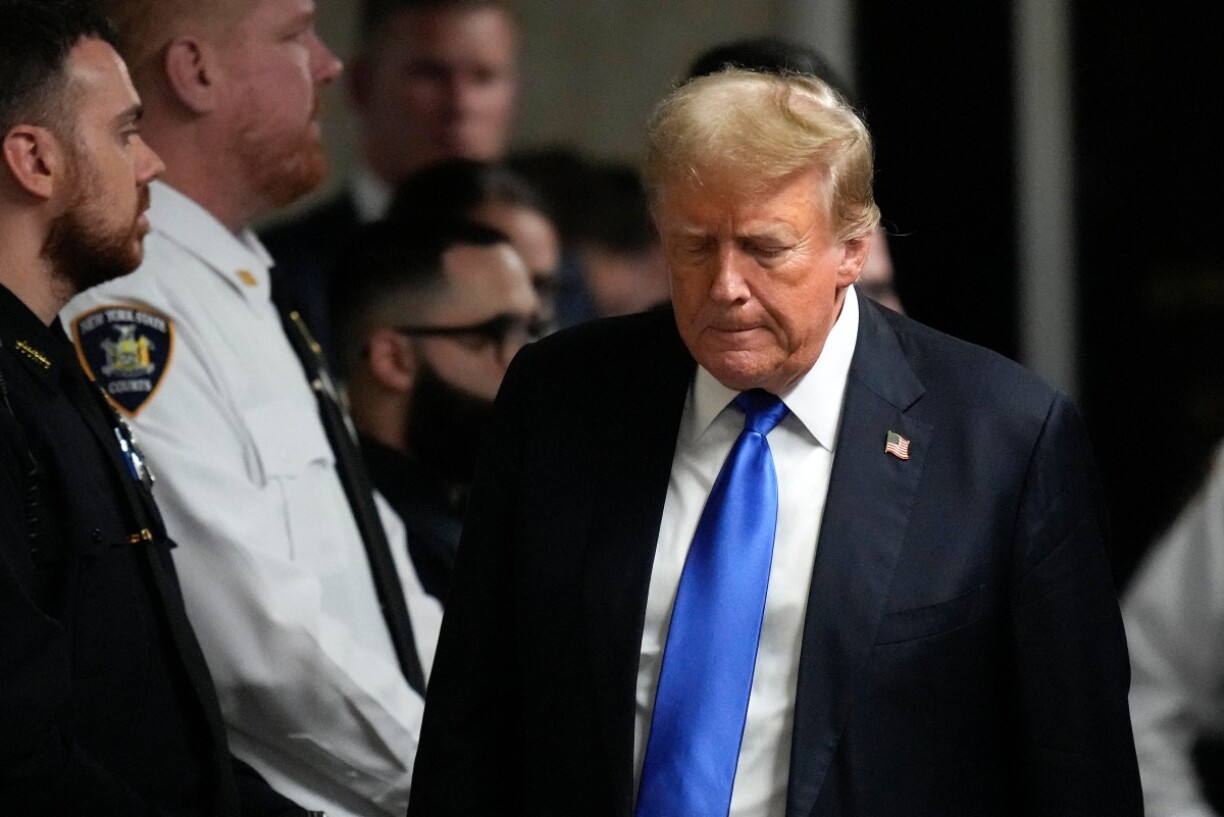
Donald Trump has become the first former American president to become a felon, following the guilty verdict in his trial.
The 'hush money trial', arguably one of the biggest in American history due to the enormous implications, is much more than a legal drama, having turned into a spectacle in and outside of the courtroom.
Trump is expected to appeal the decision, and it will not prevent the Republican candidate from appearing in the ballot for the Presidential elections in November.
A man of conviction – Thursday's historic decision saw Donald Trump convicted of 34 counts of falsifying business records as a means to cover up 'silence' payments to adult star Stormy Daniels, in the run-up to his first candidacy. For the first time, the United States of America have a convicted former President and current Presidential candidate.
The secrecy and the spectacle – The nigh-unbearable weight of this verdict led to the identities of the members of the jury being preserved in secrecy, to avoid unwanted attention and pressure. A stark contrast to the streets outside the courtroom, filled with demonstrators pro and against Trump.
One of the many present was Hollywood icon Robert De Niro. The actor gave an impromptu press conference on Tuesday, in an effort to push back against Trump's dominance of the TV news channels. Trump was often seen rallying his supporters on his way in and out of the courtroom.
Who knows where this is going? – The unprecedented nature of this verdict means that nobody really knows what the implications and repercussions are going to be. The experts, who are often able to draw on the knowledge derived from past occurrences, do not have that ability now, since nothing like this has ever happened.
Regardless, Trump - a man used to the spotlight - will still be able to be on the ballot for the upcoming elections, as the US does not specifically prohibit a convicted felon from being a candidate - and the appeal process would also delay a final decision, in any case.

Starting July 2024, individuals purchasing new cars in the European Union will be accompanied by a mandatory "co-driver" of sorts: the "Intelligent Speed Assistance" (ISA) system.
In an effort to curb accidents, the EU has decided to enforce this speed-controlling measure - but its implementation can vary according to the manufacturer, and experts aren't entirely convinced.
Could this upcoming limitation imposed on new vehicles be seen as enough of an annoyance to become a catalyst for further growth in the second-hand market?
Warning system – Road casualties continue to be an immense problem in most countries, with excessive speed being a major cause of accidents. In their latest attempt to increase road safety and reduce the likelihood of accidents, the EU has imposed a mandatory rule for new cars purchased from July onwards: they must be equipped with an "Intelligent Speed Assistance" system that will "limit" the speed you can drive at, by using a combination of GPS and cameras capable of reading road signs.
Helpful or annoying? – This system is not a huge surprise for drivers, as it was already an optional feature on some models. But it's not a straightforward affair, as manufacturers can decide on the preferred warning method, which could lead to inconsistency across the board.
In practice, it works more as a reminder than a limiter: it will warn the driver via sound and/or vibration as soon as the speed limit is reached or passed; but it can also take the form of a slight pushback on the accelerator pedal, or an actual slight reduction of speed - however, both of these situations can be easily overridden by the driver - and in some cases, the system can even be turned off entirely.
There is also the potential for causing distractions or annoyance considering that, even if the driver is fully committed to respecting speed limits, it is not uncommon to momentarily drive above the required level, especially when going through areas with frequently changing speed limits.
Why buy new? – Recent numbers have shown that the Luxembourgish used car market is alive and well, showing growth despite an increase in prices. Will this new mandate contribute to that trend? Is a mandatory feature like the ISA enough of a deterrent against new car purchases?
Manufacturers worldwide don't seem to be too concerned as of yet, as profits continue to soar, but it will be interesting to see the numbers next year.
Science & Environment – Deadly cyclone Remal hit Bangladesh and India, leaving over 20 dead and thousands of homes destroyed in its wake.
Entertainment – Anora, by acclaimed indie director Sean Baker, won the Palme d'Or at the 2024 edition of the Cannes Film Festival. Luxembourg's co-production All We Imagine as Light was awarded the Grand-Prix.
A – Poison bait is leaving Luxembourg animals at risk, following a series of incidents and suspicions. The previous week had already seen another suspected poisoning case affecting crows.
B – Authorities are scrambling to correct an error that resulted in missing instructions affecting postal votes for the upcoming European Elections.
C – Minister for Home Affairs Léon Gloden shared the results of Luxembourg City's Special Police Operation that took place between January and April 2024.

Your Weekly Recap is published every Friday at noon. Read earlier versions.





