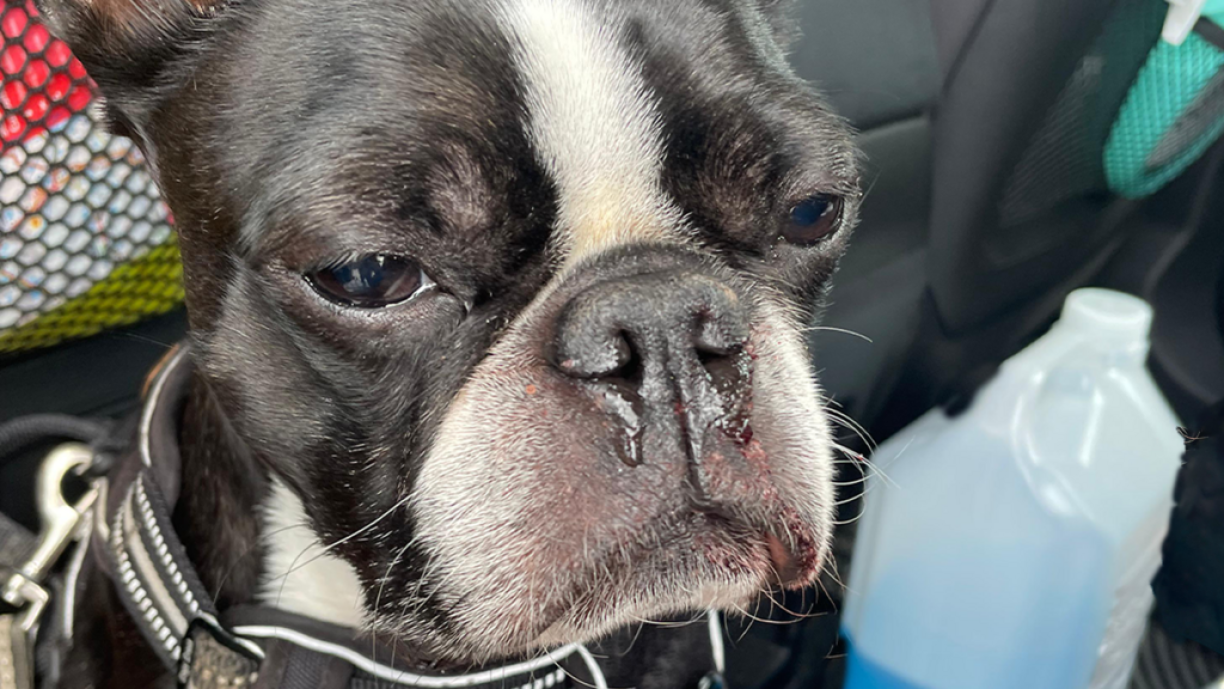
The incident occurred over the weekend when the woman and Louis went for a walk at Bambësch near Luxembourg City on Saturday lunchtime. After parking at the Bridel car park, they set off along a path leading to the forest.
Before entering the woods, Louis, attached to a lead, headed for a meadow beside the path. After sniffing around, his behaviour suddenly changed. He had difficulty breathing, foam began to form at his mouth, and he started bleeding from his nose and mouth.
Alarmed, the woman quickly noticed that Louis had something stuck in his throat. Acting swiftly, she tried to induce vomiting and discovered he had eaten two large scampi stuffed with an unknown, likely toxic substance.
Once Louis regained some composure, they hurried back to the car and drove to the Krakelshaff veterinary clinic in Bettembourg, where the dog received immediate care.
Fortunately, Louis had not chewed the scampi thoroughly, preventing the toxic substance from spreading through his body. As a result, he did not require a drip or an extended hospital stay. However, the vets provided liquid activated charcoal tablets to the owner, as a precaution in case any poison remained in Louis's system.
Activated charcoal is highly effective in treating cases where toxic substances have been ingested, whether it is medication, poison, chocolate, or certain plants. Rapid administration can significantly limit toxin absorption.
Louis's owner vows to be more vigilant in the future, committing to never letting her dog wander unsupervised in tall grass, even on a lead. While she wants to be able to monitor the ground before allowing her dog to pass, she hesitates to muzzle him, as she believes that dogs should enjoy the freedom to sniff and play in the forest.
Veterinarian Romy Roth suggests feeding dogs before walks, particularly those not prone to flatulence or gastric torsion.
During walks, owners are advised to use healthy treats to distract their dogs from potential baits. If distraction proves ineffective, there are specialised muzzles designed to prevent dogs from accessing the ground. Dr Roth describes these as resembling a shovel that extends beyond the dog's chin.
However, all types of muzzles are discouraged in very hot weather due to their impact on dogs' ability to pant and regulate body temperature.
Furthermore, it is recommended to train dogs from a young age to allow people to inspect their mouths. This enables owners to remove potentially harmful substances the dog may have picked up.
Even if you successfully remove poison from your dog's mouth, however, there is no guarantee they have not ingested some of it. It is therefore important to see a vet as soon as possible.
Traps found along paths and tracks frequented by dogs may contain various hazards, not just poison. For instance, they could also take the form of small meatballs containing nails or razor blades. The dog's symptoms will depend on the trap it has ingested. Nails or razor blades typically lead to bleeding directly from the mouth, while traditional rat poison causes bleeding from every orifice, albeit with a delayed onset. New types of rat poison are especially dangerous, combining anaesthetic, chloral hydrate, and glucose. There is as yet no antidote for this poison. Meanwhile, snail poison acts rapidly on the nervous system, resulting in symptoms such as twitching, excessive saliva, and foaming at the mouth. Some traps may contain a mix of poisons or mechanical hazards.
If your dog displays any suspicious symptoms, you should immediately visit a vet (between 8am and 4pm as a general rule) or a veterinary clinic. From 4pm to midnight, identify the closest on-call surgery or visit a veterinary clinic. Luxembourg's two veterinary clinics operate 24/7 for life-threatening emergencies, with a list of on-call surgeries available on the College of Veterinarians website.
If the nearest surgery is distant, do not hesitate to administer activated charcoal tablets to your poisoned pet, approximately one gramme per kilogram. Activated charcoal for dogs is available without a prescription from pharmacies.





