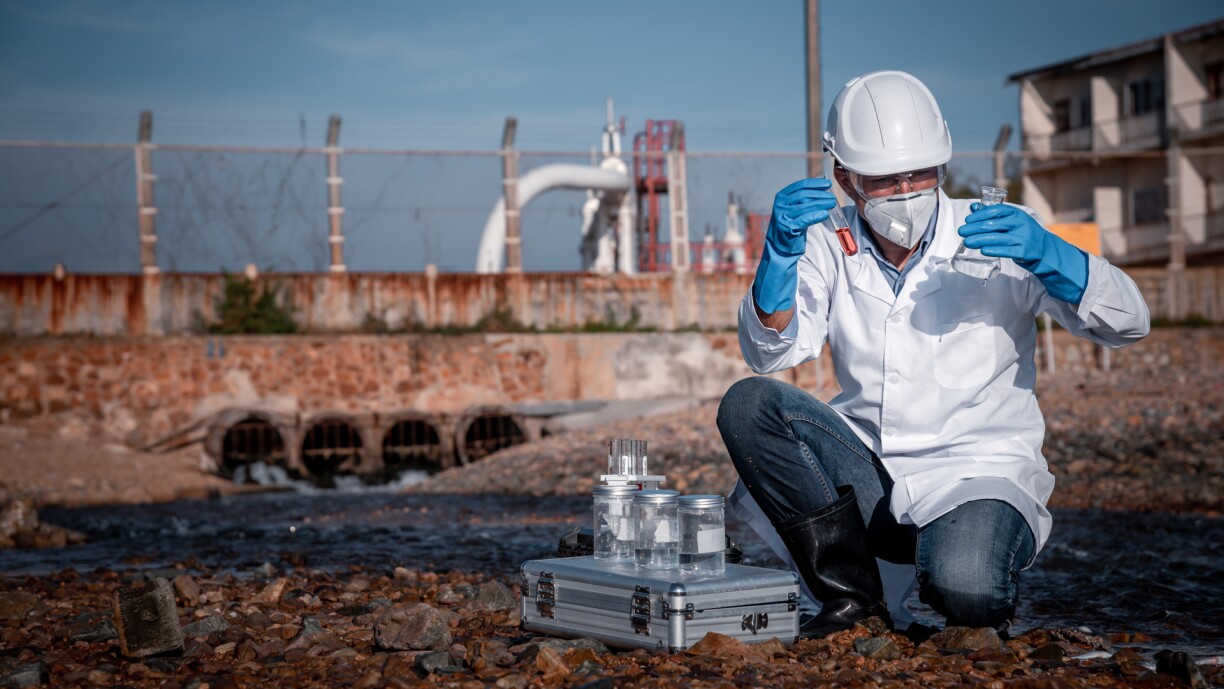
The invisible and odourless chemicals, also known as 'PFAS' (Per- and polyfluorinated alkyl substances), are omnipresent and may present the biggest chemical menace of the 21st century.
PFAS are part of the family of virtually indestructible synthetic substances first developed in the 1940s. Their resistance to water and heat gives them non-stick and waterproof properties, and they can be encountered on a daily basis, especially in teflon pans, food packaging, textiles, and cars.
And it is precisely the almost indestructible nature of these molecules that makes them so problematic.
According to results found in the 'Forever Pollution Project', a total of 17,000 sites in Europe are contaminated (i.e. above 10 nanograms per litre), including 2,100 at levels dangerous to health (above 100 nanograms per litre).
The project was led by a group of seventeen media outlets, including Le Monde and the Süddeutsche Zeitung. Their investigation has resulted in the first European mapping of contaminated or suspected contaminated sites, based on expert methodologies, data and thousands of environmental samples from 2003 to 2023.
Luxembourg has not been spared from these forever pollutants. According to the survey, several sites are presumed to be contaminated, whereas contamination at other sites has already been.
PFAS were found in the Moselle river near the Steinheim dam, in the Sûre river near Ralingen and Bettendorf, and in the Alzette river in Mersch. Other sites are presumed to be contaminated, which you can find on this interactive map.
Upon request, the Ministry of the Environment confirms that the study has been taken into consideration and that data analysis is 'underway'. The ministry also specifies that the water management administration is studying surface water and fish for the presence of PFOS (part of the PFAS family) as part of a larger project to assess Luxembourg's water bodies.
The ministry also stresses that given the omnipresence of such chemicals and the fact that they hardly degrade (neither naturally nor with technical processes), the countermeasures are highly complicated and costly. Indeed, the contamination in Luxembourg and abroad will remain for centuries.
According to the report, exposure to PFAS can have harmful effects on fertility and foetal development. In addition, it can increase the risk of obesity, of certain cancers (prostate, kidney and testicles), and of cholesterol.





