
Here are five things you should know at the end of this week:
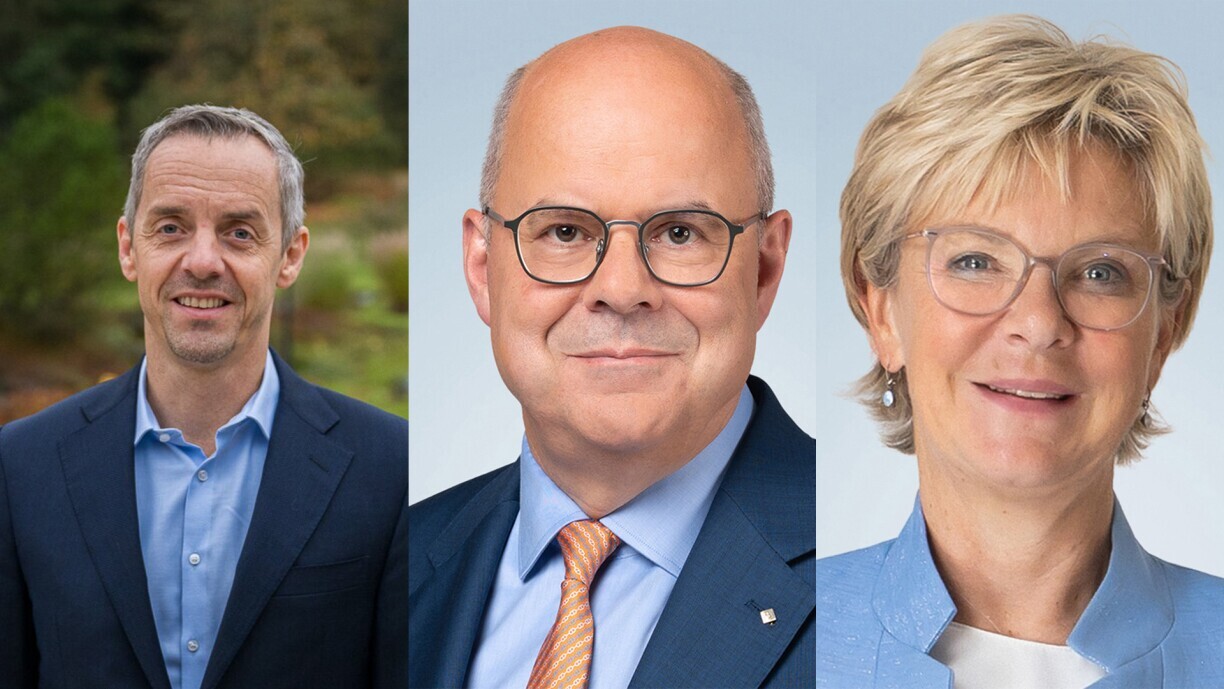
Sudden changes – Georges Mischo stepped down as Labour and Sports Minister after weeks of criticism that, according to Prime Minister Luc Frieden, made it impossible for him to carry out his duties calmly and objectively. The PM stressed that the decision was not solely tied to the controversial sports museum project. Following a lengthy discussion, Mischo agreed to resign, triggering a rapid reshuffle within the CSV-led government. Marc Spautz was designated to succeed him in the Labour portfolio and Martine Hansen in Sports, pending party approval. The reshuffle also meant the CSV needed to choose a new parliamentary faction leader.
'Fresh start' – The CSV National Council swiftly and unanimously validated the nominations of Spautz and Hansen, clearing the way for their appointment. Spautz’s move into government required him to relinquish leadership of the party’s parliamentary group, which then elected Laurent Zeimet as his successor. On Thursday, Spautz and Hansen were formally sworn in before the Grand Duke, with Mischo attending his farewell audience but offering no comments on his political future. Prime Minister Frieden highlighted both the unity shown within the CSV and the fresh start for the two new ministers, noting that Hansen would review the matter involving the sports ministry while the government focuses on moving forward.
Recent controversies – A week earlier, Georges Mischo had been under scrutiny over the planned national sports museum in Esch-sur-Alzette, as conflicting accounts emerged over its status. A media report claimed the Finance Ministry had halted the project for legal review, but the Sports Minister rejected that assertion, saying the file had merely been taken off an internal agenda because it was about to be examined by the parliamentary committee responsible for budget oversight. He argued this did not amount to a suspension and maintained he had acted transparently.
Opposition figures accused him of bypassing proper procurement rules, and the controversy fuelled tensions within the government. Despite having defended the process earlier, Mischo reversed course and confirmed he would withdraw the project entirely, following renewed pressure for the Court of Auditors to review the case.
Recently, Mischo had also been at the receiving end of critical remarks from Luxembourgish trade unions, who deemed him unfit to serve as Labour Minister in a letter addressed to Prime Minister Luc Frieden – which Mischo decried as "personal" and "below the belt".
Earlier in the year, the now ex-Minister was under fire for a proposed Labour reform, which led to unprecedented protests from trade unions, and, on the Sports side, also had to deal with the Gerson Rodrigues controversy.
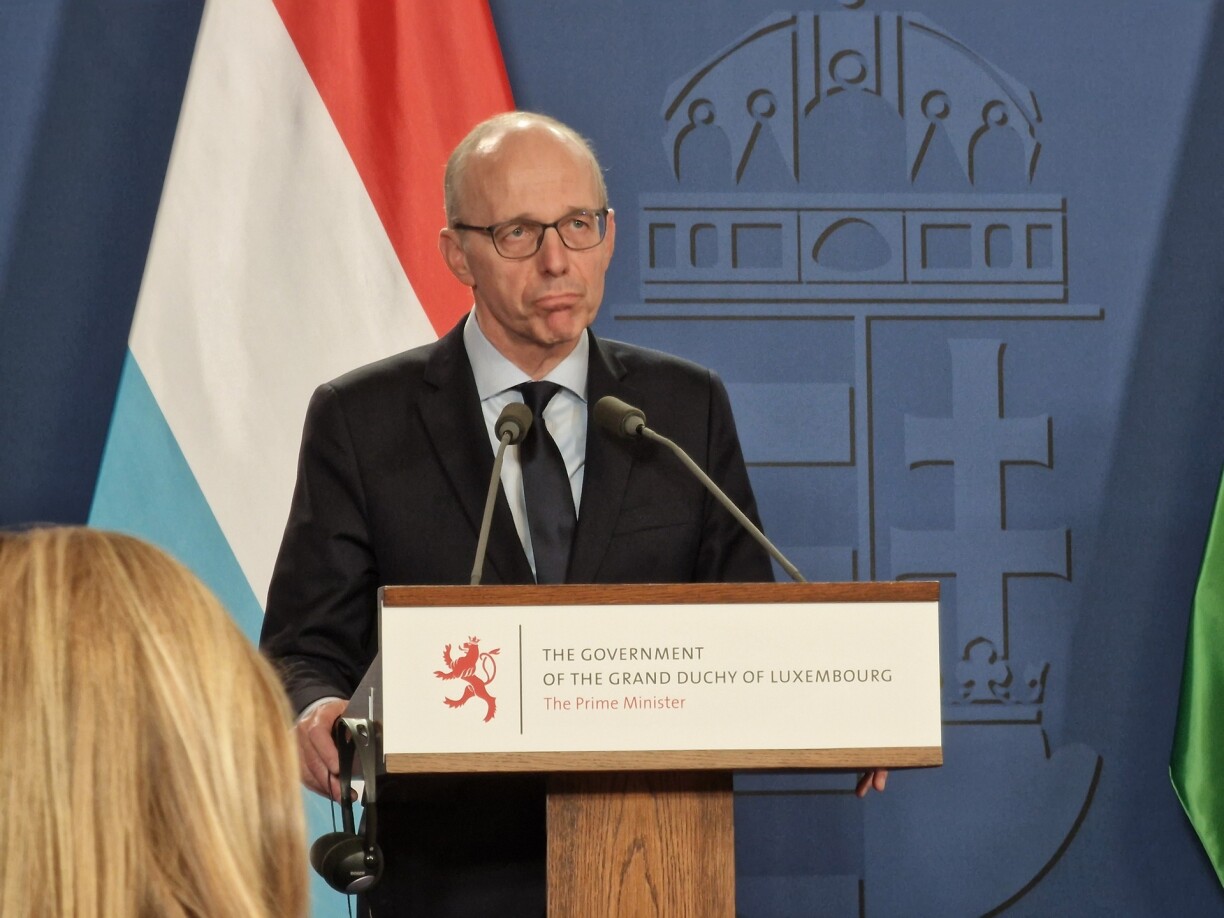
Popularity – According to December's Politmonitor survey, Prime Minister Luc Frieden has slipped to 12th place in popularity, dropping three points since June and earning below-average ratings for both sympathy and competence. Within his own party he ranks only fourth, tied at 52 points with Marc Spautz, while CSV colleagues Martine Hansen (8th) and Claude Wiseler (7th) remain the party’s strongest performers. Former Labour and Sports minister Georges Mischo placed 32nd with 33 points.
At the top of the overall ranking stands Foreign Minister Xavier Bettel, who climbed to 80 points, followed by Paulette Lenert in second and Mars Di Bartolomeo in third with 65 points. Several DP figures also performed well, including Yuriko Backes, who rose nine points to claim 5th place – the largest gain in the survey – while Lex Delles and Lydie Polfer remained solidly positioned. The Greens’ Sam Tanson reached 9th place, and LSAP’s Taina Bofferding completed the top 10 with 57 points. Broader trends show most CSV and DP politicians improving their scores, with the major exception of Frieden. At the lower end of the list, ADR’s Tom Weidig ranked last with 14 points, just behind his party leader Alexandra Schoos at 17. Public opinion on the government itself has barely shifted since June: approval stands at 48% (down from 49%), while 43% rate the government as "poor" and 33% as "very bad". Supporters of the CSV remain overwhelmingly favourable at 93%, whereas DP voters show more mixed views, and majorities of LSAP, ADR, and Green voters express dissatisfaction. The survey reflects responses from 1,042 participants interviewed between 17 and 26 November.
What worries Luxembourgers? – The second part of the latest Politmonitor survey highlights the key concerns of Luxembourg's residents, with housing continuing to be the most pressing issue for 70% of the population. This is followed by worries over geopolitical instability (64%) and increased traffic (53%). Housing concerns are particularly acute among younger people, with 81% of those aged 18–24 identifying it as a major problem, alongside 75% of those aged 24–35. Voters from LSAP (80%) are the most concerned, while the issue seems less pressing for older age groups like those over 65 (65%). Other significant concerns include right-wing extremism, especially among Greens (71%) and LSAP (60%) voters, and climate change (49%).
While concerns about the international situation have slightly decreased since the previous survey, traffic has become a more prominent issue, particularly for those aged 55 and older. The survey also reveals that politicians’ priorities should focus mainly on housing (27%), with climate change and current affairs both tied in second place (8%). In terms of public opinion on government initiatives, the pension reform remains unpopular among the majority, especially among LSAP, Greens, and ADR voters. Conversely, a single tax class garners broad support, with 67% of respondents in favour. Divisive issues include the proposed French literacy programme in schools, with 54% of respondents seeing it as a potential risk to Luxembourg’s education system, particularly among ADR voters (81%). Lastly, national defence concerns are highlighted, as only 27% of respondents express confidence in Luxembourg’s ability to defend itself against new threats, such as cyberattacks or drones.
Concerns of foreign nationals – In addition to the main Politmonitor survey, an extra 400 online interviews were conducted to explore the specific concerns of foreign nationals residing in Luxembourg. The results reveal some notable differences in priorities compared to the general population. While housing remains a significant issue for foreign residents, it ranks second (53%) overall, with international geopolitical tensions slightly edging it out at 54%. Surprisingly, national security is rated as the third most pressing concern for foreign nationals (43%), significantly higher than its ranking of 12th among Luxembourgish citizens.
When asked about the issues they believe should be addressed urgently by politicians, however, housing takes the lead once again, with 25% of foreign residents prioritising it above all else, underlining the universality of the housing problem, regardless of whether respondents are Luxembourgish or foreign-born. Following housing in importance, national security (14%) and climate change (9%) are identified as the next key areas for immediate attention. This shift in priorities highlights a deeper concern for security-related issues among foreign nationals, particularly in the context of rising global tensions and the changing landscape of international relations.

Out now – The eight tracks competing to represent Luxembourg at Eurovision 2026 were revealed on Thursday across all RTL radio stations, including RTL Today Radio.
The 2026 edition emphasises collective songwriting, with each track resulting from collaborations between Luxembourgish artists and songwriters from across Europe, particularly Northern Europe, known for its strong Eurovision presence. Two songs are in French, while the rest are in English, with Portuguese, French, and German influences.
Six of the tracks were created at the ESC Songwriting Camp at Rocklab, part of Rockhal, where over 50 artists, producers, and songwriters wrote, recorded, and produced a song each day. The remaining two tracks came from other artistic collaborations.
A variety of genres – The competing songs cover a wide range of genres and themes. Andrew the Martian’s "I’m The Martian" explores feelings of alienation, while Daryss’ "Melusina" draws on the legend of Luxembourg’s mermaid. Eva Marija’s "Mother Nature" symbolises hope, freedom, and reconnecting with one's inner child. Hugo One’s "Born Again" is an 80s-inspired anthem about healing after heartbreak. Irem’s "Bad Decisions (Hush Hush)" is a catchy pop track born from a spontaneous songwriting session, while Luzac’s "Prison Dorée" expresses the feeling of being trapped in a seemingly perfect life. ShiroKuro’s "Eye To Eye" blends pop-rock with a message about societal paranoia, and Steve Castile’s "Sweet Tooth" is a dark, obsessive track about toxic love.
Each song brings its own unique flavour to the competition, with themes ranging from personal introspection to societal reflections. The winner will be chosen through a combined public vote and an international jury on 24 January 2026 at Rockhal, determining Luxembourg’s entry for Eurovision 2026.
Not just music – Laura Thorn's successor as Luxembourg's representative will travel to Vienna for the 70th edition of the Eurovision Song Contest – an event that is no stranger to controversy.
The European Broadcasting Union decided not to hold a vote on Israel’s inclusion, which led to boycotts from Spain, Ireland, the Netherlands – who had already raised concerns over last year's voting –, and Slovenia over Israel's participation, amid concerns about the political use of the event due to the Gaza conflict. Recently, Iceland joined the boycott, and the Portuguese entry is in doubt after several artists participating in the national song contest issued a statement refusing to participate in Eurovision. Despite this, nations like the UK, France, and Germany continue to support Eurovision as a non-political celebration of music – as does Luxembourg.
Eurovision 2024 winner Nemo also announced he is returning his trophy in protest over Israel's continued participation in the contest amid the Gaza conflict. The Swiss artist stated that the trophy no longer felt right on his shelf, as Israel’s inclusion contradicts Eurovision's values of unity and dignity.
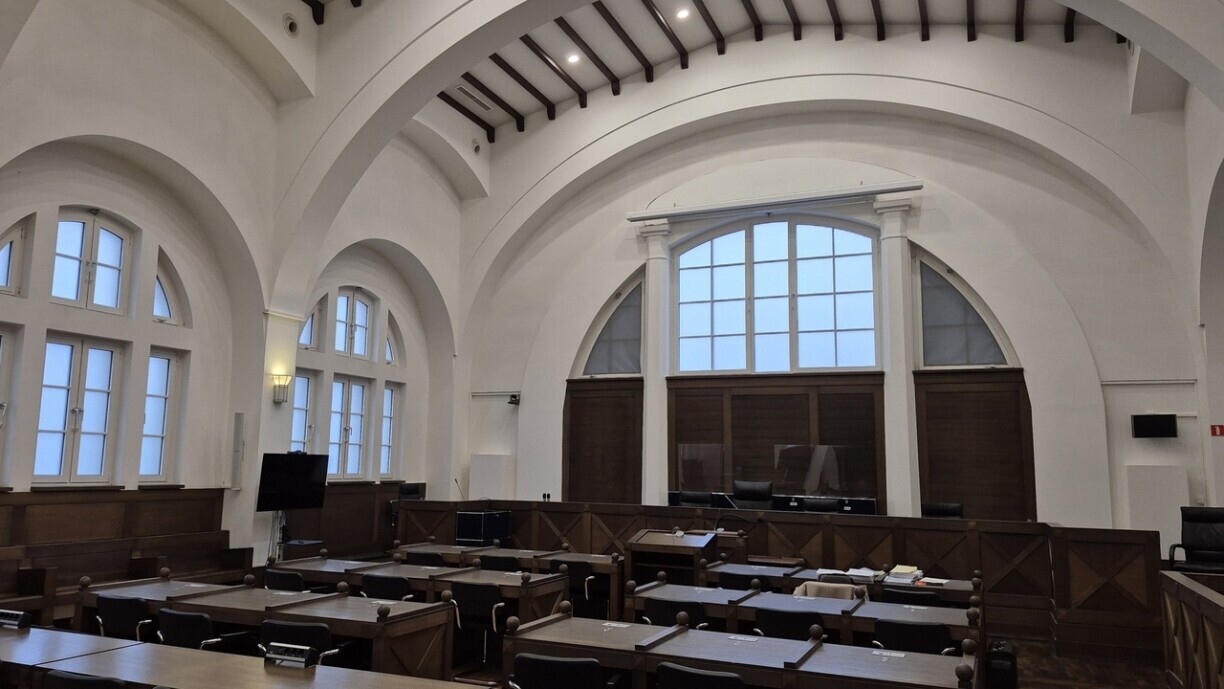
Life sentences – Three family members have been sentenced to life in prison by a Luxembourg court for their involvement in the 2021 murder of a Luxembourg resident in Portugal. The main defendant, "Ana" (all names changed to protect anonymity), along with her mother and her mother's partner – who had a secret relationship with "Ana" – were all found guilty and received life sentences. The court, however, acquitted the main defendant's son, as he was not involved in planning the murder, although it was acknowledged that he may have helped dispose of the victim's body later.
Several attempts – The court heard that the murder was carried out through poisoning, with "Ana" admitting to mixing insecticide into a drink to kill "Pedro", her partner and adoptive father of her daughter. After "Pedro" fell ill, the family members pushed him into a river, where his body was later found. Ana also confessed to previously attempting to poison "Pedro" with rat poison, and her lover "Antonio" testified about a prior attempt using sulphuric acid. Additionally, evidence revealed earlier efforts to harm "Pedro" using laxatives, hoping he would fall from scaffolding at work. The elaborate nature of the case led the presiding judge to compare it to a "soap opera".
Planned in Luxembourg – Despite the murder occurring in Portugal, the trial was held in Luxembourg due to the conspiracy being planned within the Grand Duchy. Testimony revealed that the defendants had been deliberating on how to carry out the murder for weeks or even months, meeting at "Ana"'s mother's home in Esch-sur-Alzette. They discussed different poisons to use, with "Antonio" researching online for undetectable substances to carry out their plan.

AI everywhere – Time magazine has named the "Architects of AI" as its 2025 Person of the Year, a group of pioneering tech leaders driving the rapid transformation of artificial intelligence. The individuals highlighted in the magazine's cover story include figures like Nvidia CEO Jensen Huang, OpenAI's Sam Altman, and xAI’s Elon Musk, who have been at the forefront of AI innovation. Time praises these tech titans for not only advancing AI technologies like ChatGPT and Claude but also for their role in reshaping global economies, policies, and industries. The group, depicted on the magazine's cover in an iconic homage to the 1932 photograph of ironworkers, is credited with leading a technological revolution that is on par with the most transformative infrastructure projects in history, impacting everything from geopolitics to everyday life. According to Time, these innovators have placed massive financial bets on AI, potentially positioning the technology as the most consequential force in great-power competition since the advent of nuclear weapons.
Notable risks – While Time's Person of the Year recognition celebrates the incredible strides made in artificial intelligence, the magazine also acknowledges the significant challenges and risks associated with its rapid development. AI's impact on society has been profound, with its adoption growing to the point where ChatGPT usage alone has surpassed 10% of the global population. However, the darker side of AI has become a topic of concern. The magazine draws attention to troubling reports of AI chatbots contributing to mental health crises and suicides, with notable lawsuits alleging that platforms like ChatGPT have led to harmful consequences, including the case of a teenager who tragically took his life after interacting with AI.
In addition, the automation driven by AI raises fears of widespread job displacement, as companies increasingly replace human workers with AI systems. Despite these concerns, Time notes that AI's influence remains undeniable, and many experts, like Nvidia's Huang, predict that the technology could help grow the global economy from $100 trillion to $500 trillion. Nevertheless, the magazine also chose to exclude AI from creating its cover art, opting instead for human artists, symbolising the ongoing debate about AI’s place in the creative and ethical realms.
Luxembourg adopting AI – A Quest Institute survey from late June 2025 found that AI had already slipped into everyday life for many people in Luxembourg. Over 70% of 600 respondents had used AI tools, mainly ChatGPT, mostly for private purposes such as looking up information and getting help with writing, and only a small minority still saw AI as a gimmick. Most participants took a balanced view, acknowledging both opportunities and risks: they worried about weakened memory and critical thinking, as well as manipulation of public opinion, but also expected AI to speed up research and drive medical and scientific progress. Around four in 10 even thought AI might one day develop some form of consciousness.
The Luxembourgish government plans to invest €100 million in data, artificial intelligence, and quantum technologies to position itself as a digital leader in Europe, with a focus on responsible innovation, citizen data control, and future-ready infrastructure.
Your Weekly Recap is published every Friday at noon.





