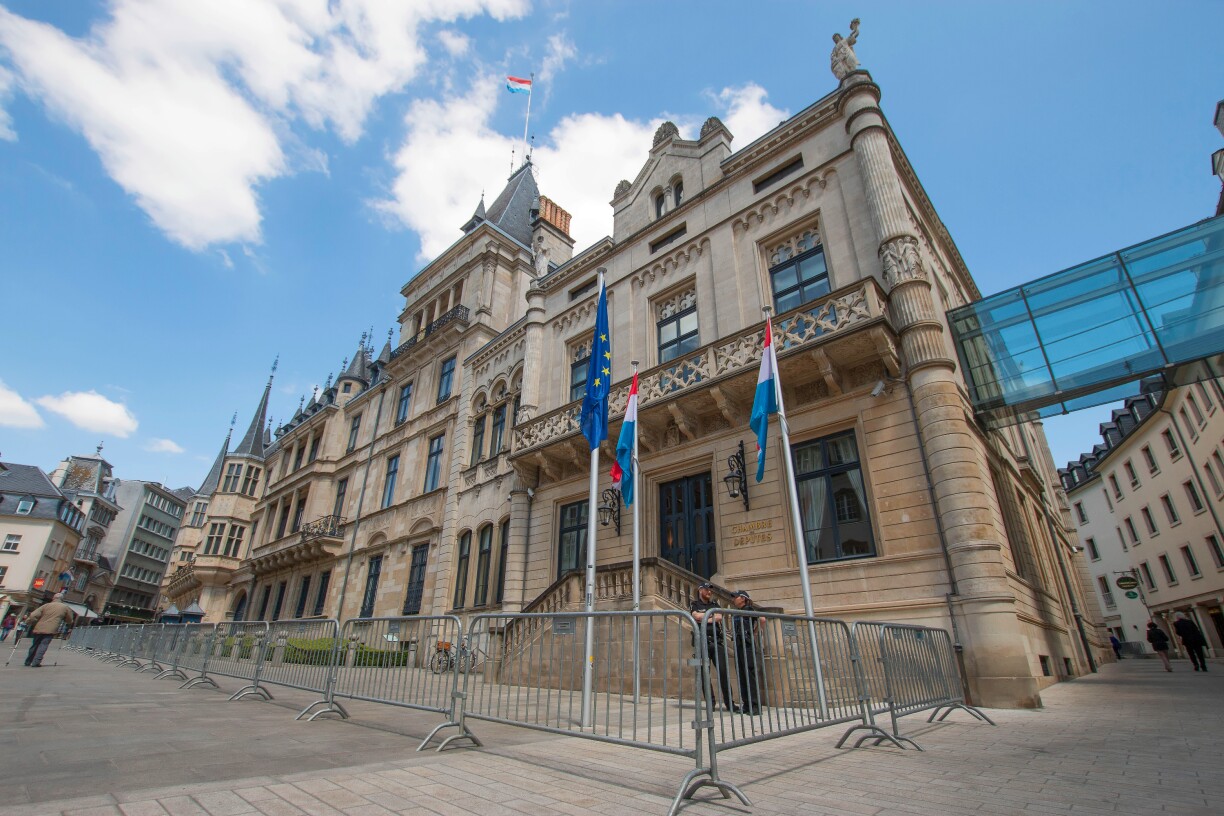
After Foreign Minister Xavier Bettel consulted with his European counterparts on Sunday, the foreign affairs committee was briefed about the exchange on Monday.
There are strong concerns about a potential large-scale conflict in the region. Foreign Minister Xavier Bettel declared his priority to be bringing Luxembourgers who remain in the area back home. The situation itself, which continues to escalate, is another serious concern. His discussions with foreign and prime ministers from the Gulf region reveal that they are not simply sitting back and watching as they are attacked. However, the United States and Israel unilaterally decided to launch strikes, without any mandate, in an attempt to decide on the future path of certain countries and regimes.
There is always talk of international law, said Fred Keup. "Over the past eighty years, international law has repeatedly been violated. It is always from the perspective of the observer," claims the ADR deputy. He is now curious how those who condemned the Maduro case will react here. Will they also condemn the Americans? "For us, in any case, we do not condemn the Americans, neither in Maduro’s case nor now in Iran, but rather even say that it was well done," Fred Keup emphasized.
David Wagner, a deputy from déi Lénk, said that at the very least, Europe must declare that the attack is a breach of international law. He criticizes that we are now facing a dangerous situation in which the world could increasingly be ruled without the rule of international law. As for what will happen to the Iranian people, it seems that neither the US nor Israel currently have a plan.
Whether the actions of the US and Israel will bring the necessary relief for the Iranian people is uncertain, according to Sam Tanson. “I really hope that the European Union will intervene, ensuring that we enter a calmer situation and that a regime change could effectively occur,” said the Greens deputy. However, continuity seems more likely than a regime change at the moment.
The next steps for Europe have not yet been decided. The room for manoeuvre appears to be small or non-existent. “We must note that Europe currently plays no role in the Middle East, or at least only a very minor one. This is also evident in that we have not been further consulted,” said Laurent Zeimet, a CSV deputy. He reckons that is a consequence of the positions that have recently been taken. His biggest concern is that there is no access to reliable information from inside Iran. It is unclear whether the people can keep up their resistance to the regime or whether the latter continues to repress the population. Official images from Iran must be taken with a pinch of salt.
The consequences of the escalating conflict for Luxembourg and the EU cannot yet be foreseen. The risk of cyberattacks or terrorist attacks in Europe seems higher now than it was last week, according to Yves Cruchten, an LSAP deputy. He is torn between hope that the Iranian people will free themselves from the authoritarian regime and the fact that international law is blatantly violated again, with the civilian population suffering the most. He hopes that the conflict will not last long and that democratic processes can resume quickly. “However, I must tell you that this remaining hope is very small and I fear that it will not come true,” Yves Cruchten adds.





