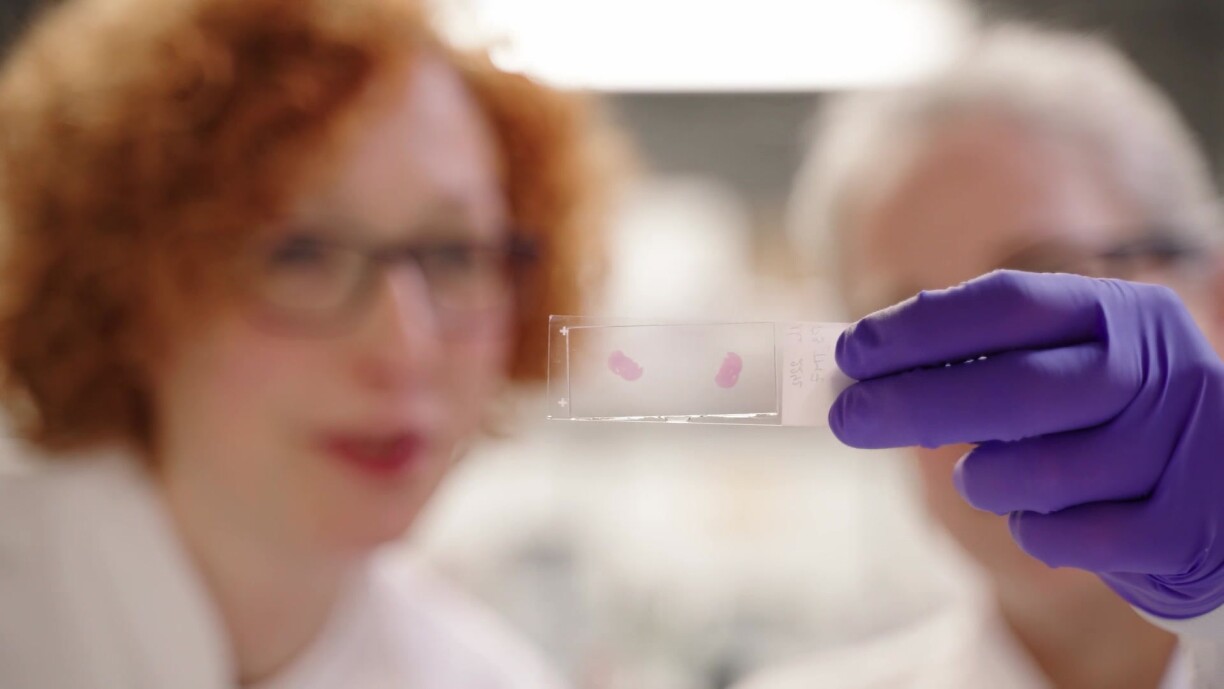
Every year, around 3,000 new cancer patients are diagnosed in Luxembourg. Experts estimate this number could increase by half again in the next two decades. But in spite of this, there is positive news: the number of deaths attributed to cancer have dropped over the last few years.
This development is largely thanks to advances in research, where time-consuming studies and new findings mean patients can be treated in a more targeted, less invasive manner.
Dr Guy Berchem has supported Télévie since its inception, and says that many new forms of medication have been developed over the last few years. In the last couple of decades, researchers have dedicated time to understanding how cancer functions. While the "ultimate cure" may not yet exist, patients now have far better chances of survival than in the past.
Research has enabled scientists to develop molecules capable of blocking cancer growth, while chemotherapy is now more effective and has less aggressive side effects on patients' overall health. There has also been progress in immunotherapy, in order to stimulate the immune system rather than directly attacking cancer cells.
Advances in treatment are not only improving survival rates but also the quality of life of patients. This is especially true for immunotherapy, which has fewer side effects than radiotherapy and chemotherapy.
Instead of destroying cancer cells – and often healthy cells too – immunotherapy works by boosting the immune system so that it can attack the cancer itself. However, it is not effective for all patients, as not all tumours have immune cells in their immediate vicinity.
"Some tumour micro-environments don't contain immune cells, so they cannot be activated", explained Dr Bassam Janji, a researcher at the Luxembourg Institute of Health (LIH) for over 20 years. "Our research is focusing on bringing immune cells into the tumour environment and then strengthening the immune system so it can eliminate cancer cells."


Some types of cancer have become easier to treat over the years, such as testicular cancer, thyroid cancer, and Hodgkin's Lymphoma. Yet others, despite years of research, still don't have any effective treatments. This is the case for glioblastoma, the most aggressive form of brain cancer. For over a decade, Dr Sabrina Fritah has been researching this particular disease, attempting to find out how certain cancer cells can evade treatment. She is also looking into the changes occurring in these cells and what mechanisms they develop.
Once researchers identify these changes, they can develop ways to block them, to ensure tumours react to treatment. "The goal is to develop new therapeutic combinations which target not only tumours, but also plasticity mechanisms, to render treatment more effective", Dr Fritah explained. Treatments are no longer a universal solution, but instead are personalised to each patient. "Researchers work on treatments for a patient at a specific moment."
Today, and in the future, patients and their tumours are subjected to individual analysis, so doctors can combine different treatments.
The European Cancer Information System (ECIS) predicts that the number of cancer cases in Luxembourg will rise by 57% between 2022 and 2040. But in more positive news, fewer people are succumbing to the illness.
Since 1998, the number of deaths attributed to all cancer types in Luxembourg have dropped by 2.1% per year. Research is making good progress, and new technologies which can handle complex data and calculations will help to push it further. More people are living for longer after a cancer diagnosis, and many patients are treated successfully thanks to early detection and significantly better treatments.
This extended lifespan is helped by years of research, so investment through initiatives such as Télévie is essential to drive the research sector further.





