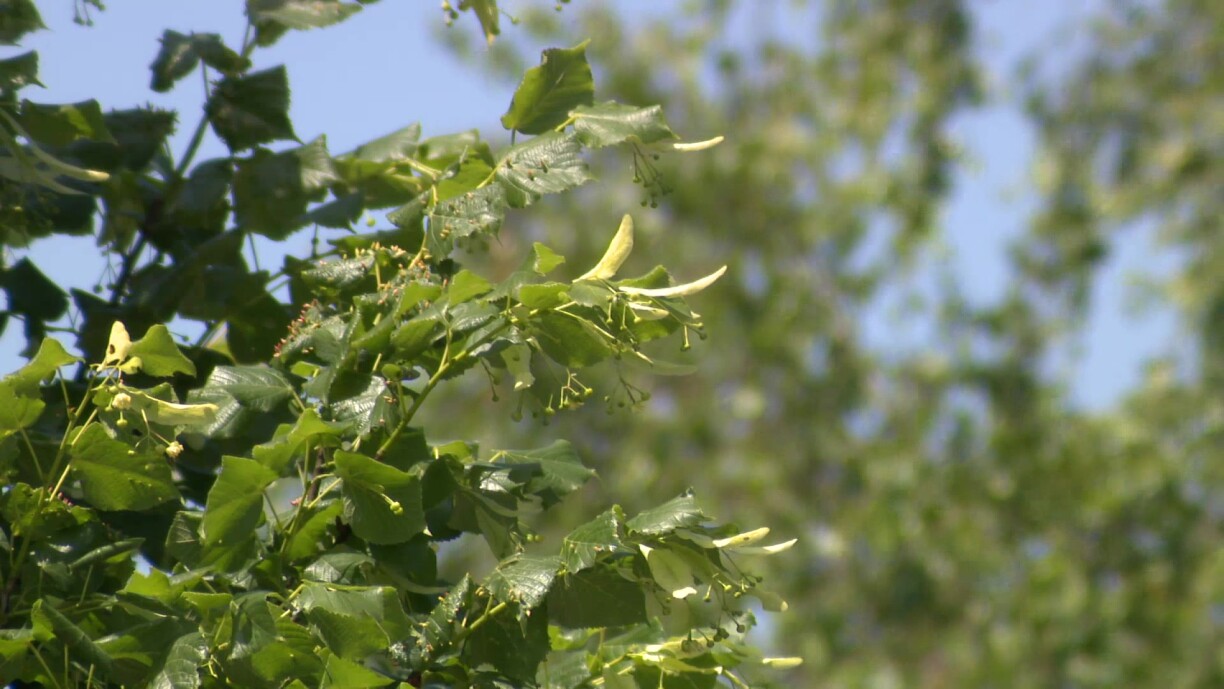
Allergy sufferers know the signs all too well: pollen season is here. It is a period that now tends to start earlier and often lasts longer than it did just a few years ago.
At the Luxembourg Institute of Health (LIH) in Esch-sur-Alzette, researchers are collecting extensive data on hay fever and other allergies. Dust allergies are also a focus, with several studies currently under way.
Luxembourg is currently in the middle of pollen season. It begins with birch pollen and continues into summer with grass pollen. Itchy eyes and a runny nose are among the most common symptoms for allergy sufferers, while skin irritations are also on the rise.
According to LIH researcher Dr Annette Kuehn, climate change means there is more pollen in the air, especially in urban areas, where higher pollen concentrations are being observed.
She explained that trees in cities are often under stress due to pollution, including from traffic. As a result, their biology leads them to produce more pollen.
The first major peak in pollen allergies was already observed in the 1970s. According to one study, more than 40% of adults in Luxembourg are now affected by allergies, particularly involving the respiratory tract, lungs, and nose. Warm and dry weather is one of the factors contributing to the problem.
Kuehn said the rise in allergies is also closely linked to modern lifestyles, including what people eat, how they live, and the lower level of biodiversity in their surroundings. As a result, she explained, the immune system is not always strong enough to deal properly with allergies.
Climate change is also causing trees to produce more pollen. However, people do not react to the pollen itself, but to the substances it contains. In autumn, a fungus can grow on birch trees, which may also trigger allergies at that time of year. According to the LIH, a Norwegian study supports this theory.
Anyone at risk of asthma attacks should consult their doctor. Treatment depends on the individual case, Kuehn explained, with some patients able to undergo therapy while others mainly receive treatment for their symptoms.
Prevention, she added, is also linked to lifestyle. A healthy diet is important from an early age, even in infancy and childhood, to help strengthen the body. Healthy exposure to nature also plays a role, as the immune system needs contact with microbes and bacteria in order to learn how to respond properly.
Alongside pollen allergies, the LIH is also researching dust allergies, with two studies currently under way.
Dr Christiane Hilger, a researcher in biological sciences at the LIH, explained that one of these is a European study involving clinical centres in eight countries.
Patients with animal allergies provide blood samples, which are then analysed using a specially designed allergen chip containing 160 different allergens, she said, adding that these include allergens from animals, dust mites, pollen, and mould.
Hilger explained that researchers examine which antibodies individual patients have in order to identify patterns and better understand what they react to. Initial analyses suggest that one in two patients reacts to more than one animal, while two in three also react to dust mites and pollen, she said.
According to Hilger, a second study, carried out together with the children's hospital, known locally as the Kannerklinik, and a start-up, focuses on children with asthma.
She explained that the start-up has developed a device for inhaled corticosteroid therapy, which includes a digital component. This makes it possible to measure inhalation technique and send reminders if a patient forgets to take their medication, Hilger said.
At the same time, researchers analyse blood samples taken at diagnosis and after three months of treatment in order to monitor changes, according to Hilger.
For pollen allergy sufferers, the problem is no longer limited to spring. Due to climate change, the season can now begin as early as December or January.





