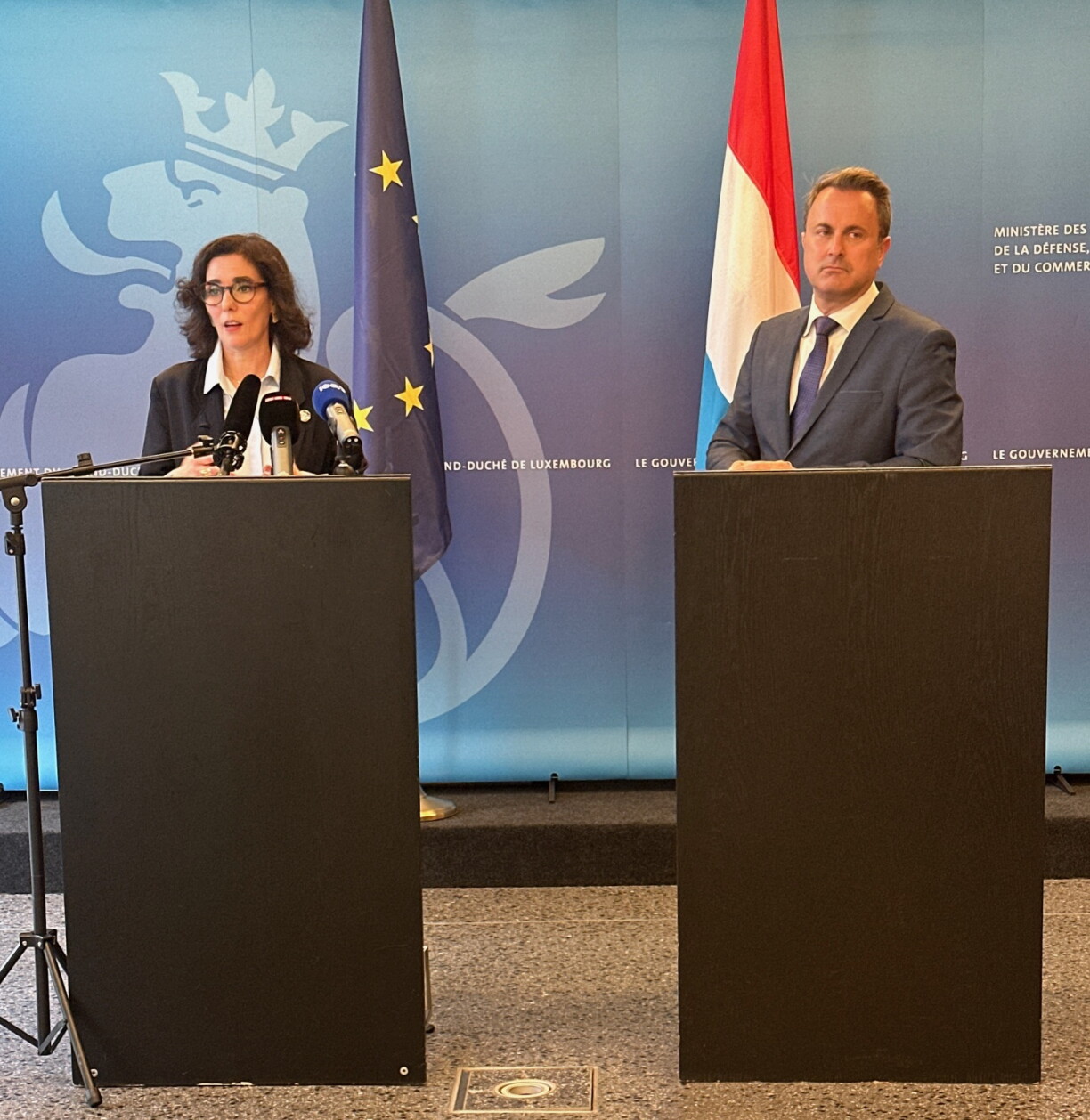
International aid is tending to decrease while the number of conflicts worldwide continues to grow, according to Deputy Prime Minister and Minister for Foreign Affairs Xavier Bettel. The minister recently hosted European Commissioner for Preparedness and Crisis Management Hadja Lahbib for a visit that included stops at the Red Cross, Air Rescue, emergency.lu, and the Grand Ducal Fire and Rescue Corps (CGDIS). The main focus was on improving cooperation in the event of crises abroad.
Improving cooperation is the goal because, according to officials, a great deal is already being done. Lahbib and Bettel expressed mutual praise. The Commissioner thanked Luxembourg's Foreign Minister in particular for his efforts in reaching agreements among the 27 member states, as well as for concrete actions such as the repatriation of people from West Asia two months ago. Bettel, in turn, thanked Lahbib because the European Commission is set to cover 75% of the flight costs from that operation.
He also thanked her for her broader commitment. The Commissioner, a former journalist, was recently in Lebanon, among other places, when 300 tonnes of relief supplies – eleven of them from Luxembourg – were delivered there. The two politicians discussed potential synergies for jointly purchasing or stockpiling goods in the future.
According to the Commissioner, there are currently 130 active conflicts worldwide – more than at any time since the end of the Second World War. While the situation does not appear likely to calm down soon, a humanitarian action plan is being drawn up in Brussels. Lahbib described "Humanitarian Diplomacy" as a very important asset, giving the example of her efforts to establish corridors in East Africa so that aid can reach its destination at all.
When asked whether Luxembourg itself is prepared for a crisis at home, Lahbib replied that Luxembourg could be "proud" to be one of nine members of a voluntary coalition that aims to be a pioneer among prepared nations. She made no comment on Luxembourg's high dependence on imports, particularly regarding energy.
Prime Minister Luc Frieden stated during the presentation of the national resilience plan in October last year that he had no intention of "obliging" people. Lahbib noted that volunteers would always be the first to react in crisis situations. "Know your neighbour and become a volunteer," the Commissioner said.
As a member of the Belgian liberal-conservative Reformist Movement (MR), Lahbib naturally agreed with Frieden's approach. She also serves as European Commissioner for Equality and pointed out that she would issue a recommendation for member states to take action against forced conversions. However, she added that there will not be a top-down directive.





