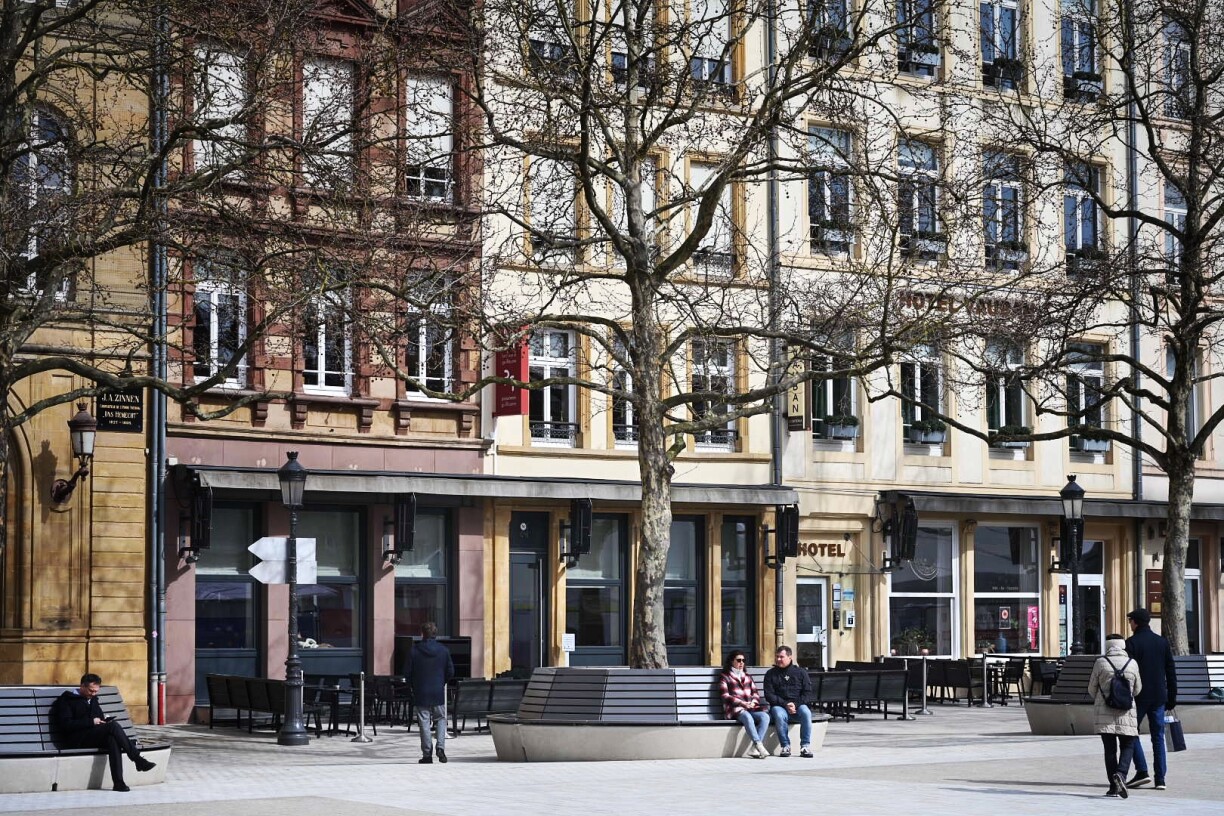
The national trends in retail are reflected in the capital, said Luxembourg Confederation director Tom Baumert. Luxembourg City still accounts for around 40% of the country's retail space, he said.
Baumert explained that individual shops are declining, particularly independent fashion retailers. However, he noted that the Horesca sector, comprising hotels, restaurants, and cafés, is seeing strong growth, especially compared with the rest of the country.
Looking at retail in more detail, he said it was not only a matter of analysing square metres, but also the number and type of individual shops. The food sector, by contrast, is expanding, including both larger supermarkets and smaller specialist stores, Baumert said.
In the capital especially, he pointed to a growing trend towards "more specialised businesses", particularly in the food sector.
Since 2019 there have been fewer shops in the Gare district, while the old town in the city centre paints a better picture. First alderman Maurice Bauer commented: "In 2019 we had 2,104 retail outlets in the city, now we have 2,446, so there is a clear growth."
The Horesca sector has experienced growth in the capital unlike anywhere else since 2019, with fast food outlets proving most popular. 31 "snack" bars have opened in the city in the last three years alone.
As for empty premises, Baumert said the vacancy rate was 9.4% in the city centre and 12.9% in the Gare district, at its lowest since the report was first created in 2019. He went on to compare the situation with cities in neighbouring countries:
He explained that Trier's vacancy rate is "around six to seven points higher", reaching roughly 20%, while Metz is "a little better".
However, he said Luxembourg City is still in a comparatively favourable position, adding that "we are quite spoilt with the low rate". Although the issue is widely discussed, he stressed that the vacancy rate is currently "the lowest it has been for seven years" and remains strong compared with neighbouring cities.
The report also measured footfall, showing that many shoppers find their way to the capital for their purchases.
However, in response to the criticism that the old town was becoming too expensive, mayor Lydie Polfer retorted: "We are not responsible and cannot influence what is on offer."
She stressed that politicians do not decide which businesses open in the city, adding: "the choices currently available in the city seem to please many residents and people from outside the city as well."
The council intends to work on improving the quality of life for people living and working in the city, and showed enthusiasm at growing numbers of visitors from abroad. Polfer said this would also positively benefit the retail sector, pointing to a positive evolution in recent years.





