
Here's 5 things you should know at the end of this week:


Real estate experts in Luxembourg keep sounding the alarm over the latest market developments.
Out of balance - Representatives from the real estate sector confirm that there is a surplus of sellers and a dwindling number of buyers. Fewer individuals can afford homeownership, impeding their ability to make purchases.
Meanwhile, the inventory of available properties continues to expand. According to Manuel Rizzo, committee member at the Real Estate Chamber, the situation has reached a point where real estate agencies are no longer encountering prospective buyers while clients find themselves constrained by financial limitations and opt to rent instead.
Affecting all of Luxembourg - The atHome Group's second quarter report reveals that the price of flats in western Luxembourg has decreased by 14.1%. Houses in the country's center have seen a drop of 13.9%, while in the south, the fall for houses is at 8.4%. Flats in the north also experienced a price drop, falling by 11.9%.
The reasons behind this trend include the rise in interest rates, which seems to be impacting the typically high demand in Luxembourg's housing market.
However, the atHome Group emphasizes that these are merely trends and the complete data for the second quarter will only be disclosed in early July.
Unions weigh in - Two of the country' major unions gave a joint press conference earlier this week to address the ongoing negotiations concerning a new collective agreement within the construction sector.
Describing the current situation as "a disgrace," the OGBL and LCGB announced their intention to initiate collective actions in the coming weeks and months. Both trade unions stressed that it is "unacceptable" that no agreement on wages, holidays, or training has been reached after two years of negotiations.
Approximately 20,000 employees within the construction industry are affected by these negotiations, which are currently in deadlock.

Luxembourg's Ministry of Finance has issued a statement to express its desire of voting on a new tax credit "before summer".
The credit is a measure retained in the latest tripartite agreement, which the government and social partners signed in early March.
The short-term tax credit corresponds to an adjustment of the tax table by two index brackets and will come into force retroactively on 1 January 2023.
What is the tax credit? - As part of the latest tripartite agreement, the tax credit is intended to compensate for the increase in the tax scale due to the wage indexations. The credit corresponds to an adjustment of the tax table equal to two wage indexations.
Next year, a structural adjustment of the scale by 2.5 brackets is planned. A climate tax credit is also included in the measures as of 1 January 2024, which is intended to compensate for the CO2 tax for moderate salaries.
The idea of the credit is to mitigate the impact of inflation on households and lighten the financial burden on households.
Pending opinion - According to the Ministry, the text was drafted "in record time". But, almost two months later, the president of the Chamber's special tripartite commission, MP Gilles Baum, declared last week on RTL that he cannot proceed with the work until the opinion of the state council is available.
The council has since indicated that the text is not yet on the agenda for the upcoming meeting next week, but this might still change. According to RTL sources, the government did not mention any "political priority" when it referred the matter to the state council.
Pirate Party reacts - In an interview with our colleagues from RTL.lu, MP Sven Clement stated that the authorities need to act quickly to implement the tax credit: "Whatever relieves the burden on households must be given an absolute priority."
MP Clement reminded the government that it has currently tabled around 100 draft laws in the Chamber of Deputies and that there is a risk that the Council of State will only get to about a third of them before summer.
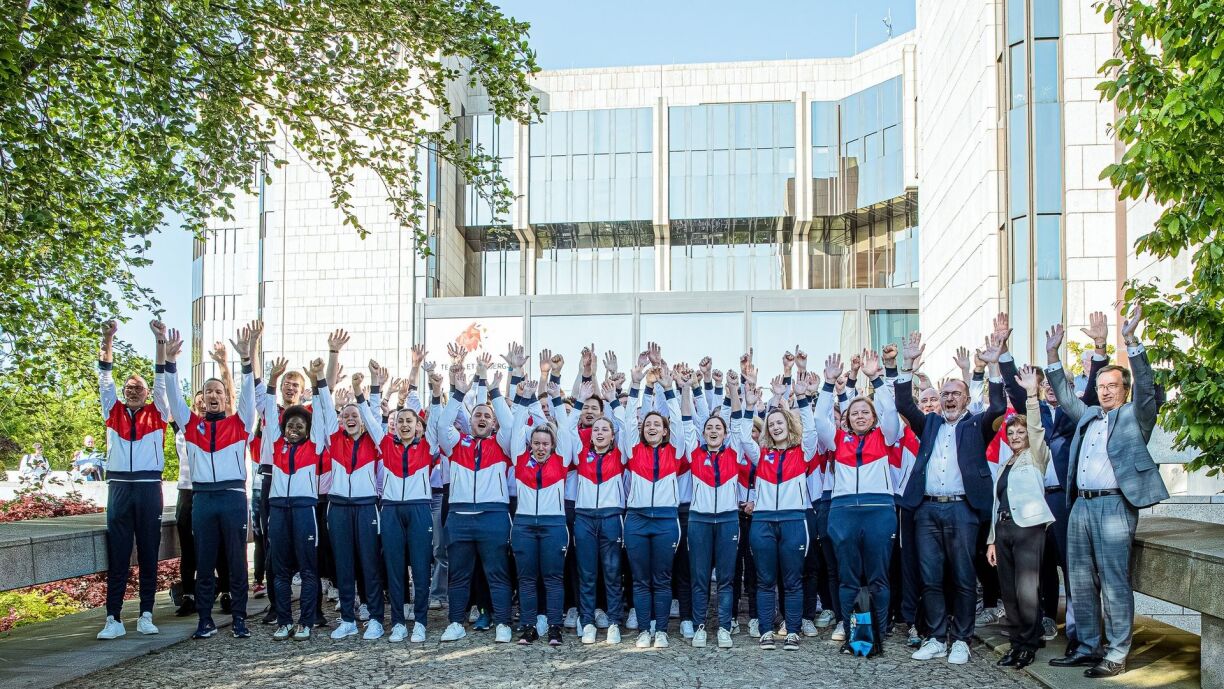
The 2023 edition of the Games of the Small States of Europe, held in Malta's capital Valetta, kicked off on Sunday.
The small-scale version of the Olympics is a chance for Luxembourg's top athletes to go head-to-head with the best opponents from Europe's smaller nations.
The competition will conclude on Saturday 3 June and Luxembourg aims once again for one of the top spots in the final medal table.
History - The Games of the Small States of Europe is a biennial competition, first organised in San Marino in 1985. Due to the Covid-19 pandemic and the deferral of the Tokyo 2021 Olympics, the latest Games had to be postponed to 2023.
The 2023 edition takes place in Malta and sees the host country compete against Andorra, Cyprus, Iceland, Lichtenstein, Luxembourg, Monaco, Montenegro, and San Marino.
The Grand Duchy has topped the medal table of the Games on three occasions already: 2013, 2017, and 2019.
Top Three - After four competition days, Luxembourg has accumulated an impressive amount of silverware, including 12 gold medals, 17 silver medals, and 18 bronze medals. The Grand Duchy ranks 3rd in the medal table as we are edging closer to the end of the contest.
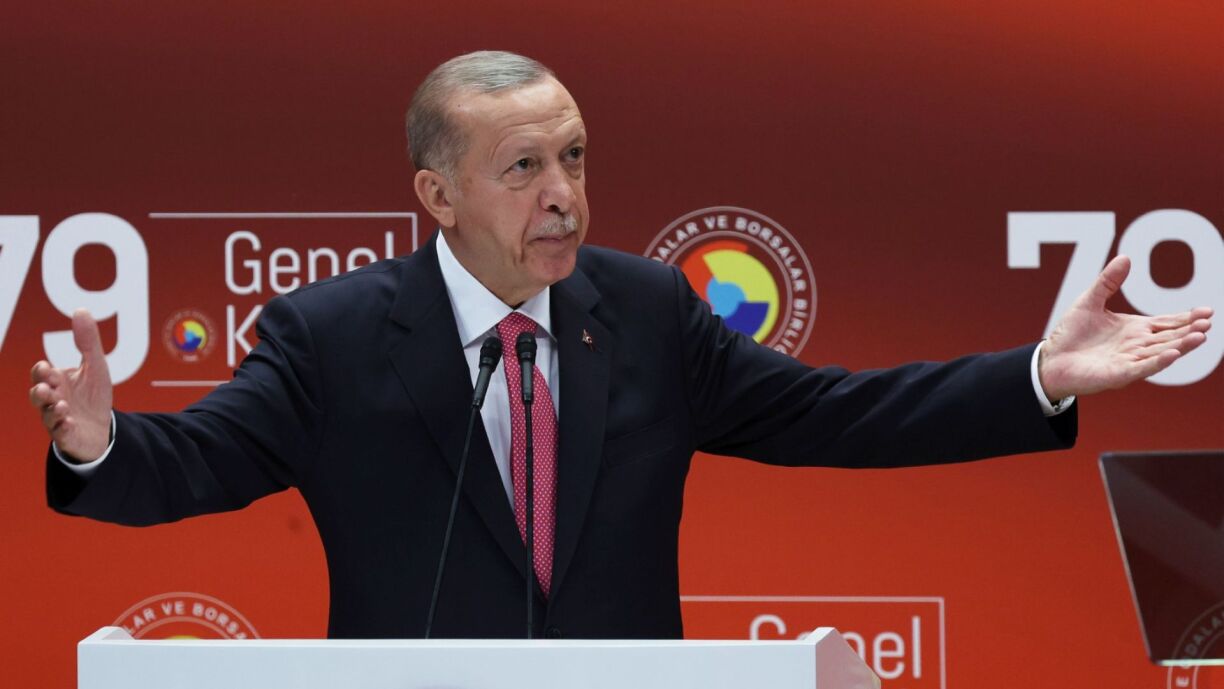
Erdogan now looks at a new presidential term after beating opposition leader Kemal Kilicdaroglu by four percentage points.
'Second time lucky' - Although it took two attempts, Erdogan secured himself another term at the helm of Turkey.
Opposition candidate Kilicdaroglu had managed to bring together a powerful coalition that grouped Erdogan's disenchanted former allies with secular nationalists and religious conservatives. With their support, he pushed Erdogan into Turkey's first runoff on 14 May and narrowed the margin further in the second round.
Nevertheless, Erdogan remains in power as he claimed victory in the runoff vote on Sunday.
Reactions in Germany - Strong backing for President Recep Tayyip Erdogan among Turks in Germany in last weekend's historic election has sparked renewed soul-searching about whether Berlin's attempts to integrate the minority are failing.
Germany, home to the world's biggest Turkish community overseas, had about 1.5 million registered voters in the polls, and Erdogan received some 67 percent of votes cast.
Despite the worries triggered by the weekend election results, some argue that the backing for Erdogan in Germany should not ring alarm bells. Many of the best integrated Turks have in fact taken on German nationality over the years, which excluded them from the vote, observers note. Also, the voter trend in German parallels that in other European countries.
Reactions in Luxembourg - Since Erdogan's win, Luxembourg's Minister of Foreign and European Affairs Jean Asselborn has stated that he now awaits a clear statement from Turkey on Sweden's NATO admission.
Although Erdogan had previously blocked the demand, the newly reelected President has eased his position since winning the runoff on Sunday.
Minister Asselborn commented: "A clear statement could be made by the Turkish side that the election is over and that actually nothing is in the way anymore, that Turkey says yes to ... millions of people in Sweden who are afraid of what is happening in Russia and in Ukraine and who want to become NATO members."
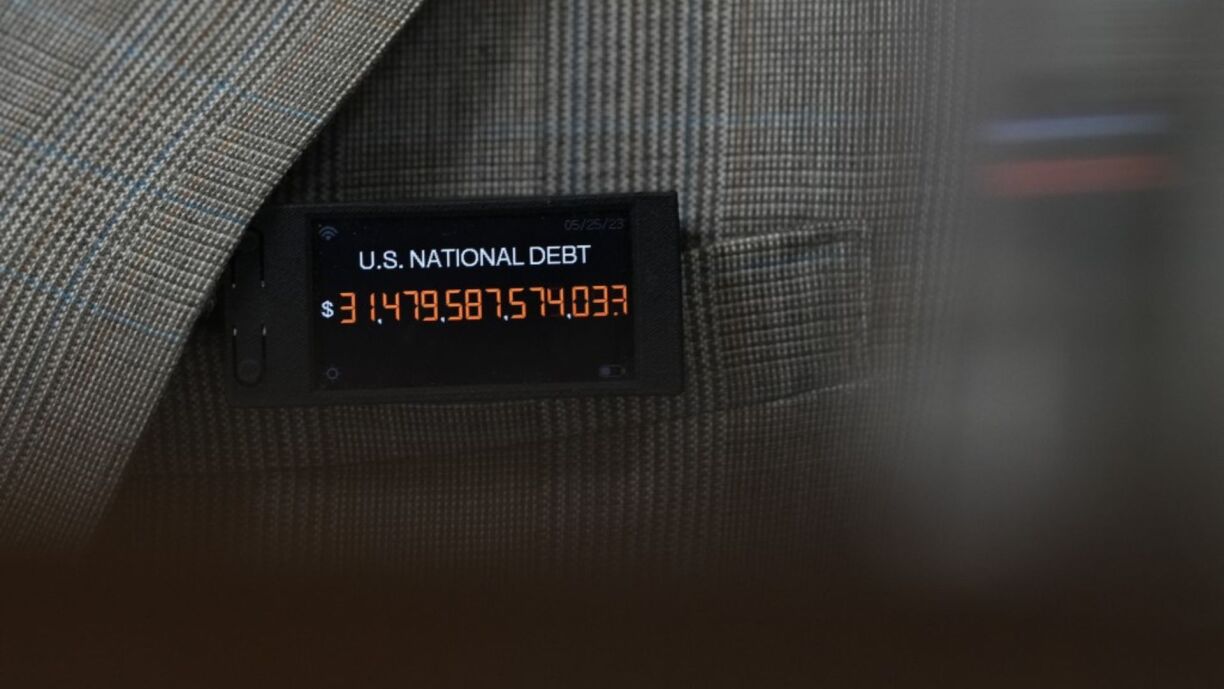
US lawmakers voted to suspend the federal debt limit on Thursday, eliminating the threat of a credit default just four days ahead of the deadline set by the Treasury.
Crisis averted - The vote triggered a sigh of relief among US lawmakers as economists had warned the country might run out of money to pay its bills by Monday.
Democratic leaders had spent months underlining the havoc that a first default in history would have wrought, including the loss of millions of jobs and $15 trillion in household wealth, as well as increased costs for mortgages and other borrowing.
Debt ceiling - The United States spends more money than it collects through taxation, so it borrows money via the issuing of government bonds, seen as among the world's most reliable investments.
Around 80 years ago, lawmakers introduced a limit on how much federal debt could be accrued.
The ceiling has been raised more than 100 times since to allow the government to meet its spending commitments and now stands at around $31.5 trillion.
Biden weighs in - The vote has been touted as a major victory for Biden, who managed to protect almost all of his domestic priorities from deep cuts threatened by Republicans.
The US President took to social media after the vote to praise lawmakers for reaching a compromise in a tense situation: "No one gets everything they want in a negotiation, but make no mistake: this bipartisan agreement is a big win for our economy and the American people."
The bill now heads to Biden's desk to be signed into law.
Business & Tech - Hong Kong rolled out new cryptocurrency rules on Thursday, allowing licensed exchanges to service retail customers, bucking the global trend of tightening rules after last year's market crash.
Science & Environment- France has launched its first factory for electric vehicle batteries. The plant in Billy-Berclau is the first in a clutch of factories that are due to open over the next three years in a northern corridor billed as a "Battery Valley" for the rapidly growing industry.
Entertainment - A trove of Freddie Mercury's previously unseen handwritten draft lyrics for some of Queen's biggest hits goes on show Thursday in New York, ahead of their sale in London later this year.
Smile and wave - Between 27 May and 18 June, everyone is welcome to try out some free city surfing in Esch-sur-Alzette. As part of the 'Summer in the City' programme, the Place des Remparts has been transformed into a beach.
World No Tobacco Day - Figures indicate that the number of smokers in Luxembourg is once again on the rise, that despite a recent price increase for cigarette packages designed as a measure of discouragement.

Your Weekly Recap is published every Friday at noon. Read earlier versions.





