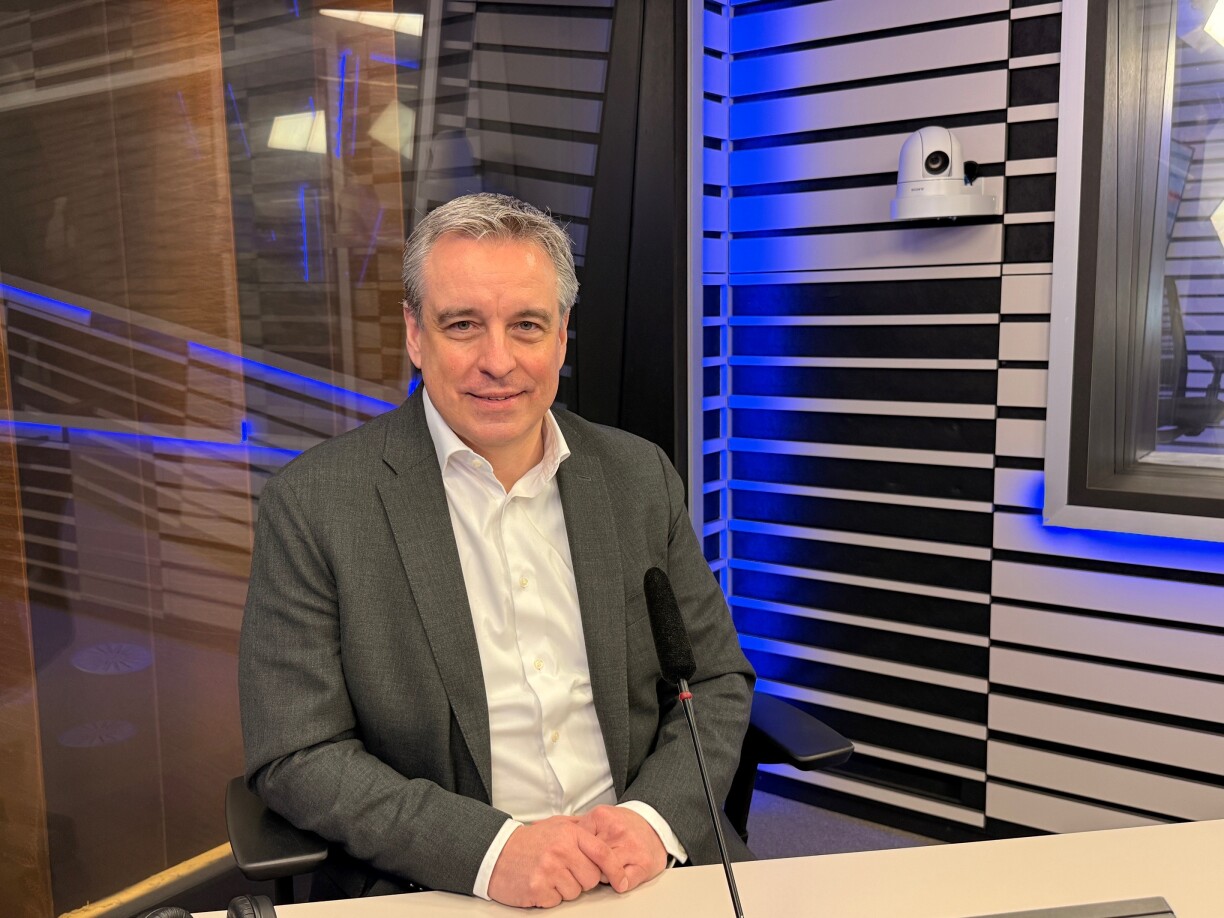
According to Minister of Education Claude Meisch, the issue regarding unisex toilets did not emerge out of nowhere. He recalled that last summer Luxembourg adopted a national action plan on the rights of the LGBTQIA+ community, supported by the Democratic Party's (DP) coalition partner Christian Social People's Party (CSV). That plan already included a commitment to develop more inclusive toilet facilities in secondary schools, he said. Meisch stressed that the current debate should be seen in that broader policy context.
Meisch said he saw no substantive disagreement between the CSV and the DP on the matter. He suggested that the reaction was less about substantive disagreement and more about capitalising on a surge of public outrage.
In his view, some actors had chosen to "ride a wave of indignation" rather than engage with the issue on its merits, even though there was broad agreement on what types of toilets should be available in schools and how the policy would ultimately be implemented.
He declined to comment further on the CSV's internal positioning, adding that political parties sometimes feel pressure to react when public opinion shifts. He insisted, however, that the controversy had not created tensions within the coalition.
Meisch said he had personally spoken to CSV MP Ricardo Marques, and that they shared the understanding that schools would continue to provide boys' toilets, girls' toilets and, in addition, gender-neutral facilities. The same approach would apply to changing rooms, according to Meisch.
However, he regretted that public debate had become increasingly polarised, making it harder to discuss sensitive issues calmly and respectfully, particularly those affecting minorities. Schools, he added, should be places where adults lead by example.
Responding to online comments featuring the common question "Don't we have bigger problems?", Meisch acknowledged and stressed that the education system faces many challenges. However, he argued that the issue also concerns individual pupils, including teenagers who feel uncomfortable in their bodies or transgender students for whom using school toilets can be a source of distress.
He expressed concern that minority rights were no longer treated with the seriousness they deserved, noting that inclusive facilities had become standard practice internationally. A society's values, he said, are reflected in how it treats minorities and responds to their needs.
In response to a question, Meisch acknowledged that school toilets had already been the subject of debate in recent months, citing the case of a secondary school in Lallange where most toilets were temporarily closed due to discipline problems. He argued that toilet design plays an important role in preventing discrimination, bullying, and violence, while also ensuring pupils' privacy.
Under current layouts, toilet blocks are often closed off from the outside, making supervision difficult, while individual cubicles frequently lack sufficient privacy, according to Meisch. He explained that the proposed model would involve a single toilet block, accessible to boys, girls, and those using gender-neutral facilities, that is more open to the outside, allowing staff to hear disturbances if they occur. Inside the block, however, each cubicle would be fully enclosed from floor to ceiling, offering complete privacy, he said.
Meisch emphasised that this approach was not only about gender inclusion, but also about improving safety, discipline, and overall well-being in schools.
Asked whether the debate had been triggered primarily by LGBTQIA+ issues, Meisch said that could only be speculated. He accused some MPs from the Alternative Democratic Reform Party (ADR) of spreading inaccurate claims, noting that even his own children reacted badly to the news at home, believing that anyone would be able to use any toilet in any school building.
He clarified that this was not the case. Boys' and girls' toilets would remain, with an additional option open to everyone, Meisch said. He explained further that the initiative is currently a pilot project, developed with input from multiple stakeholders, and that it would not be fully implemented until 2032. It would apply only to new secondary schools or major new extensions, Meisch concluded.





