Organised by the Ministry of Family Affairs, the National Week Against Over-Indebtedness, which runs from 27 April to 1 May, aims to break the taboo surrounding excessive debt in Luxembourg and encourage people to speak openly about financial difficulties and seek solutions.
Too often, people maintain a façade under the unspoken rule that "you don’t talk about money", even within families or couples. As a result, fundamental questions such as how to manage money or how it affects personal well-being are often avoided, even when financial situations are already deteriorating.
According to Guy Schmit, an independent expert and certified coach specialising in people's relationship with money, this avoidance can lead to a cycle of repeated spending and borrowing.
He stressed that recognising what one already has and practising gratitude can help counter this dynamic, adding that support structures and professional help are available in Luxembourg, but that people must be willing to accept them.
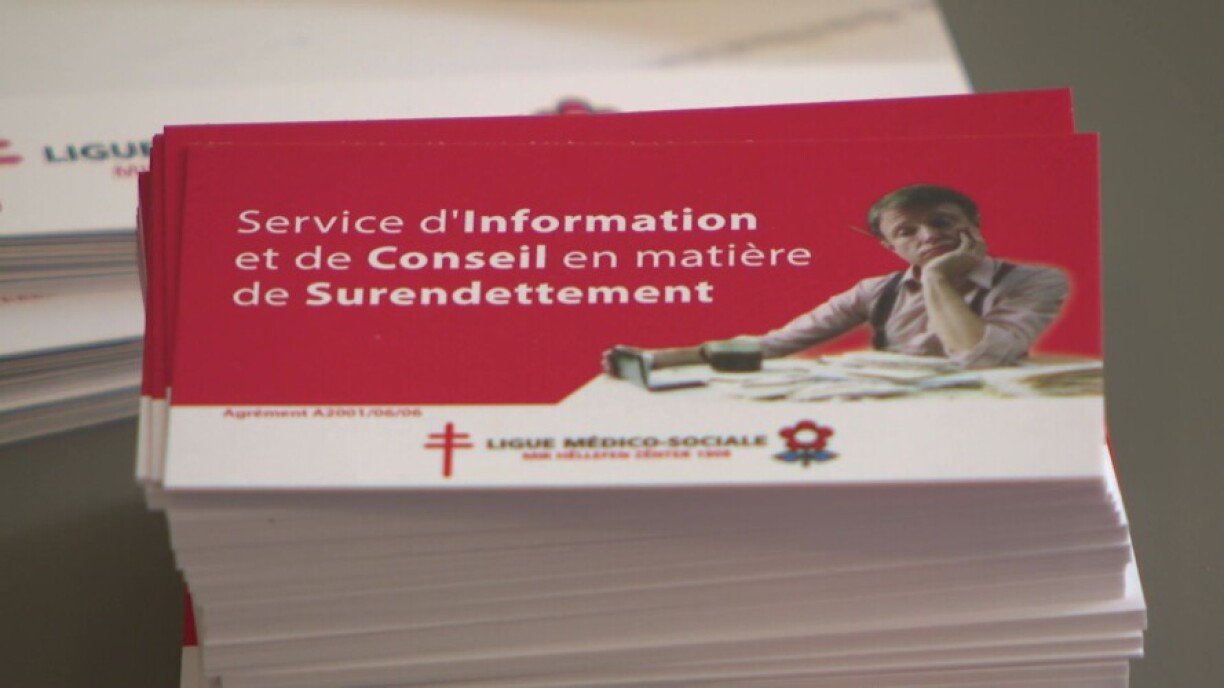
For Nathalie Schmit from the Ligue Médico-Sociale, the first step is often simply listening. She explained that many people open up about their financial struggles for the first time during such conversations, which can already bring clarity.
Nathalie Schmit said that these exchanges are confidential, and support can include analysing a household budget, identifying where money is being spent, and offering practical advice to reduce unnecessary expenses.
Further steps may involve advisers negotiating with creditors on behalf of those affected. As a last resort, Luxembourg's over-indebtedness law provides a legal framework to help individuals regain control of their finances.
The causes of over-indebtedness are varied, ranging from addiction and digital consumer habits to structural factors such as high housing costs.
According to Antoine Paccoud of the Luxembourg Institute of Socio-Economic Research (LISER), housing costs account for a very large share of income, exceeding 35% for many households and rising to around half for those on lower incomes, whether they are tenants or repaying a mortgage.
Letty Reichling of Inter-Actions – a social and educational association providing community work, youth services, and social housing – also pointed to changing payment habits, noting that since the Covid pandemic, card payments and online shopping have made spending, and even taking out new loans, faster and less tangible, sometimes requiring only a few clicks.
From housing pressures to lifestyle choices, many people are living at their financial limits. When a sudden setback occurs, such as job loss, illness, or divorce, individuals can quickly reach a tipping point.
For this reason, learning how to manage money from a young age is considered essential, and financial education is increasingly being addressed in Luxembourg's schools, not only during this awareness week.
The full programme for this fourth National Week Against Over-Indebtedness is available online.





