New minister, old problems: social dialogue appears to be back at square one. The question now is whether the CSV-DP coalition risks a clash with the unions and whether new strike action can be expected.
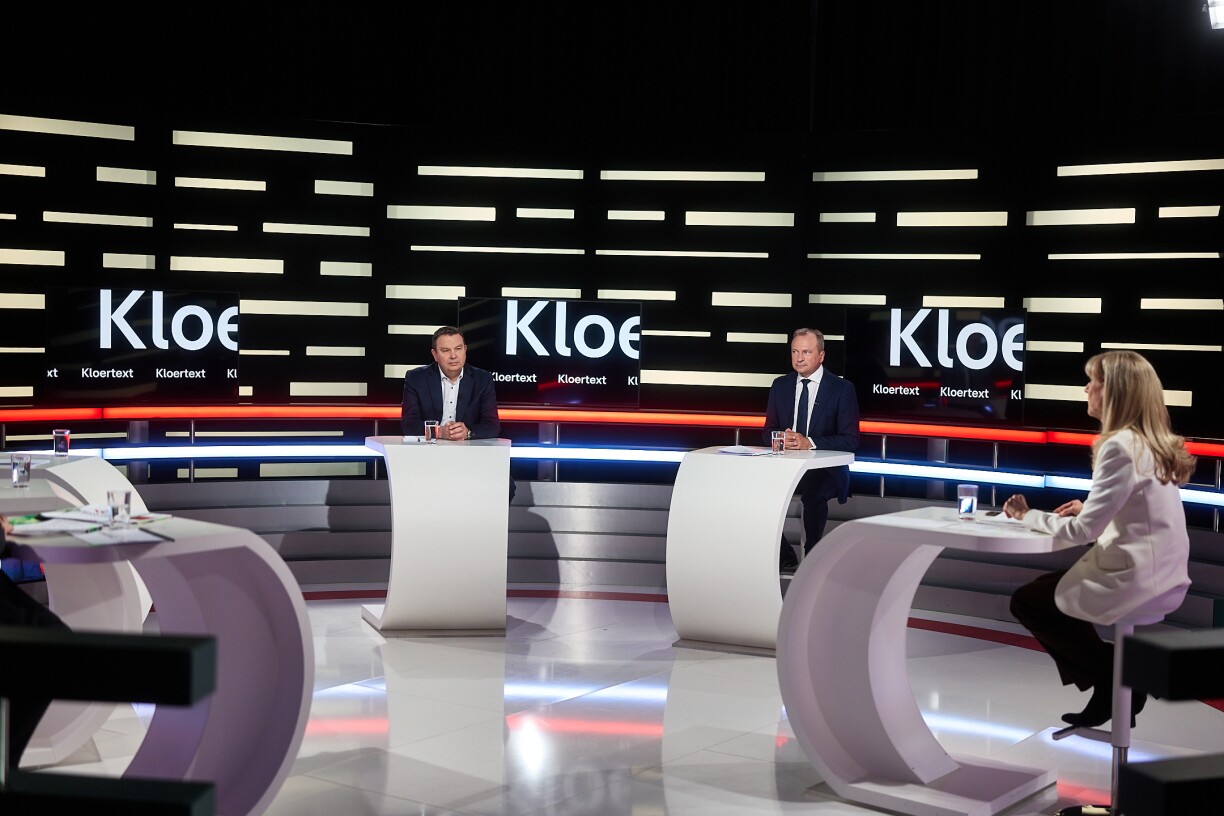
The minimum wage remains a contentious issue. Even the new Minister of Labour, Marc Spautz, has not managed to relaunch social dialogue. The Independent Luxembourg Trade Union Confederation (OGBL) and the Luxembourg Confederation of Christian Trade Unions (LCGB) are pessimistic about the prospect of a structural increase to the minimum wage and are threatening union action. Meanwhile, the Luxembourg Employers' Association (UEL) warns that an increase could land many companies in further – or even worse – difficulties. Representatives from both sides, as well as from the government and the opposition, debated the issue on Thursday on RTL Télé. A light at the end of the tunnel is, however, not in sight.
The trade unions are demanding a €300 increase to the minimum wage but feel the government is not necessarily willing to support them or those earning the minimum wage. Patrick Dury, president of the LCGB, first emphasised the union's alignment with the OGBL, noting that he was essentially speaking on behalf of both. He then stated that for some time, the joint OGBL-LCGB union front had come to the conclusion that it was facing a common bloc consisting of employers and the government. According to Dury, the positions of the two are essentially interchangeable and at least partly aligned. He said the unions had found it very difficult to move from a tripartite model to a "consult-and-decide" model and now to a "decide-and-inform" model.
The remark drew a furrowed brow from René Winkin, director of the Federation of Luxembourg Industrialists (FEDIL). He emphasised that the matter at hand stems from a European directive but added that he understood the unions' frustration.
Winkin spoke of an ongoing issue that had been lingering for a year. He argued that it had been clear from the outset that Luxembourg's median wage is calculated on the basis of the basic wage, and that the European Commission lists Luxembourg among those countries where the minimum wage already exceeds 60% of the median wage. In his view, the troubles of the past months could have been avoided, as what has now come to light could have been discovered a year ago after "an hour of calculation" at the General Inspectorate of Social Security (IGSS). Winkin is advocating for a solution that serves the interests of workers as well as the companies that employ them.
The party of former Minister of Labour Georges Engel was among those who believed that things would become easier with Marc Spautz at the helm of the Ministry of Labour. In the meantime, the new co-president of the Luxembourg Socialist Workers' Party (LSAP) has adopted a more nuanced view.
According to Engel, the government has drawn a very clear line regarding its objectives and, in light of that, the name of the labour minister ultimately plays no role. That line, in Engel's view, is that the government does not want to raise the minimum wage.
Finance Minister Gilles Roth of the Christian Social People's Party (CSV) disagreed with this assessment, noting that "nothing has been decided." Roth explained that following an initial round of discussions within the Government Council, further consultations are taking place. According to Roth, once a proposal has been finalised, the Minister of Labour, together with the Minister of Social Security, will carry forward the necessary discussions. "And I don't think the final outcome will be that the minimum wage is not increased", Roth said.
The question remains, however, by how much. At present, the government is discussing an increase of €175. Sam Tanson, the Green Party (Déi Gréng) spokesperson in the Chamber of Deputies, emphasised that work must always pay, that people must be able to live decently on their wages, and that they should not have to count every euro at the end of the month. Yet this, she noted, is currently the reality for one in six employees, while social dialogue remains blocked despite the many challenges.
"We are in a tense situation. There are many crises here in the country and also around us, and the main partners are failing to sit around a table and discuss things together", she said.
Tanson also added, however, that she understands the unions. Dury said that the unions had met with the government in every format it wished, but nothing came of it. The only thing that achieved any progress, he noted, was the demonstration on 28 June 2025.





