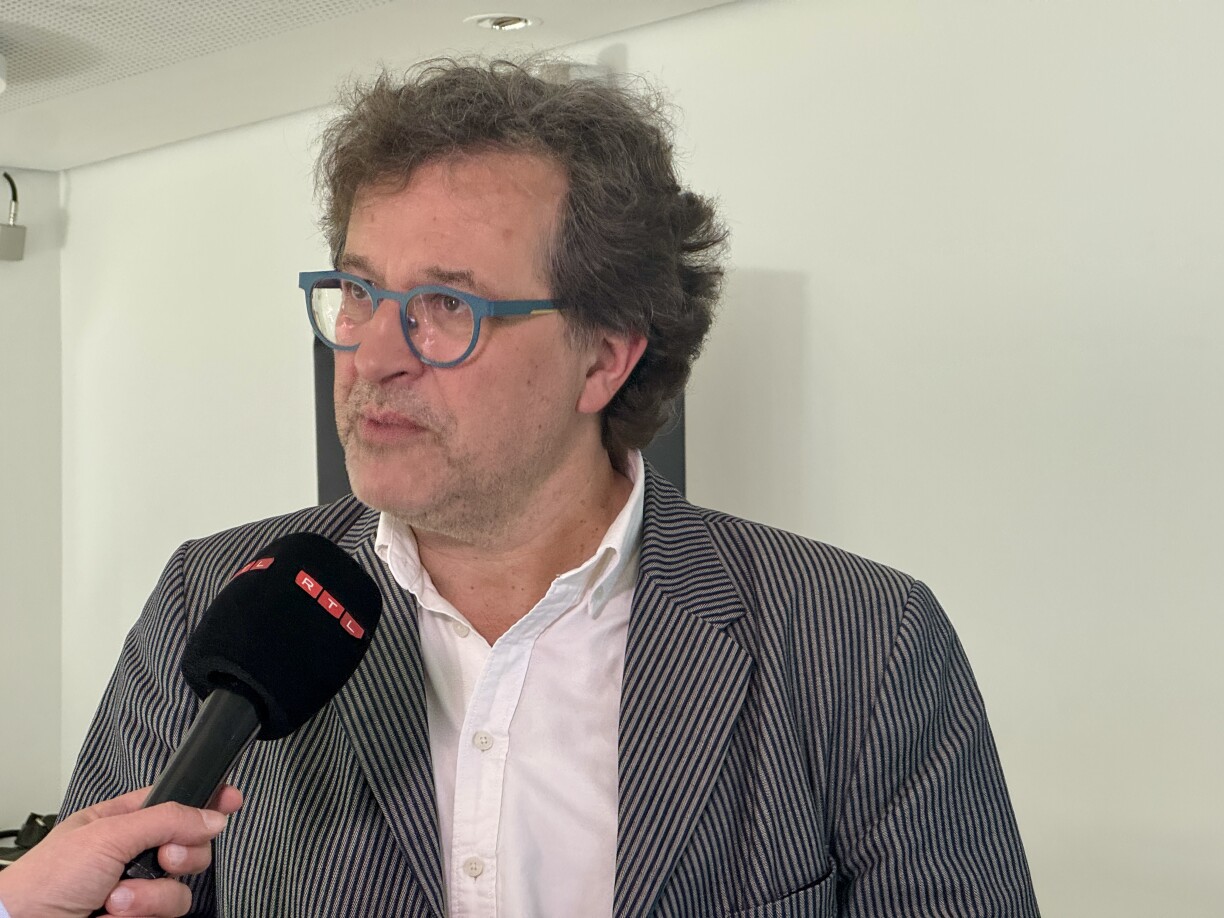
Luxembourg should go further than the EU directive on supply chain due diligence and set an example in Europe, according to Jean-Louis Zeien, president of Fairtrade Luxembourg, which forms part of the the Initiative for Due Diligence Luxembourg.
He argues that the responsibility now lies with the Luxembourg government. The directive concerns due diligence obligations that large multinational companies will have to meet in relation to human rights, climate, and environmental standards.
The initiative, which represents 16 NGOs, criticises the fact that the directive has been weakened at EU level. Only around 970 companies across Europe would now fall under its scope.
In Luxembourg, that would be roughly 30 companies. Zeien notes that proportionally more companies would be affected in Luxembourg than in countries such as Portugal, due to the large number of holding companies based in the Grand Duchy.
The initiative also calls on Luxembourg to align with its national action plan on business and human rights. Zeien said that particular attention should be paid to high-risk sectors such as cyber technologies, the pornography industry, and the industrial defence sector, which the government is looking to expand.
Beyond that, the financial sector should also be held accountable, he argues, pointing to banks and investment funds, which reported record profits last year. The UN has also encouraged Luxembourg to become a global leader in sustainable finance, according to Zeien.
Pascal Hursting, co-coordinator of the Initiative for Due Diligence Luxembourg criticises the removal of climate transition plans from the directive. This would have required companies to present strategies showing how they align with UN climate targets, an obligation the initiative now wants to see included in Luxembourg's national legislation, he said.

Another key demand is to lower the thresholds for companies covered by the directive. The initiative argues that multinationals with at least 1,000 employees and €450 million in EU turnover should be included, rather than the currently proposed thresholds of 5,000 employees and €1.5 billion turnover.
With stricter rules, between 70 and 80 companies in Luxembourg would be affected, compared to around 30 under the current directive, they said. The initiative also calls for these companies to be monitored by an independent supervisory body, rather than one attached to a government ministry.





