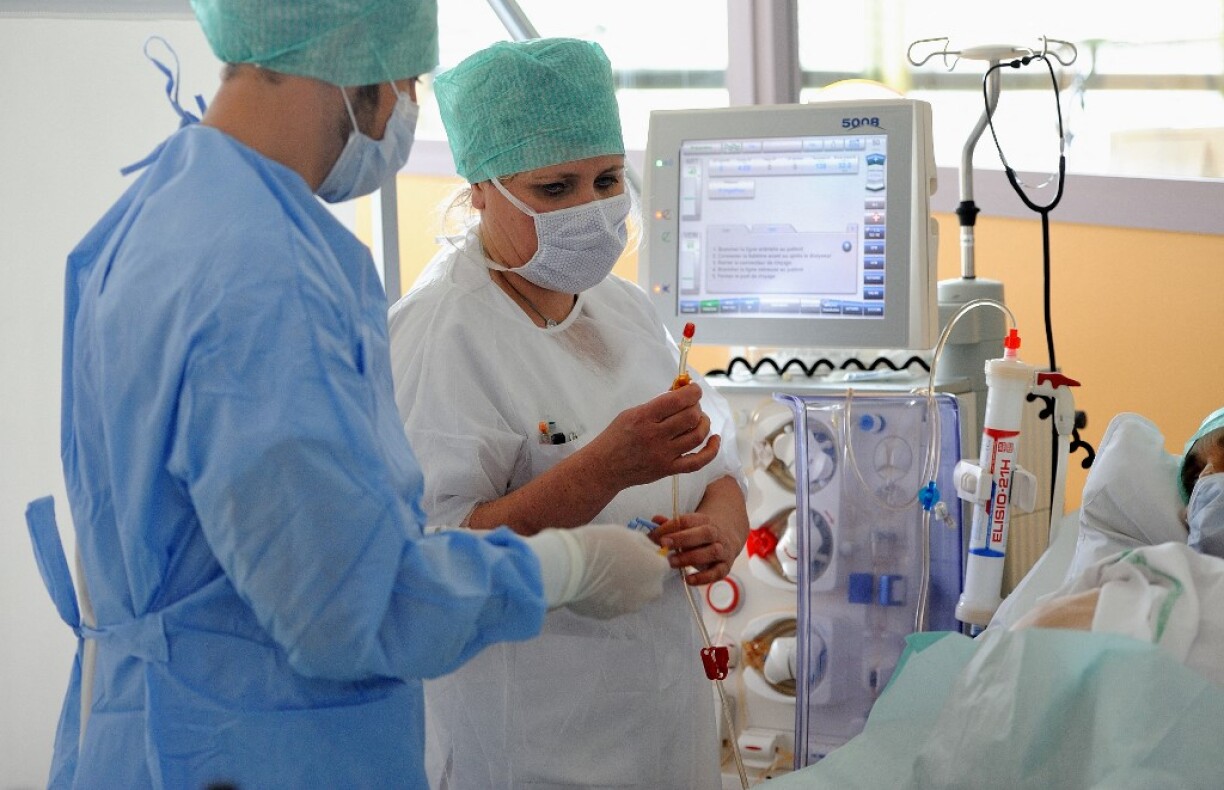
French healthcare professionals have strong ties with Luxembourg's healthcare sector, but this comes at a costly price. On the one hand, there is a pronounced outflow of French professionals towards Luxembourg; on the other, the Grand Duchy has grown increasingly reliant on French cross-border workers for the functioning of its healthcare system.
According to a study by France’s National Institute of Statistics and Economic Studies (INSEE), Luxembourg has become the primary destination for healthcare professionals based in the Grand Est’s border regions. Of the 10,400 practitioners working close to the French-Luxembourg border, more than 4,400 are employed in Luxembourg. In practical terms, this means that over one in three healthcare workers living near the border commutes to Luxembourg daily. This ongoing exodus has left French healthcare institutions struggling to recruit staff and maintain services in the affected regions.
Nurses are by far the largest group involved in this cross-border movement, making up roughly a third of health professionals in the area. For patients in France, Luxembourg’s strong pull is already having tangible consequences. INSEE notes that in towns such as Thionville and Val-de-Briey, more than 60% of general care nurses now work outside France, primarily in Luxembourg, leaving local patients with reduced access to care.
In the Thionville area alone, 1,620 general care nurses have jobs across the border in Luxembourg. The figure stands at 640 in Val-de-Briey, 370 in Metz, and even 80 in Sarreguemines, which is located over 120km from Luxembourg City. As a result, France now has the lowest nurse-to-inhabitant ratio, the study explains.
Luxembourg offers higher salaries to healthcare workers, reportedly three times higher than in France. However, this disparity has made the country increasingly dependent on foreign labour, with 93% of cross-border employees in Luxembourg’s care sector originating from France.
The onset of the coronavirus pandemic highlighted this dependency. To ensure the continued flow of vital staff, the Luxembourg government moved quickly to keep borders open for healthcare workers. Today, nurses living in France represent a large proportion of the workforce in Luxembourg, with one in three nurses employed in the country residing in France, both in hospitals and in the wider healthcare system.





