Here are five things you should know at the end of this week:
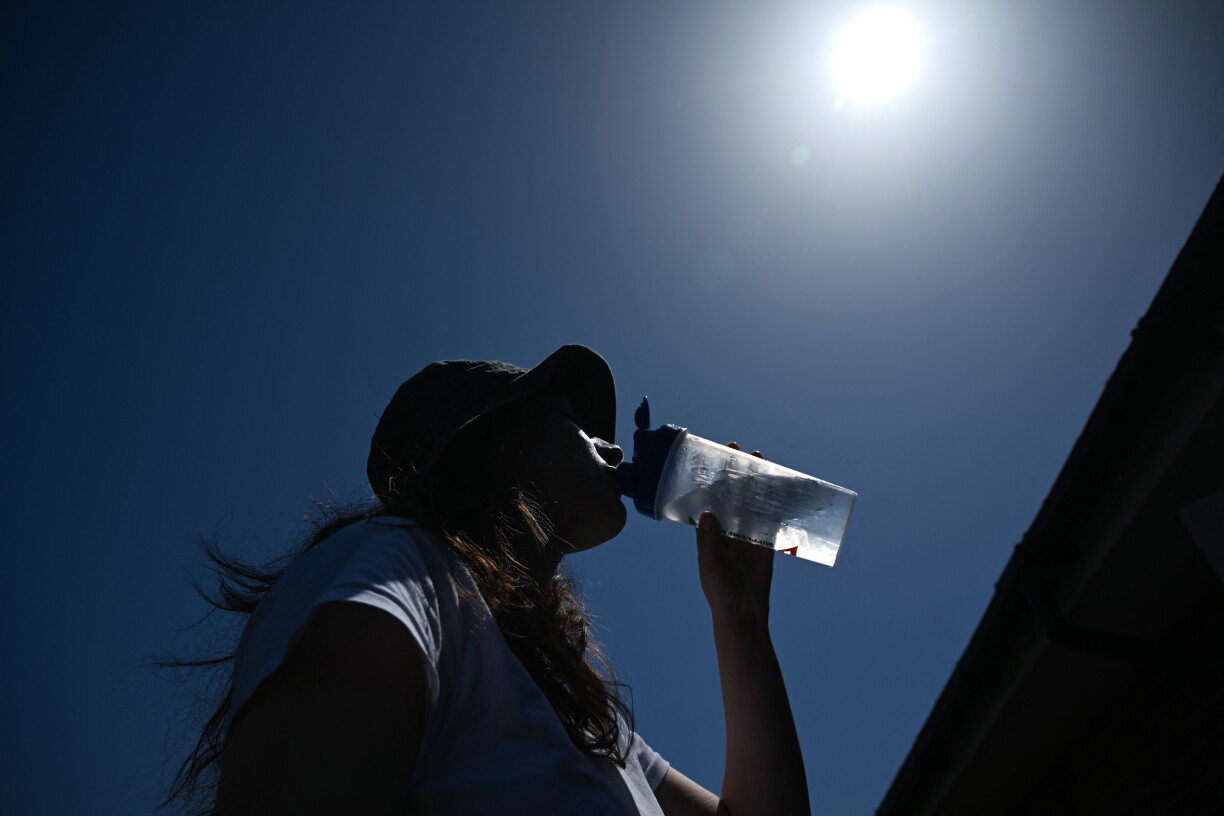
Record heat – The Findel weather station recorded 36.3°C on Thursday, the highest June temperature ever measured at Luxembourg's reference station since records began in 1947. Meteorologists warn the record could fall again, though, with some parts of the country forecast to hit 40°C or above on Saturday – temperatures that are usually associated with Kuwait City or Phoenix, Arizona.
Severe toll – The extreme heat has taken a toll on multiple fronts: a heat-related fault disrupted CFL train services on Monday; wildlife rescue centres and animal shelters are overwhelmed with heat-distressed animals; and a 75-year-old homeless man died after being found unresponsive in the sun on Rue de Strasbourg.
In response, the ministries of Family Affairs and Health have temporarily extended opening hours at support facilities in Luxembourg City, Esch-sur-Alzette, and Ettelbruck, with over 330 making use of the services in the first two days. NGO Stëmm vun der Strooss is also working to provide relief measures for those experiencing homelessness through water fountains and solidarity calls.
School out or not? – With some primary schools granting afternoons off and others continuing as normal, parents, pupils, and teachers have criticised the lack of a consistent national approach. Minister Meisch defended local decision making, arguing that school buildings vary too widely and that closing all schools would "bring the country to a standstill" by leaving working parents without childcare. The teachers' union SEW/OGBL agreed that blanket closures weren't the answer, but called for urgent investment in ventilation and air conditioning.
Milestone celebration – Grand Duke Guillaume used his first National Day civil ceremony as head of state to call for collective responsibility and the passing of democratic values to future generations. "Democracy is a shared journey", he told the audience at the Philharmonie.
Prime Minister Frieden echoed the tone in his speech, saying this year's celebrations were particularly significant as the first under Guillaume's reign, and reaffirming that "Luxembourg will always stand up for democracy, peace, freedom, and human rights".
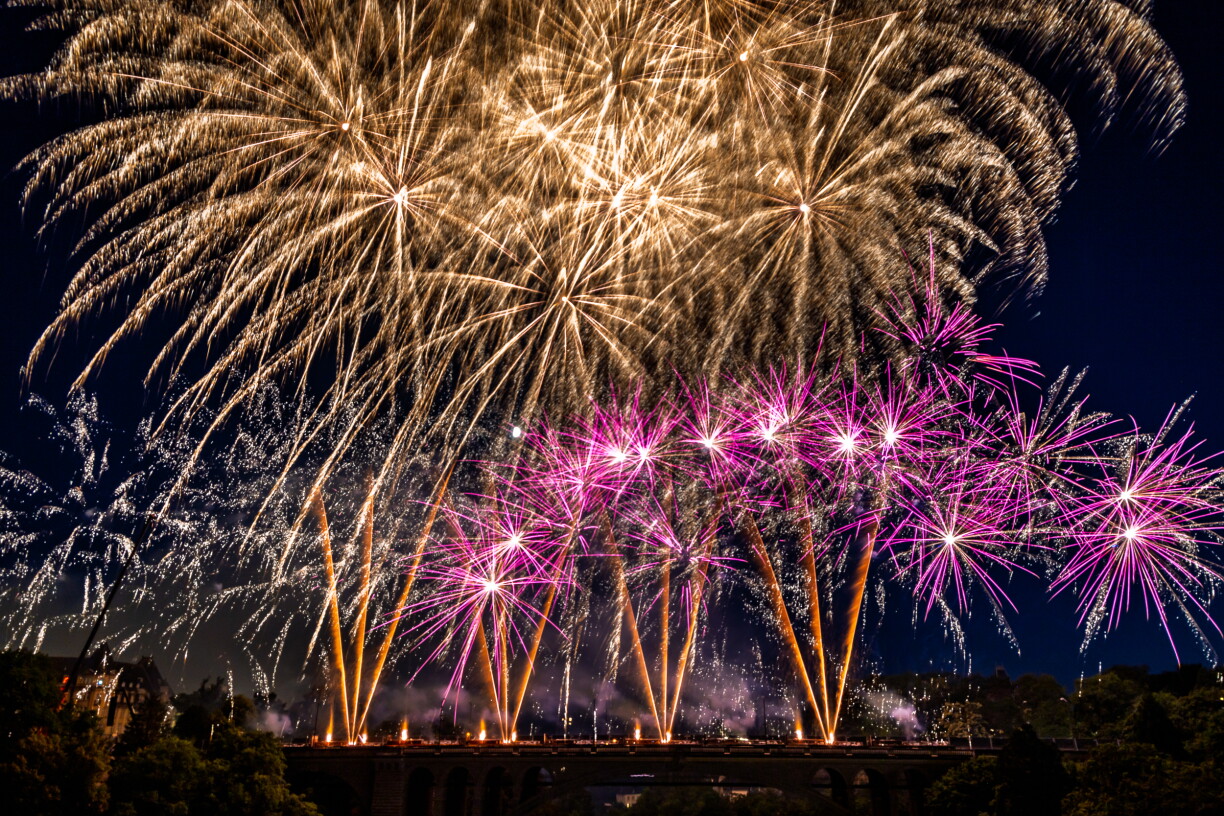
Fireworks and fanfare – The Duke's night fireworks lit up Luxembourg City for over 15 minutes, drawing thousands of spectators. The following day's military parade featured nearly 900 personnel, 50 vehicles, 18 motorcycles, and two aircraft, with dog handlers marching without their canines due to the red heat alert. A new march composed in Grand Duke Guillaume's honour was performed for the first time during the ceremony.
Outstanding achievement awards – Six people were recognised by the Grand Duke at the Philharmonie: two men received medals for pulling a drowning man from the Moselle, while chef Anne Knepper, actress Vicky Krieps, sprinter Patrizia Van der Weken, and Air Rescue founder René Closter were appointed Knight of the Order of the Oak Crown. The ceremony's standout moment, however, belonged to 12-year-old violinist Eloïse-Marie Aubert, whose performance of Mendelssohn's Violin Concerto drew a standing ovation.
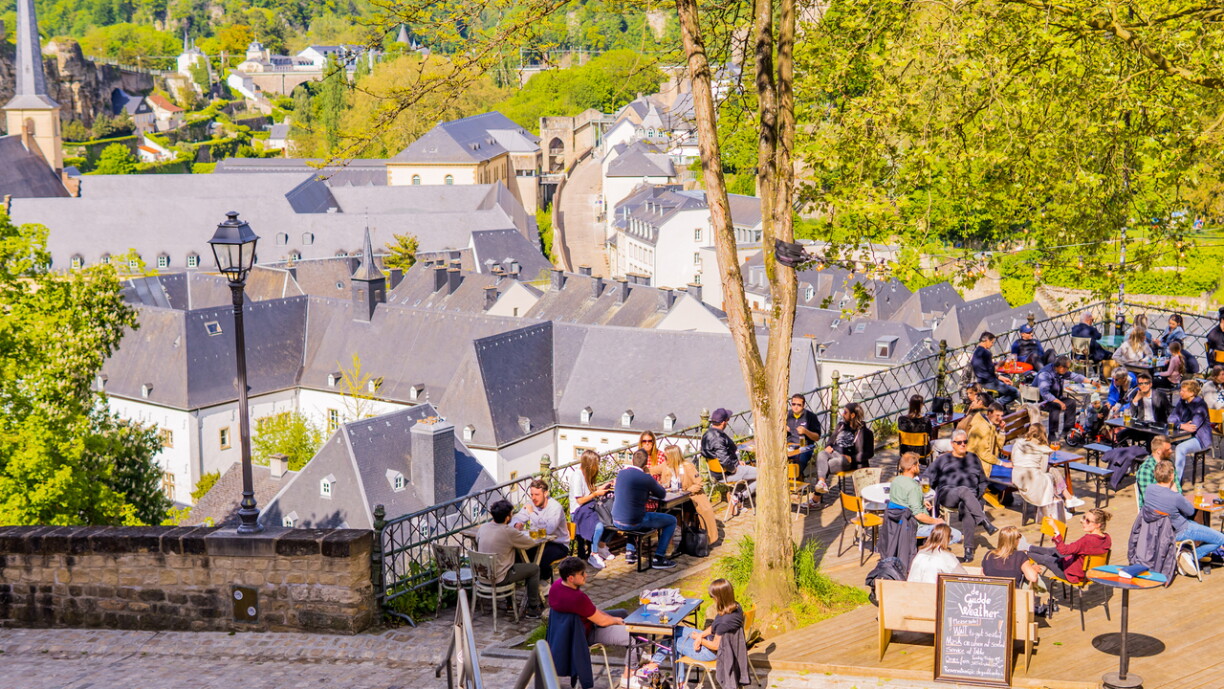
Learning from others – Representatives gathered at Cercle Cité to exchange ideas on sustainable urban tourism, with Nantes' experience proving particularly instructive: the city reinvented itself as a destination by investing in culture for residents first, with tourists following naturally. Culture Minister Eric Thill said Luxembourg could draw clear inspiration from that model.
Luxembourg's strengths – Tourist Office director Antje Voss pointed to the city's free museums, green spaces, and public transport as genuine differentiators, while Visit Oslo's Thea Gunnes drew parallels between the two compact, walkable capitals. The shared message that dominated was that smaller cities should lean into what makes them distinctive.

PM resigns – Starmer announced his resignation outside 10 Downing Street on Monday, his voice cracking as he said he accepted "with good grace" that his MPs no longer believed he could lead Labour into the next general election.
Seventh in 10 years – Whilst he came to power with a landslide victory over the Conservatives in July 2024, Starmer's domestic authority eroded through a series of policy reversals, ministerial departures, and a scandal over his appointment of a Jeffrey Epstein associate as ambassador to Washington. Starmer's exit continues an unstable era for British politics that began with the Brexit referendum, whose 10th anniversary fell the day after his resignation.
Burnham steps up – Andy Burnham, who only re-entered parliament last week after winning a by-election, is widely considered as the successor for the job. Nominations open on 9 July and close on 16 July, meaning Burnham could be installed in Downing Street as early as 17 July; his nearest and currently only rival, Wes Streeting, ruled himself out and endorsed Burnham instead.

Unprecedented visit – A five-person Taliban delegation met with EU representatives and officials from 15 EU member states in Brussels on Tuesday, in the first-ever visit by Taliban officials to EU institutions. The European Commission extended the invite despite not formally recognising the Taliban government, arguing it needs to hold talks with the "de facto authorities" to create repatriation channels for Afghans who have been denied asylum or who pose a security threat.
Tougher stance – The talks reflect a broader EU push to tackle irregular migration and boost a repatriation system in which currently fewer than 30% of people ordered to leave actually do so. On 12 June, the EU's new Migration and Asylum Pact entered into force to underline such reforms. Germany and Austria have already begun deporting Afghans with criminal convictions via charter flights through Qatar.
Legitimising Taliban? – Opposition MEPs and civil society members were quick to condemn the meeting, with Amnesty International staging a protest outside the Commission headquarters and calling it a "slap in the face" to European values. Nobel peace prize winner Malala Yousafzai said she was "shaken and deeply disturbed" by the invitation, pointing to the brutal repression on women and girls by the Taliban.
Your Weekly Recap is published every Friday at noon.
Read earlier versions here.





