The young MP spoke of his conviction that Luxembourg needs to improve its offer of news and media in multiple languages, as well as defended the Luxembourgish language and spoke of the possibility of his party entering into a government coalition after the elections in October.
While Clement's efforts to introduce English as an official language may have failed, they are part of an important conversation about the role of language in Luxembourg’s society.
The Pirate member of Parliament also highlighted the need to improve the coverage of this year’s local elections, and have it done in more languages.
Clement was speaking about the role of the 4th estate: the media. He had been asked about the value of speaking to Christos Floros, in English, addressing a different audience on RTL TODAY, in the context of elections in October, where roughly half the country is expected to participate, following Luxembourg’s most inclusive local elections in June (in terms of eligibility).
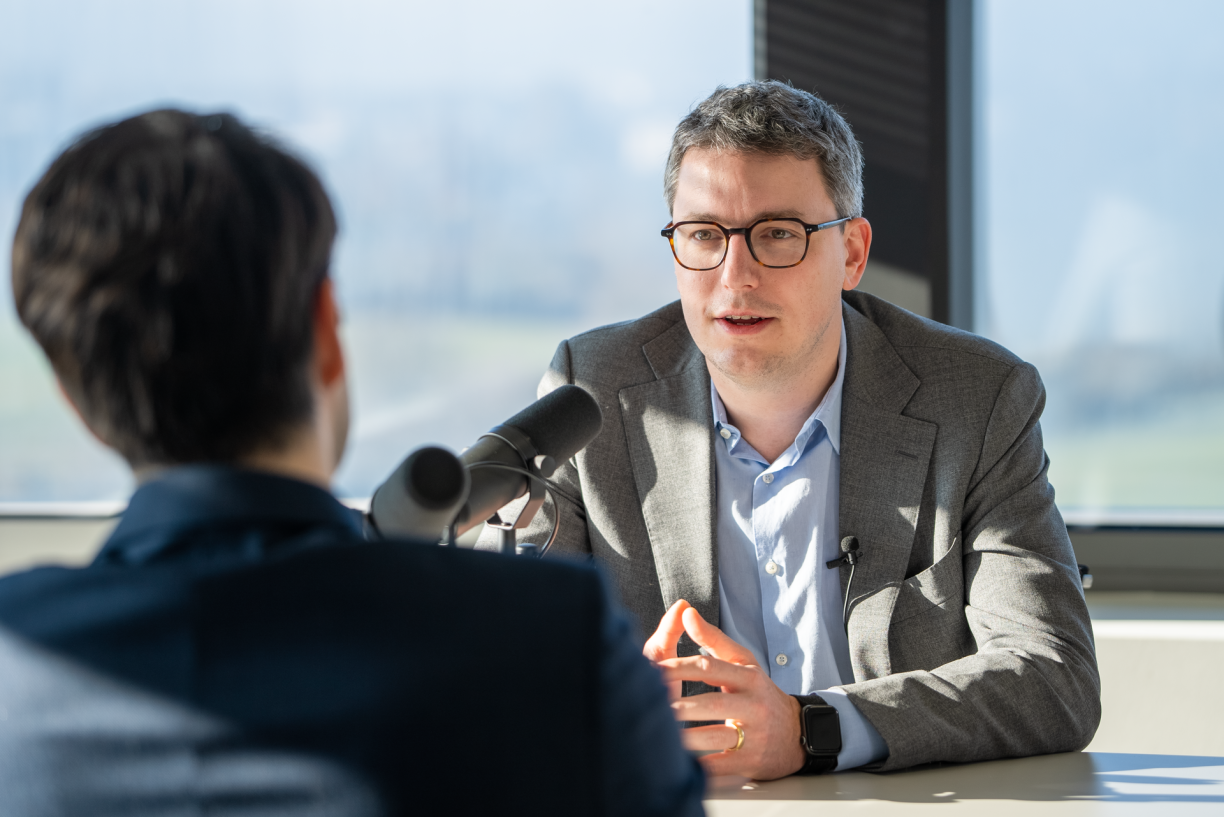
“I think it's invaluable,” said Clement, adding that the Constitution “clearly says that Parliament represents the entire population of Luxembourg…even if only half of the population will vote for us.” and according to him, it's the job of MPs, such as himself, to be as inclusive as possible.
On the subject of multilingualism within Luxembourg's media, Clement stated that “personally, I believe that there could be steps that could easily be taken to be more inclusive. RTL is already broadcasting French subtitles for the news segments, if I'm not mistaken.” He suggested that the subtitled news could easily be made available in English as well, and other languages, “bearing resources” and praised RTL Luxembourg’s efforts to be more inclusive and open with its multilingual services offered.
At the same time, Clement defended a Luxembourgish speaking TV channel and radio station “because it's the only way to maintain knowledge of [the] language.”
He added however that “covering national elections in Luxembourgish might make a bit more sense, but covering municipal elections only in Luxembourgish is certainly back-dated and doesn't respect the diversity of the current electorate in Luxembourg anymore.”
Sven Clement thinks that Luxembourg is fortunate to have a multilingual “situation” in its politics but underlined the complexity of a system where “we debate laws written in French, in Luxembourgish… to be written up about them in German-speaking newspapers”.
The question then, he says, becomes about how to make this “situation” more inclusive. He said he is “fighting” for more resources to be made available for translations.
“I asked. I demanded. I requested. I pled for English to be included in the new Constitution as a fourth official language. Well, that didn't happen” said Clement.
According to the de-facto leader of Luxembourg’s Pirate Party, we need to take a deeper look at our country’s multicultural society and the migratory background of a big part of the population, to ensure that our decision-making is communicated effectively to every citizen and resident.
A discussion surrounding the role of media and especially English-speaking media in Europe, also brought up the ban of Russia’s Russia Today channel, and the influence of Qatar and Qatari money, through Doha’s AlJazeera English, in the context of the Qatargate (Qatar, Morocco) scandal.
“The lead candidate for the CSV is probably the Luxembourgish politician that has the closest ties with Qatar as well,” he exclaimed, referring to the CSV’s top candidate in this year’s legislative elections, former Minister Luc Frieden, who until recently served as President of the Chamber of Commerce.
“We definitely need to have a media that covers [Brussel and European Politics]. But I'm not sure how you can force such a media into existence.” Clement said.
“My preferred solution would be… maybe a public broadcaster shared between Belgium and Luxembourg or a Benelux public broadcaster.” he said, in relation to informing the European population about developments at EU level, but said “I would not entrust that important job to a private company like we do currently with RTL” in Luxembourg.
Asked about the possibility of the Pirate Party entering into a government coalition in 2023, he replied: “I tend not to think too much about what might be coming after October… First of all, we need to win the elections.” but added that “We are certainly ready to be part of a coalition if we would have the necessary seats and we would find partners that would agree with us on the necessary program. So let's put the parentheses around me or the Pirates entering government”.
“You go into politics to change the world and you can change more inside the government than outside the government: that's clear”, said the politician, shortly before the end of the exchange.





