
Here are five things you should know at the end of this week:

New "Sonndesfro" polls are showing falling support for the ruling CSV just two years after its electoral win.
CSV in decline – If elections were held this Sunday, Luxembourg's ruling Christian Social People's Party (CSV) would drop four seats in parliament, according to a new Sonndesfro poll by ILRES for RTL and Luxemburger Wort.
The CSV would fall from 21 to 17 seats, with 25.3% of voter support – down 4.6 percentage points since 2023. The DP would remain stable with 14 seats, while opposition parties like the ADR and The Left would gain ground. The ADR would rise to a historic seven seats, while LSAP and The Greens would also see slight increases. Only the Pirate Party would see a notable decline, slipping to 4.4%.
Opposition on the rise – While the CSV-DP coalition would retain a slim majority (31 seats), momentum is building in the opposition. The drop in CSV support appears to reward more radical parties, with the ADR and The Left achieving their strongest results in over five years.
Observers note this shift marks a growing frustration with government decision-making and seeming lack of transparency.
Anger over social issues – Poll analysts attribute these changes in part to voter backlash against how the government has handled key social issues. 63% of respondents disagreed with the government's pension reform process, which bypassed unions and employers' representatives. Citizens also voiced mixed views on liberalising shop opening hours, but were strongly in favour of constitutional protections for abortion (70%) and higher defence spending (68%).
This dissatisfaction is confirmed in a new report, the so-called social panorama, which notes that social inequality is particularly high in the Grand Duchy. The rate of 'working poor' is the highest in Europe, unemployment rates are also notoriously high, and the risk of poverty stands at around 18% (as of 2024).

Lawmakers have agreed to enshrine the "freedom" to have an abortion in Luxembourg's Constitution, rather than a "right".
The language has been softened and contraception left out as a compromise expected to help the proposal pass the two-thirds majority in parliament.
The proposal makes Luxembourg only the second country in the world to take this step, after France.
Consensus through compromise – After months of debate, lawmakers agreed to enshrine the freedom to have an abortion in Luxembourg's Constitution rather than calling it a right.
The wording, proposed by MP Marc Baum (The Left), was softened to win broader support from centre-right parties, especially the CSV, whose votes were necessary for the constitutional majority. While some regretted that contraception wasn't included in the final text, nearly all parties (except the ADR) welcomed the deal as a landmark agreement.
Balancing access and conscience – The wording "freedom" was chosen to uphold both women's access to abortion and doctors' right to refuse participation on grounds of conscience. This dual protection aligns with current law and helped ease concerns around medical autonomy. The clause will be added to the section on public freedoms and requires a two-thirds vote in Parliament, which is expected to pass comfortably.
European first –Once adopted, Luxembourg will become only the second country in the world, after France, to constitutionally protect abortion access. Lawmakers are celebrating this proposal as a strong symbolic move that ensures abortion access cannot be easily reversed in the future, especially after Roe v. Wade was overturned in the US. While the measure faced some criticism from religious institutions, civil society and most political parties backed it as a non-regression clause for reproductive rights.
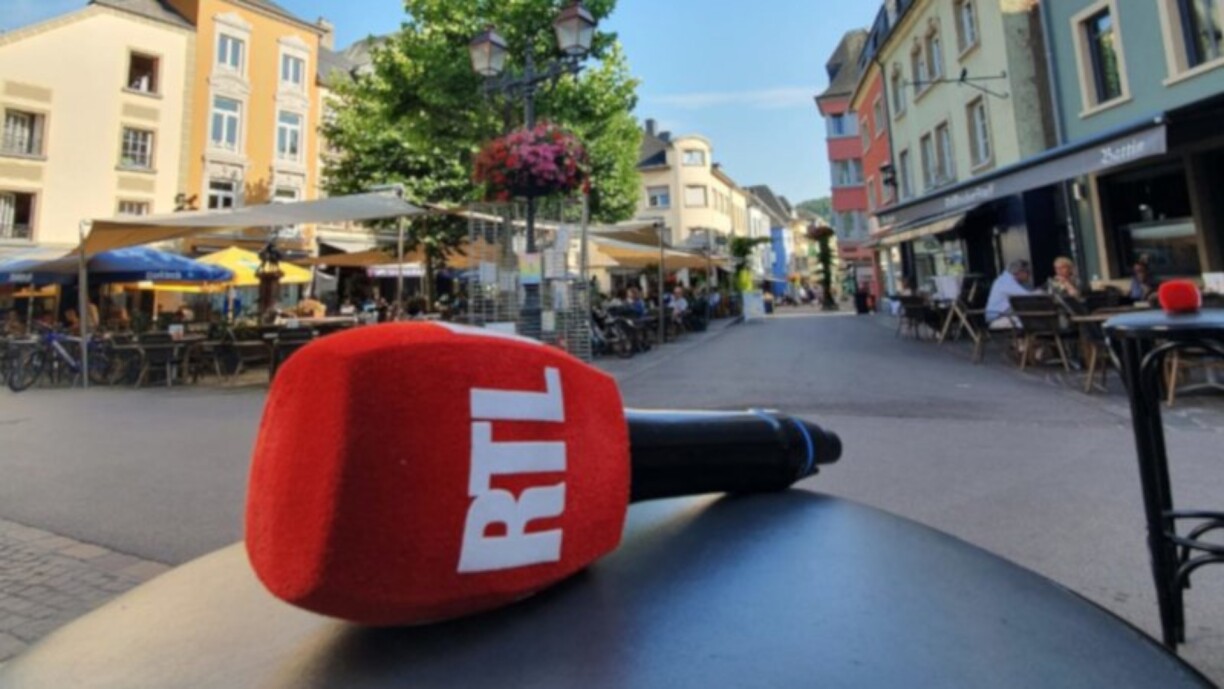
The government has presented a draft law that foresees a thorough reform of Luxembourgish media law to reflect the contemporary digital landscape.
Newer, but increasingly important media figures such as influencers and podcasters are also to be regulated alongside traditional media under the new ALIM authority.
Not updated since 1991 –Luxembourg has introduced a draft law to modernise its outdated 1991 media legislation, proposing new rules that would apply not only to traditional broadcasters such as radio and television, but also to the written press, online influencers, and podcasters.
Minister Delegate for Media Elisabeth Margue stressed the need for uniform standards, arguing that whether content is published on TV, in a newspaper, or online, "the same fundamental rules should apply."
Bigger budgets for regulator –To handle the expanded scope, the media regulator ALIA will be rebranded as the Luxembourg Independent Media Authority (ALIM). The body will now oversee compliance across all media types, including digital creators, who play an increasingly relevant role in shaping public opinion.
Criteria such as reach and influence will determine which influencers are subject to the law. ALIM will receive additional staff and funding, with budget details expected during the upcoming state budget presentation.

Israel and Hamas signed a ceasefire and hostage release deal in Egypt on Thursday evening.
The plan, which was encouraged by US president Trump, includes major prisoner exchange and phased troop withdrawals. This isn't the first truce proposal Hamas agreed to.
Global reactions range from celebration in Gaza to cautious optimism in Europe and Luxembourg.
Truce agreement reached – 733 days after the infamous October 7 attack, Israel and Hamas formally signed a ceasefire and hostage release agreement in Egypt. The deal, approved by the Israeli government late Thursday, will see all remaining hostages – both living and deceased – released within 72 hours, alongside the gradual withdrawal of Israeli troops from Gaza. In exchange, Israel will release nearly 2,000 Palestinian prisoners, including hundreds serving life sentences.
The truce is expected to begin within 24 hours, ending a genocidal campaign that left at least 67,000 Palestinian Gazans dead and the majority of the Gaza Strip in ruins.
'Historic step' –The agreement is the result of weeks of indirect negotiations under a 20-point peace plan unveiled by US President Donald Trump, who is expected to attend a signing ceremony in Egypt. His plan includes the release of hostages, a surge of humanitarian aid, and "scheduled withdrawals" of Israeli forces to a designated "yellow line".
A multinational monitoring mission led by US Admiral Brad Cooper will oversee implementation, with Egyptian, Qatari, and Turkish officials embedded in the team. While Trump described the accord as a "historic step toward peace", Hamas rejected proposals for a transitional Gaza authority led by the former president, insisting that only Palestinian institutions can govern postwar Gaza.
Cautious reactions –Celebrations erupted across Gaza and Israel, with crowds gathering in Khan Yunis and Tel Aviv's Hostage Square. Palestinian President Mahmoud Abbas hailed the ceasefire as a "historic moment", while world leaders from Europe and the Arab League praised the deal as a critical step towards stability.
Luxembourg's Foreign Minister Xavier Bettel, speaking from Osaka, said he was "counting on the next few days to bring peace", noting that while the details remain unclear, "only a two-state solution can secure lasting stability".
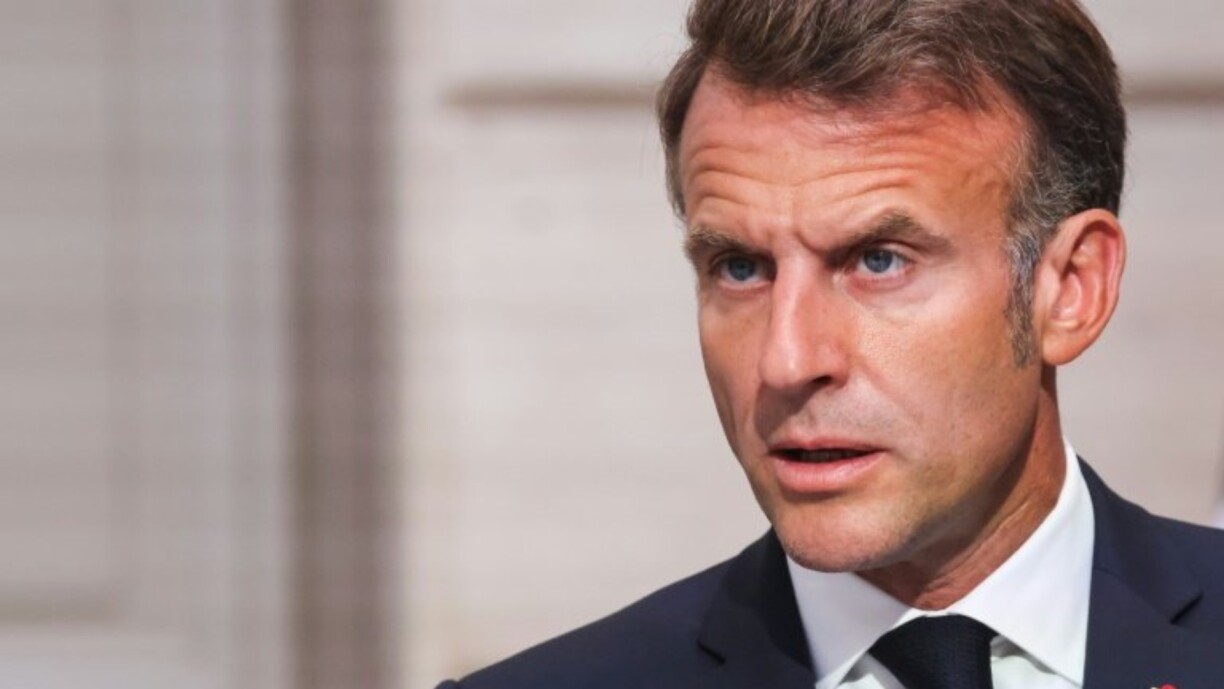
Macron is to name a new prime minister by Friday evening after Lecornu's record-short mandate.
The resignation of the seventh PM in the span of seven years is deepening a political crisis and exposing backlash over Macron's unchanged cabinet.
Far-right forces are capitalising on this political paralysis, with experts warning against prolonged instability ahead of the 2027 presidential elections.
Seventh PM in seven years –President Emmanuel Macron is expected to appoint a new head of government by the end of the week after the resignation of Sébastien Lecornu, his seventh prime minister in seven years. The centrist leader hopes to avert another round of snap elections and secure passage of the 2026 austerity budget.
Macron, who has stayed silent in public, is reportedly considering a technocratic cabinet made up of figures without presidential ambitions. Potential names floated include former Socialist premier Bernard Cazeneuve and EU auditor Pierre Moscovici, though no frontrunner has emerged.
Record resignation –Lecornu resigned on Monday after just 29 days in office – the shortest tenure in modern French history. His downfall followed widespread criticism of his new cabinet, seen as a recycled lineup of Macron loyalists that failed to build bridges with other parties. Appointed to end months of stalemate, Lecornu was instead caught in the same political gridlock that toppled his predecessors François Bayrou and Michel Barnier.
Markets reacted nervously to his exit, with the Paris CAC 40 falling over 2%, reflecting fears of prolonged instability and uncertainty over France's indebted finances.
Far-right advances amid gridlock –The far-right Rassemblement National ("National Rally") is capitalising on the crisis, leading in national polls and pledging to block any new government that lacks a clear electoral mandate. Marine Le Pen and party president Jordan Bardella have rejected Macron's overtures for cooperation, accusing him of clinging to power despite losing legitimacy.
France's parliament has paralysed policymaking since 2024, with three governments collapsing in a row. As Macron's approval ratings sink to historic lows, analysts warn that prolonged instability could strengthen the far right's path to power ahead of the 2027 presidential elections.
Business & Tech – US state California has banned noisy advertisements, which can no longer be louder than the content they're interrupting.
Science & Environment – The Ministry of Education has unveiled a new educational framework to help students navigate artificial intelligence.
Entertainment – Taylor Swift's newest album, The Life of a Showgirl, broke streaming records immediately upon release, but reactions have been mixed so far.
Global Sumud Flotilla–Luxembourgish activist Nora Rosa Fellens Huberty, who attempted to enter Gaza with humanitarian aid, arrived safely in the Grand Duchy after being detained under "inhumane" treatment in Israel. Despite showing clear signs of exhaustion, the activist has announced she will continue to work towards a "free Gaza".
Sorry, Donald –Nobel prize season is well underway, with the newest cohort of laureates unveiled in the fields of Medicine, Physics, Chemistry, and Literature. The much-anticipated Peace prize was awarded Venezuelan María Corina Machado this Friday morning – much to Trump's dismay – and Economics will be the last field to be unveiled on Monday morning.
Parliamentary Influence Index–Luxembourg's very own Tilly Metz (The Greens) has made it into the top three most influential MEPs.

Your Weekly Recap is published every Friday at noon. Read earlier versions.





