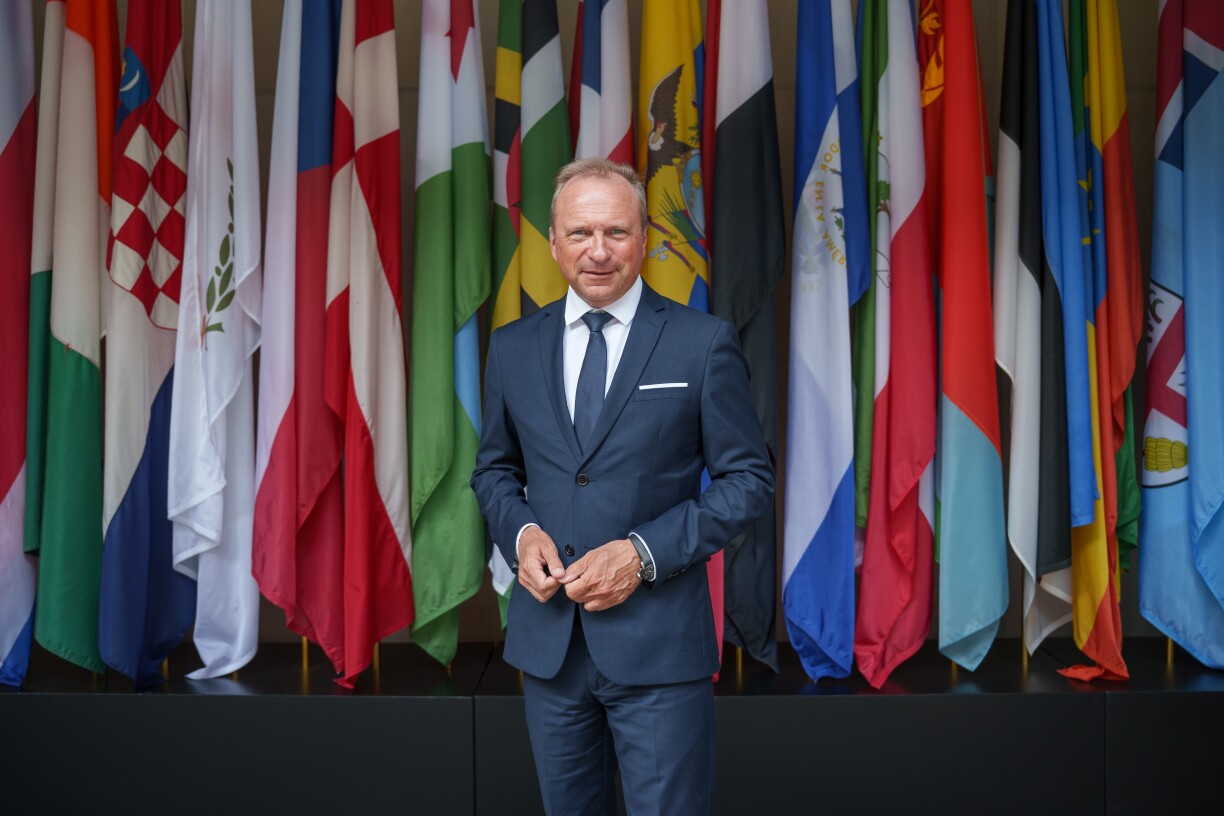
Although the situation in the Strait of Hormuz has eased, the geopolitical and economic aftermath of the war in Iran will continue to have repercussions on the global economy for a long time. This was also made clear at the spring meetings of the World Bank and the IMF in Washington, where Finance Minister Gilles Roth represented Luxembourg. Despite the prevailing pessimism, the CSV minister, following a real speed-dating exercise of 24 meetings in 48 hours, remains nonetheless optimistic that the strengths of the EU, and in particular the Luxembourg financial centre, will help absorb the economic shocks.
For that to happen, however, central banks must also play their part in their interest rate decisions, so as not to stifle fragile economic growth trends, said Gilles Roth in the US capital. It is a call to adjust interest rates in line with crisis scenarios.
Gilles Roth does not share the pessimism of the IDEA think tank, stating from Washington that in all his meetings, including with US banks, he sensed a deep appreciation for Luxembourg's financial policy, despite the general disorder in world politics and the international economy.
As for the tripartite talks, the Finance Minister warned that one should not immediately set out red lines at the start of the process. People expect compromise and a willingness to reach consensus from the social partners sitting around the table. Being straightforward and transparent, "pouring water into one's wine", as Gilles Roth put it, is what people are owed in a tripartite process.





