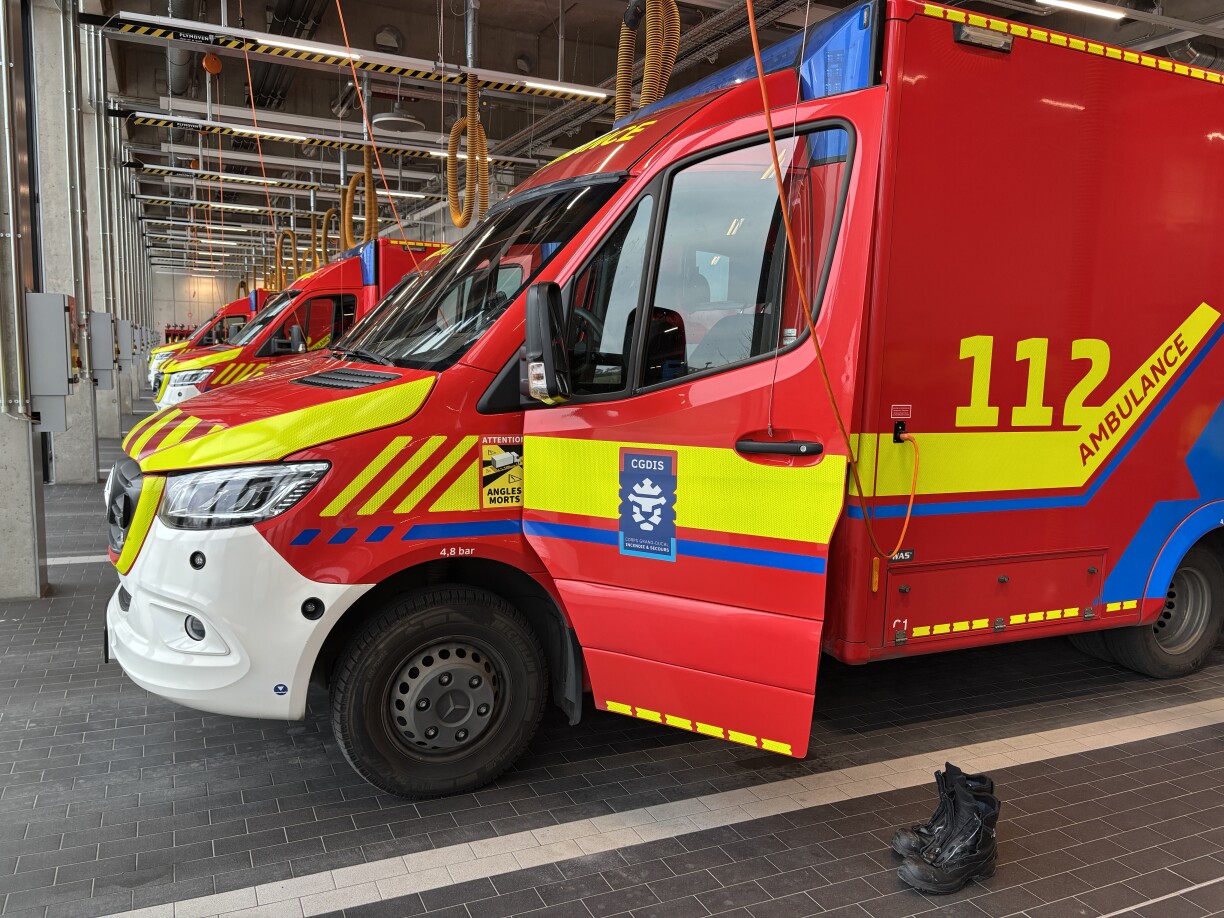
On Thursday, the CGDIS board was due to vote on changes to the emergency services guidelines. However, due to legal concerns, the board opted to remove the vote from the agenda and postpone it to a later date.
The most contested change to the guidelines is the potential to open up ambulance paramedic spots to doctors specialising in areas other than anaesthesia or rescuscitation, as has been the case historically.
Anaesthetists are firmly against the changes, arguing that it would negatively impact the quality of the service, and that the legal framework would not permit the change. Behind the scenes, however, it is rumoured that the objection stems from the lucrative pay for paramedics, amid claims that the anaesthetists are unwilling to share the money.
To date, only doctors and nurses with anaesthesia and resuscitation specialisation have been permitted to join the SAMU paramedics. Dr Philippe Welter, President of the Circle of Anaesthetists-Resuscitators, said the routine for these specialists guarantees the best possible patient care, and that to change this system would affect the service quality. He said there was no lack of anaesthetists, so there was no need to open up the SAMU for other doctors.
However, emergency room doctors view it differently, as this type of care is part of the job they have chosen, said Dr Anne-Sophie Ries. In recent years, the specialistion for A&E doctors has developed and they now have the necessary qualifications to assist with mobile medical units. This is the case in other countries. However, due to the restrictions for A&E doctors, very few want to work in Luxembourg.
In a letter to the CGDIS board, emergency room doctors have requested the opportunity to work as paramedics in emergency situations with the SAMU. Working in an emergency room is a specialisation which requires four to six years of training, and although it is relatively new, it is internationally recognised. There are special courses for doctors to learn the correct terminology and treatments to operate outside of the hospital environment.
In other countries, emergency room doctors are permitted to work as paramedics. In France and Belgium, on the other hand, anaesthetists and resuscitators no longer receive the necessary training in disaster medicine. This is particularly important as complex treatments or life-saving techniques in difficult conditions are required outside the hospital. Retaining the exclusivity of anesthesiologists-resuscitators for the SAMU would therefore no longer be relevant to emergency physicians.
The anaesthetists' primary argument is that they wish to maintain the high quality of the SAMU service. The lifesaving measures are part of their daily routine. In a 2025 interview with RTL, Dr Welter described the partnership between an anaesthetist and an anaesthetic nurse as a team that works "better than a marriage".
Alongside the quality argument, the anaesthetists have legal concerns regarding opening up the emergency responder profession to A&E doctors. The Circle of Anaesthetists-Resuscitators submitted a legal opinion to the CGDIS board explaining that a nurse-anaesthetist's tasks can only be carried out under the authority and in the presence of a doctor with this specialisation, and to fail to do so would be illegal.
A doctor could therefore risk legal action if selected treatments are carried out as part of an emergency response team without the specialist physician. The statement raised concerns over potential involuntary homicide, and even suggested that the members of the board of directors could potentially also be guilty as accomplices if the framework were adopted in this way.
Behind the scenes there is talk that the lucrative salary for anaesthetists-resuscitators at SAMU is preventing them from wanting to share the role with others. Dr Welter understood this argument, but pointed out that A&E doctors benefit from a "comfortable fee structure" themselves.
Some months ago, RTL research revealed that SAMU shifts can be very lucrative. Remuneration for being on call depends on the duration, the number of interventions performed, and the time and days worked. A 12-hour shift would therefore equate to €1,454.88 just for being available. A SAMU doctor performs an average of between three and five procedures during such an on-call shift.
Based on four procedures, this amounts to approximately €800 extra. For a 12-hour on-call shift with four procedures, a doctor therefore earns around €2,250. This does not include additional medical procedures, supplements, or medical transport.
For hours worked at night, on Sundays, and on public holidays, procedures are billed at double the rate, which can bring the remuneration to more than €5,000 for these shifts.
Upon request, the National Health Fund informed RTL that SAMU operations in 2024 would have cost the CNS around 3 million euros.





