Copyright may seem like an abstract legal issue to many people, but for creators it is part of everyday reality.
Between streaming, free content, and new technologies such as artificial intelligence, this protection is facing growing pressure. To raise awareness of the issue, the Ministry of the Economy plans to launch an awareness campaign in the coming weeks.
A beat, a melody, an idea: music does not come out of nowhere. Behind every song is time, talent, and creativity. And also a right: copyright.
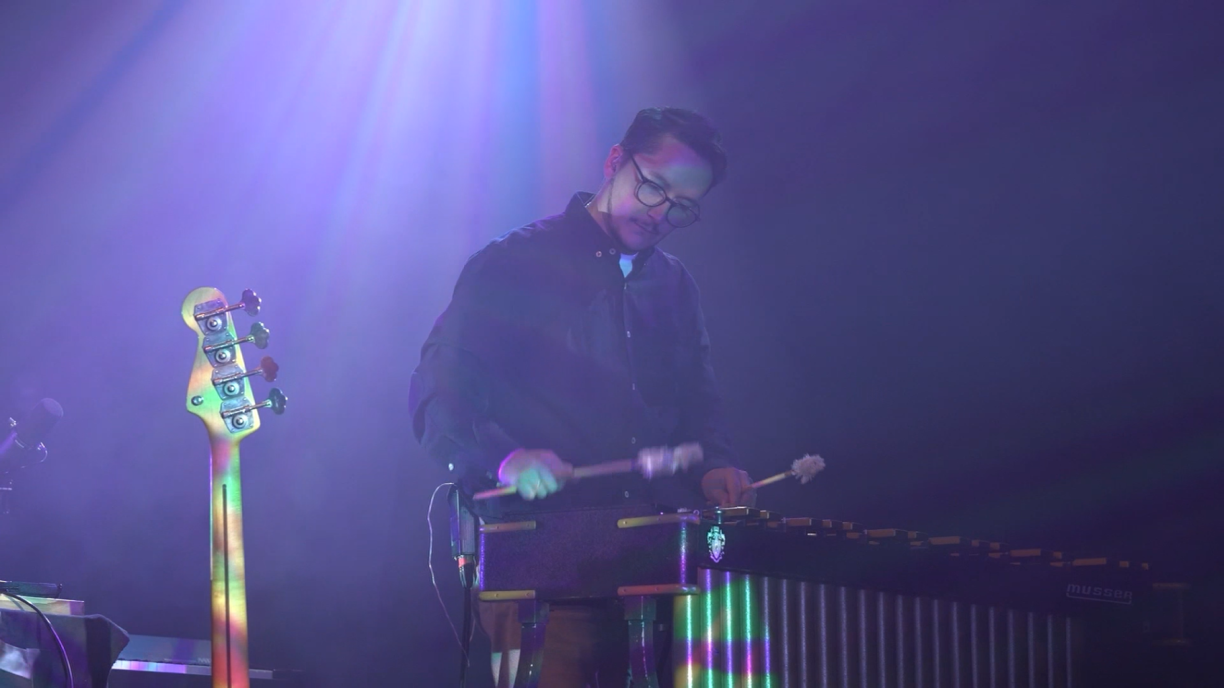
For Luxembourg musician Pol Belardi, this is a fundamental principle. He explained that copyright means the works he creates are protected as his intellectual property and can also generate a certain income.
This protection is not only a moral question, but also an economic one. For many musicians, copyright is one of the last stable sources of income.
The music industry has changed radically in recent years. CDs and physical sales now play only a marginal role, while income from concerts is not always predictable.
What remains, among other things, are the small amounts generated each time a piece of music is played, whether on the radio, on a streaming platform, or live.
According to Marc Nickts, director of the Society of Authors, Composers, and Publishers of Music (SACEM), copyright is the basis of income for almost all creative workers. He described it as an economic structure that makes it possible to generate revenue from creative work.
SACEM plays a central role in this. It collects these revenues and distributes them to artists four times a year. How much someone earns depends heavily on how often a song is played.
Despite this system, copyright is coming under increasing pressure. One reason is the expectation among many consumers that everything should be available immediately and for free.
Belardi warned that the idea that everything should be free within two clicks has unfortunately become fixed in people's minds. Yet people's livelihoods depend on copyright, he stressed.
This is not only about major artists. Smaller rights also matter.
When a piece of music is played, whether at a party, on the radio, or online, the composer, lyricist, or even the neighbour who helped write or perform it should also receive their share. Such a system already exists in many neighbouring countries, but in Luxembourg it is not yet part of copyright law.
The issue becomes particularly problematic in the age of digital platforms and artificial intelligence.
Belardi referred to concrete cases in which artists' identities have been stolen, with new songs suddenly appearing on streaming platforms under their names, even though they never produced them, he said.
Even deceased artists are releasing "new" music generated by algorithms, according to Belardi. The aim is to benefit from their success in the algorithms and make money from it.
For Belardi, this development resembles the "Wild West", with data being used without permission.
Copyright does not only apply to music. Books, articles, and digital archive material are also protected.
Here, the key issue is balance: how can knowledge be made accessible without infringing the rights of authors?
Claude Conter, director of the National Library of Luxembourg, explained that the aim is to provide free access to all documents, while also recognising the institution's responsibility towards creators.
Even the simple act of lending a book from a library is legally considered a form of "reuse". This is why agreements exist, for example with the Luxembourg Organisation for Reproduction Rights (Luxorr), to compensate authors.
Despite legal platforms, the illegal use of music, films, and books remains widespread. This is also the case in Luxembourg, according to a recent study by the European Intellectual Property Office.
The study shows that even though legal access has become easier, the willingness to bypass rights remains.
Serge Quazzotti, director of the Luxembourg Institute of Intellectual Property, said that 21% of people in Luxembourg still regularly use illegal online content.
An even greater challenge is artificial intelligence.
Today, systems are trained on vast quantities of existing works, often without a clear legal basis. Music, texts, and images are analysed, combined, and generated anew.
For copyright specialist and Assistant Professor at the Open University of Catalonia, Vanessa Jiménez Serrania, the system is at a turning point. She said that, on the one hand, there are more ways to monitor use, while on the other hand, there are also more infringements.
Jiménez Serrania believes the coming years will determine whether copyright adapts to these new technologies or whether it is increasingly called into question.
Whether in music, literature, or digital art, copyright remains the foundation of all creative work.
But in a world where content is becoming faster and easier to access, a fundamental question arises: how much is creativity still worth to us?
This is precisely the question that the Ministry of the Economy's planned awareness campaign aims to place at the centre of the debate in the coming weeks.





