Nearly half of Luxembourg's 690,000 residents do not have Luxembourg nationality. In recent decades, the number of people moving to the Grand Duchy from abroad has increased exponentially.
What does this mean for living together in Luxembourg, how can foreigners integrate quickly and sustainably, and what must be done to preserve Luxembourgish identity and culture? The Alternative Democratic Reform Party (ADR) initiated a debate along these lines in the Chamber of Deputies on Thursday morning, although it was not without controversy.
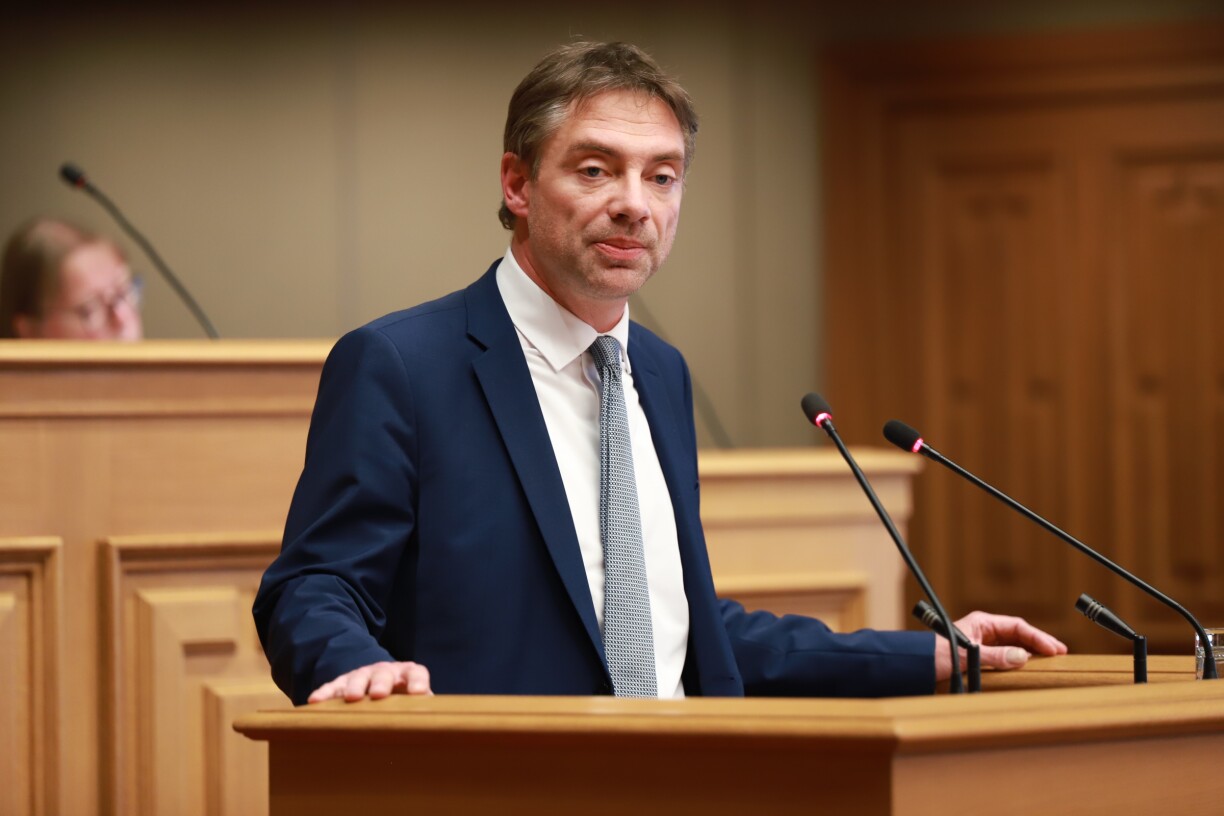
Integration is nothing abstract, ADR parliamentary group leader Fred Keup declared, but it is concretely visible in classrooms or on football pitches. He highlighted his wife's family as an example, as his father-in-law moved to Luxembourg from Italy as a young man, and his children subsequently integrated well.
This example shows integration is often an intergenerational process, requiring time and goodwill, and in Luxembourg it has long been based on the three pillars of school, clubs and language. he said. But these days, it is becoming more difficult in schools, argued Keup.
Keup stated: "We have 120,000 pupils in our schools, that's nearly 20,000 more than 7 or 8 years ago. And parallel to this, around two-thirds of the school population no longer speak Luxembourgish at home."
While international schools are a solution for a clear need in the country's education, Keup queried whether the pupils could really speak Luxembourgish after their schooling.
Language is the most open form of integration, as everyone could learn it, according to Keup.
But in order to promote Luxembourgish to foreigners, it first needs to be spoken by Luxembourgers and to become more visible in public spaces, he said. Keup added that this was not about exclusion, but about encouraging different nationalities to live alongside each other.
MP Jean-Paul Schaaf of the Christian Social People's Party (CSV) accused the ADR of promoting the debate with the motive of luring "parties from the democratic centre" onto shaky ground.
Schaaf said: "And then you come here, with your nice friendly words, speaking as if you were in the centre. You are the wolf in sheep's clothing and I am the sheep here, and we are meant to get along."
He added that the assumption that foreigners did not integrate into Luxembourgish society was not strictly true.
Schaaf explained further: "We have 180 nationalities in this country, it is not one bloc. They are not all here at the same time, some haven't spent their whole lives here, and others have. There are young people, old people, different nations, it's not one single bloc of foreigners."
Luxembourg needs migration for demographic reasons, if nothing else, he said, and this had not caused cultural issues in the past. Schaaf did agree with Keup in that selected jobs, such as healthcare, should require a certain knowledge of Luxembourgish.
MP Mandy Minella of the Democratic Party (DP) countered that Luxembourg had done a lot at national and municipal level in recent years to strengthen integration.
She said the following: "The Ministry of Family supports more and more municipalities with concrete initiatives as part of the municipal pact. In February, Betzdorf, for example, with 52 other councils, committed to simplify access to information, to strengthen community life, and to encourage people to get involved."
Minella also emphasised that multilingualism only enriched Luxembourg.
MP Liz Braz of the Luxembourg Socialist Workers' Party (LSAP) said the ADR had failed to present concrete measures to encourage better integration in many areas, and suggested this lack of ideas was due to the fact the party is not actually interested in improving integration.
She explained: "You want to tell them how to live, but won't give them the right to get involved politically, to have a voice in the democratic process. Here your favourite statistics, that of one in two residents being foreign, don't seem to matter."
Whilst integration is important, one has to recognise the challenges faced by many foreigners, according to Braz. She added that language may be important but is far from the only factor involved in successful integration. Another key point is access to living space, she said.
MP Djuna Bernard of The Greens (déi gréng) objected to the term integration, as it conveys that newcomers to the country need to follow certain norms. She said it would be better to discuss living together as a society.
Finally, MP Marc Georgen of the Pirate Party (Piratepartei) called for the job market to be opened to everyone as it would encourage integration more than anything else, as well as contributing to the country's wealth. He added that municipal councils could make more efforts to make Luxembourgish visible, such as on their websites.





