
Here are five things you should know at the end of this week:


A new study by the Luxembourg Institute of Socio-Economic Research examined the housing and inflation situations in the Grand Duchy, finding that women in low income brackets were suffering more as a result of the housing crisis, compared to men, and were worse off compared to other vulnerable households.
Single parents worse off – According to LISER CEO Aline Muller, "the expense/income ratio has jumped up as a result of the increase in housing costs, affecting women far more than men, but above all affecting women who are single parents."
Over 86% of single-parent women are affected. What's different when compared to their male counterparts? Basic necessities.
"Data shows that women's basic necessities are far more important to them, which is where they have been hit particularly hard by inflation, and in real terms, this is reducing their actual income", Muller explained.
Should women have more benefits? – The LISER study was carried out in collaboration with the Ministry for Equality and Diversity, with researchers recommending that politicians respond to the issue with targeted measures.
Should women benefit more from indexation than men? Should there be higher housing and rent allowances for women?
Minister Yuriko Backes says it's complicated. The criteria for housing benefits, for example, already takes vulnerability into account, and Backes believes this aid is being calculated the right way.
The minister also referred to the tax credit for single parents as a measure designed to help. While it is not exclusively aimed at women, the majority of single parents in Luxembourg are indeed women.
Recently, feminist platform JIF had declared to be in favour of adjusting the tax system to benefit single parents.
Still a long road – International Women's Day was less than a month ago and it served as a platform to highlight some of the issues still present in modern societies.
The Gender divide is still very real, despite some narrowing points; Women should remain vigilant about securing their rights; Immigrants are especially vulnerable.
And let us not forget the ever-lingering presence of violence.

By January 1, 2023, 50.4% of the population in Luxembourg was foreign-born, a record in the European Union. It can be seen as simultaneous proof of the country's attractiveness and its reliance on foreign labour.
Immigration to the EU more than doubled compared to the 2021 total, while the number of outgoing emigrants to third countries remained stable.
Luxembourg's steadily declining birth rate is one of the factors that could explain this trend.
Crossing the threshold – A STATEC report from last year, pertaining to the 2021 census, mentioned that nearly 50% of Luxembourg residents were born abroad.
That line has been crossed: Eurostat's report now places that figure at 50.4%. Luxembourg sits comfortably in the lead of this metric, with numbers two (Malta) and three (Cyprus) coming in at 28.3% and 22.7%, respectively.
The Grand Duchy also welcomes the highest percentage of residents from an EU Country, with 33.2%. As for people born in non-EU countries, Malta takes the top spot at 20.9%, with Luxembourg following close behind at 17.2%.
At the opposite end of the chart, Poland recorded a total of 2.5% foreign-born residents, with Bulgaria (2.6%) and Romania (2.8%) not far back.
Lëtz go to Europe – Immigration to the EU more than doubled in the span of a year: up from the 2.4 million recorded in 2021, 2022 saw 5.1 million people arrive from non-EU countries.
The number of outgoing emigrants was steady, with around 1 million each year.
Relative to the size of the resident population, Malta recorded the highest immigration rate from both EU and non-EU countries in 2022 (66 immigrants per 1,000 inhabitants), followed by Luxembourg (48) and Estonia (37).
In absolute terms, here are the countries with the largest numbers of foreign-born residents (from other EU countries and non-EU countries): Germany (16.5 million people), France (8.9 million), and Spain (8.2 million).
Storks are slacking – There are multiple factors that could explain these numbers, and one of them is Luxembourg's declining birth rate - especially in recent years, which means we are likely not going to buck this trend anytime soon.
The start of the 21st century showed a relatively steady rate hovering around 1.7 children per woman. However, from 2012 onwards, the decline has been steeper and now sits around 1.3.
To put it into perspective: in 1960, Luxembourg counted an average of 2.29 children per woman. This rate dropped to the above-mentioned 1.31 in 2022, falling well below the EU average of 1.46.
Another contributing factor is the higher age of births: on average, women in the Grand Duchy have their first baby after the age of 30. In fact, the average age for first-time mums was 31.3 years in 2021.
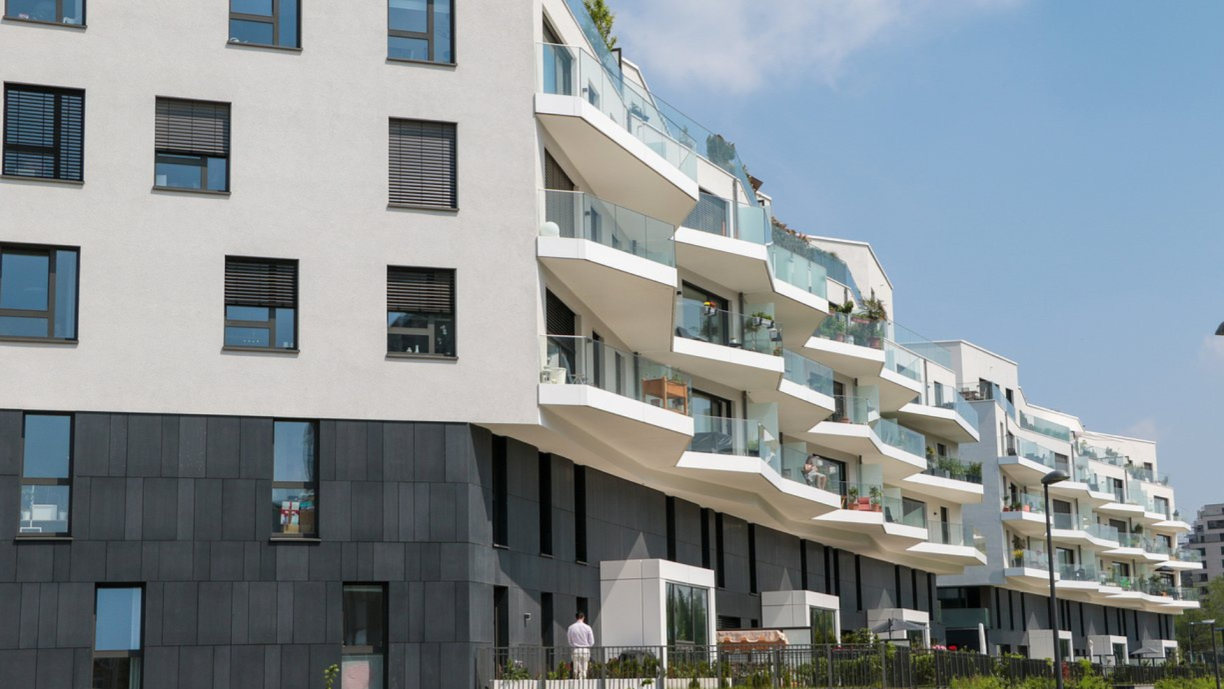
As AtHome delves into the Luxembourg property market's performance in the first quarter of 2024, a glimmer of optimism emerges amidst various indicators.
As many experts anticipated, house prices in Luxembourg witnessed a significant decline throughout 2023, as reported by the Housing Observatory last week.
Both sales prices and the rental market have seen more favourable conditions.
Challenging period – The property sector went through a challenging period in 2023, primarily attributed to the surge in interest rates, which substantially impacted activity within the Luxembourg residential property market. This diminished activity, combined with a decrease in purchasing power among households and investors, contributed to a widespread reduction in property prices across the country.
Adjusting sales prices & stable rental market –The first quarter of 2024 witnessed a trend of price adjustments across all regions of Luxembourg. Data indicates a general decrease in prices, averaging around -9.3%. Notably, flats experienced a more pronounced decline at -10.1% compared to houses at -7.7%.
The rental market in Luxembourg demonstrates a trend towards stabilisation, with a notable but moderate 1.7% increase in rents on average during the first quarter of 2024.
Interest rates experience decline – In a positive development for potential property buyers, interest rates are finally witnessing a notable decrease, marking a significant shift from the upward trajectory observed in previous years. This news comes as a relief, especially considering that interest rates had tripled by 2022, reaching levels between 4.5% and 5%.
Related –The latest Eurostat calculations place Luxembourg at the top of European countries in terms of GDP per capita, because of its cross-border workers.

A magnitude-7.4 earthquake - the strongest since 1999 - hit Taiwan with devastating force, causing multiple casualties and over 1000 injured. Officials have warned of aftershock in the coming days.
Massive clear-up operations are ongoing, in an attempt to reach the multiple people who are still trapped in tunnels and other cut-off parts of the island.
The aftermath: relief structures set up.
Catastrophe averted –Taiwan's strict building regulations and general public disaster awareness appear to have staved off a major catastrophe for the earthquake-prone island, which lies near the junction of two tectonic plates. The strongest quake in the island's history, which hit in September 1999, had a similar magnitude (7.6 vs 7.4) and killed around 2,400 people.
This week's big tremor had an estimated epicentre 18 kilometres south of Hualien City, at a depth of 34.8 kilometres and it has, so far, kept the number of recorded casualties at 10, with around 1000 injured. It prompted tsunami warnings as far as Japan and the Philippines.
Search and rescue –Taiwan's urban area was not the only one majorly affected by the quake: landslides and other debris have cut off mountain roads and left hundreds of people out of reach. Rescue efforts are ongoing, with authorities searching for those still missing under the rubble and debris - which could, potentially, lead to a higher number of reported victims.
The strongly hit city of Hualien wake up to massive engineering operations, as authorities begin the clear-up process. Engineers, construction crews, emergency service workers, helicopters are all working together to minimize the impact of the great quake.
Relief structure –As expected, aftershocks of the 7.4 earthquake swiftly followed, counting more than 300 so far. Many people have chosen to remain in public shelters such as the one currently occupying an elementary school in Hualien.
One such person, Indonesian Hendri Sutrisno, occupies a tent with his wife and two-month-old baby. "We have all the necessary stuff -- blankets, toilet and a place to rest" he said. Sutrisno believes that, should a big aftershock occur, it would be hard to evacuate yet again, especially with a small baby, hence why he feels it is "wiser for us to stay here", in the tents.
Hundreds of people are still trapped in tunnels, hotels and other locations but are believed to be relatively safe, as rescue efforts continue.

Israel has been experiencing a massive wave of protests aimed at Benjamin Netanyahu, with thousands of Israelis taking to the streets to voice their anger at the long-serving Prime Minister's management of the hostage situation, among other issues.
Netanyahu is receiving an increasing amount of pressure from the international community to call a cease-fire in Gaza as the humanitarian crisis continues to deepen in the wake of his campaign of destruction. The recent strike that killed several aid workers from a US-based organisation even caused the United States, his staunchest ally, to finally raise their voice.
Israel's longest serving prime minister has seen his fair share of criticism throughout the years, but has managed to survive and hold on to his seat year after year. Now, however, he appears physically and politically fragile - with some speculating this could be the end of his reign.
Thousands take to the streets – Prime Minister Benjamin Netanyahu's popularity has seen better days, as evidenced by the thousands of Israelis coming out in protest against his government's handling of the Gaza hostage situation.
Many claim that Netanyahu is more focused on keeping his power than on saving his citizens, going as far as to call him "a traitor" to his people. "On your watch" and "You failed in every possible way" were some of the words shouted at the prime minister, amid calls for snap elections to 'save Israel' from his hands.
Everybody hates 'Bibi' –While internal protests are mostly focused on Netanyahu's political manoeuvres, the safety of Israel's population and the situation involving the hostages taken by Hamas, the world is calling for an end to the military incursion in Gaza, which some call a "massacre" and "genocide".
International leaders and organisations have long been decrying the humanitarian crisis, but the tipping point might be the recent death of several aid workers from a US-based organization, which led the White House to change its tone. Up until now amounting to no more than slight discomfort between allies, US pressure over Israel's military campaign is likely to harden. Biden and Netanyahu are expected to speak directly, with the Israel PM likely to receive at least a stern talking-to.
Time to say goodbye? –With thousands of protesters on the streets every night demanding he resign, and growing anger at his handling of the war in Gaza, many wonder how long the veteran political escapologist can survive.
The usually bullish Netanyahu, 74, appears both physically and politically fragile. Deeply unpopular -- no more than four percent of Israelis trust him, according to one poll late last year -- the war in Gaza is taking its toll on the man Israelis call Bibi.
"Netanyahu has been buried politically many times before and bounced back," said Emmanuel Navon, a former Likud member and political science professor. "But this time is different because of October 7" (the date of the Hamas attacks).
Navon compared Netanyahu's hold over the ruling Likud party to Donald Trump's over US Republicans.
Business & Tech –Eurozone inflation falls faster than expected in March, fuelling hope for lower interest rates.
Science & Environment –'Forever chemicals' are contaminating nature - and could face bans.
Entertainment –Kanye West accused of racism and antisemitism in new lawsuit.
GDP per capita – Luxembourg is the richest EU country — thanks to cross-border workers.
Too much water? – Luxembourg's high amount of rainfall since October is good for water reserves, bad for farmers.
Wind power –Transport of turbines for the new wind farm near Ettelbruck has started.

Your Weekly Recap is published every Friday at noon. Read earlier versions.





