Luxembourg likes to describe itself as pragmatic, diplomatic, and realistic. But if we are honest with ourselves, there is one word we fall back on whenever difficult questions arise: small. Too small to influence global affairs. Too small to take risks. Too small to jeopardize relationships. It is an argument we hear repeatedly when it comes to holding Israel accountable and calling for an end to its actions.
"Too small" is a comforting idea. It suggests that what happens beyond our borders is ultimately out of our hands. But that argument is becoming harder and harder to defend.
Because when you look beyond the rhetoric, Luxembourg is not acting like a small, powerless country. We are deeply embedded in global financial, technological, and political systems – and those connections carry weight.
Take finance. Luxembourg's regulator, the CSSF, has accepted Israeli bonds, contributing to their circulation on European markets. This places Luxembourg within the infrastructure that facilitates access to such financial instruments. Without gateways like ours, that access becomes more constrained; with them, it becomes easier.
These flows are not neutral when they are tied to a state facing serious allegations under international law, including potential war crimes and crimes against humanity, particularly in relation to Palestinians and the broader regional escalation.
Look at banking. Our state-owned bank, BCEE, has reportedly closed accounts belonging to two members of the International Criminal Court without clear public explanation. Whether or not those decisions were justified, the lack of transparency should concern anyone who believes in the rule of international law. Silence, in such cases, is not neutral.
Consider trade and investment. Research by SOMO places Luxembourg as the second-largest European actor in financial flows connected to Israel, after the Netherlands. That is not the footprint of a bystander, it is the profile of an active economic partner.
On the corporate side, Luxembourg hosts the headquarters of NSO Group, the company behind Pegasus spyware, widely criticized for its use against journalists, activists, and political opponents. It also hosts the European headquarters of FANUC, a Japanese firm whose technologies have reportedly been linked to military supply chains connected to Israel. These are not coincidences; they reflect the kind of economic ecosystem we have chosen to build.
Then there is the legal question. The Chamber of Deputies has already commissioned independent academic analyses on whether Luxembourg has obligations to sanction Israel. Two separate universities reached the same conclusion: as an independent state, Luxembourg is not only permitted to act, it may be obligated to do so.
So, this is no longer about whether Luxembourg is "too small". It is about whether we are willing to take responsibility for the influence we already have.
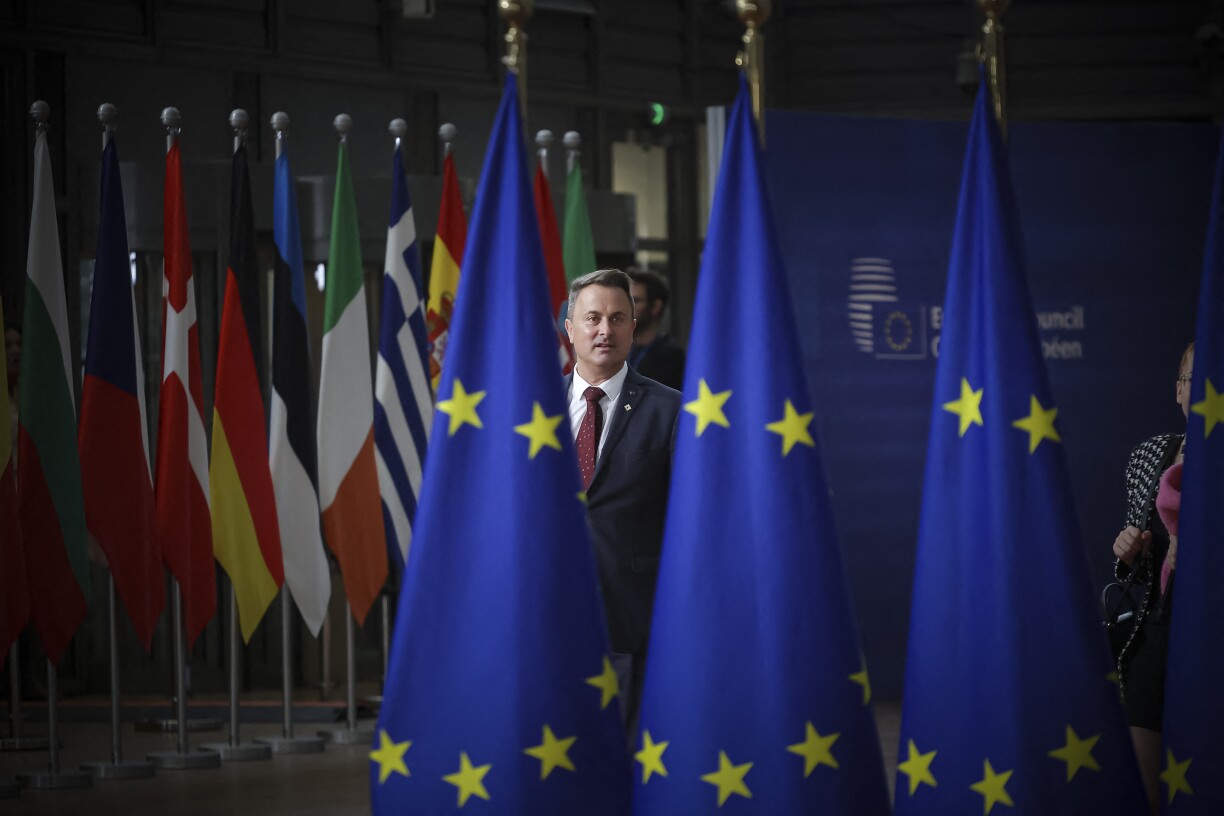
Today, on 21 April 2026, Luxembourg is already part of a crucial moment at the European level, with foreign affairs ministers meeting in the European Convention Centre in Kirchberg to discuss the future of the EU-Israel agreement. This places our government not on the sidelines, but directly within the decision-making process.
Beyond Luxembourg's local influence, this is an opportunity to align with member states, such as Spain, that have taken clearer positions, and to stand on the right side of history by supporting calls for accountability and ending the EU Agreement with Israel.
We often say that small states derive their strength from multilateralism, from international law, from a rules-based order. But those principles only matter if they are applied consistently, especially when it is inconvenient. Choosing not to act is still a choice. In a system as interconnected as ours, neutrality is rarely neutral.
If there is uncertainty, legal, political, or humanitarian, the answer should not be silence. It should be open, informed discussion. That is why we are calling for a public roundtable on 23 April at the Youth Hostel in Luxembourg City, bringing together legal experts, policymakers, and humanitarian voices to examine Luxembourg's role more closely.
Public engagement matters too. An EU-wide petition calling for the suspension of the EU-Israel agreement is approaching its national threshold in Luxembourg, with more than half already reached. That momentum suggests something important: people are paying attention and civil society will ensure we stand on the right side of history.
Luxembourg has never been defined solely by its size, but by its ability to adapt, to engage, and to stand for principles when it counts. There is every reason to believe this moment will be no different, that citizens will ask questions, demand clarity, and push for consistency between our values and our actions.
Luxembourg has never been too small to matter. And its people are not too small to make a difference.
This is an opinion article. The views expressed belong to the author.





