During a current affairs session in the Chamber of Deputies on Wednesday morning, opposition MPs criticised the government's position on United States policy and its handling of a dispute involving the International Criminal Court (ICC).
MP Franz Fayot of the Luxembourg Socialist Workers' Party (LSAP) questioned the government's stance on the new national security strategy of the United States. Fayot expressed concern over what he described as "fascist and imperialistic tendencies" emerging from the White House, suggesting they reveal an intention to "destroy Europe from within." Alongside the Green Party (Déi Gréng) and the Left Party (Déi Lénk), the LSAP argued that the government is not doing enough to push back against this direction.
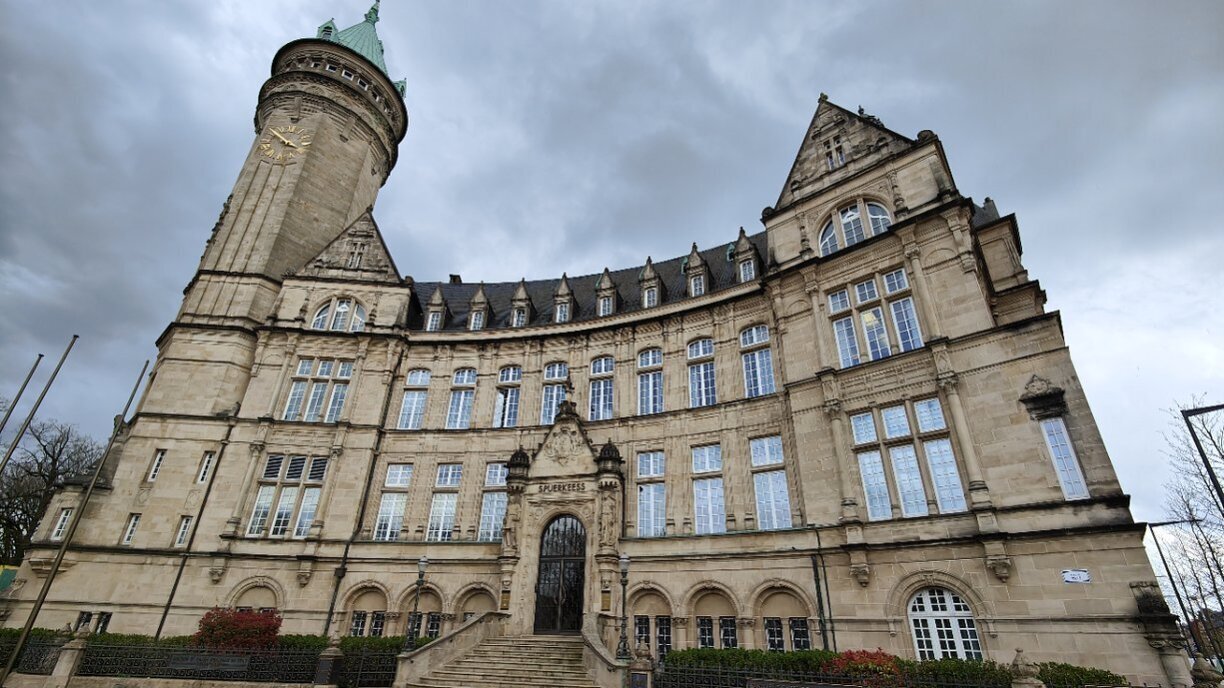
A separate point of contention arose over the decision by Spuerkeess, Luxembourg's state-owned bank, to close the accounts of the International Criminal Court in early 2026. The move follows sanctions imposed on ICC judges by the Trump administration.
Fayot criticised the bank's decision as "anticipatory obedience." He noted that Spuerkeess had sought the government's opinion on the matter. In Fayot's view, the bank should have been told that closing the accounts of "a pillar of the system of international law" was out of the question. He lamented that the government failed to provide such a firm commitment.
It was only after repeated questioning from the opposition, particularly from Green Party parliamentary group leader Sam Tanson, that Prime Minister Luc Frieden voiced his support for the ICC. Tanson had previously submitted parliamentary questions on the issue after it was first reported by the newspaper Luxemburger Wort.
The Prime Minister stated that, "objectively speaking," he is "of course" pleased that the ICC maintains accounts in Luxembourg. However, he claimed he had no insight into why Spuerkeess decided to end the relationship, noting that he is "neither a member of Spuerkeess, nor the finance minister." Frieden added that it is not within a prime minister's remit to decide which accounts a bank closes. However, these explanations failed to satisfy the left-leaning opposition parties.
More broadly, the Prime Minister advocated for maintaining strong transatlantic relations. While acknowledging the need for Europe to become more self-reliant, he insisted that the United States must remain its main ally. Frieden noted that tensions between Europe and the US have occurred in the past.
Laurent Zeimet, head of the Christian Social People's Party (CSV) parliamentary group, echoed this sentiment. However, he added that Europe would not be so dependent on the US today if action had been taken in previous years.
The issue of the ICC accounts had already been raised in the Chamber of Deputies a fortnight earlier, when Tanson questioned Finance Minister Gilles Roth on the matter.
During that exchange, Roth largely cited bank secrecy principles in his responses. He also claimed that the ICC had withdrawn its funds on its own accord, adding that he could not rule out the possibility that the decision had been reached "mutually".
However, Roth did acknowledge that Spuerkeess conducts a significant number of transactions in US dollars, meaning US sanctions must be factored into its internal risk assessments. He stated that the government cannot interfere in this risk assessment process, even though Spuerkeess is state-owned.





