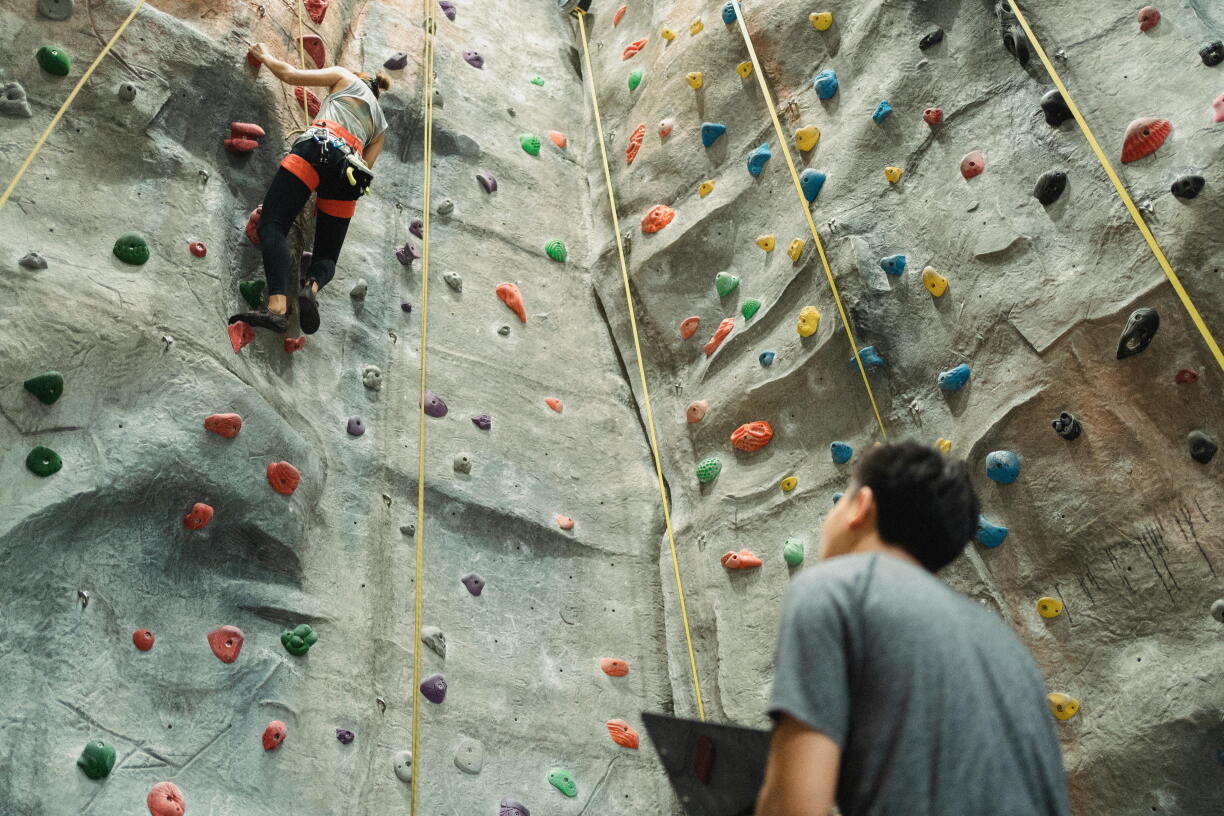
On Tuesday evening, a 37-year-old man died at a climbing gym in Soleuvre. An investigation will determine the exact circumstances of the accident. In an interview with RTL, the president of Luxembourg's Climbing Federation (FLERA) discussed the dangers of the sport and the steps being taken to make it safer.
The man had been climbing using a so-called auto-belay system, a mechanism that takes the place of a climbing partner. In climbing halls, instructions on how to belay correctly are displayed in many places.
When such unfortunate incidents happen and a person is injured or killed, it is a tragedy, and one's thoughts naturally go to the victims and their families, said Jacques Welter, President of FLERA. Fortunately, he added, tragic accidents are not that common.
Welter noted that there is an objective risk involved, one the federation tries to keep as low as possible. Even so, he said, human error can never be entirely ruled out.
The federation, he said, examines every accident in detail. One example was the incident in October 2025 involving a Dutch tourist in Berdorf, where the rescue helicopter was also called in.
Welter said the matter had been studied very closely, with the federation looking at what could be changed to prevent a similar accident at the same spot. After all the analyses, however, the conclusion was that the issue lay with the climber, and there was little structural change to be made.
Even so, the federation has recently put together a best-practice document that has been distributed to climbers and the gyms. Large posters will also be put up in the various halls setting out what climbers need to keep in mind. Some level of risk, however, will always remain.
Auto-belay is still relatively new, according to the FLERA chief, but is being used more and more in climbing gyms. In climbing, people usually go up in pairs, with a so-called partner check to make sure everything is in order between them.
The auto-belay, by contrast, is a system that removes the need for a partner. Climbers attach themselves to the device and are then secured automatically as they go up. Even so, Welter urged, the climbing harness still has to be properly fastened in the right place.
The federation is also active in schools to spread awareness, and a climbing certificate has been introduced.
But Welter was candid, explaining that being a seasoned climber, does not make anyone immune to risk or danger, and even the most experienced climbers can make mistakes.





