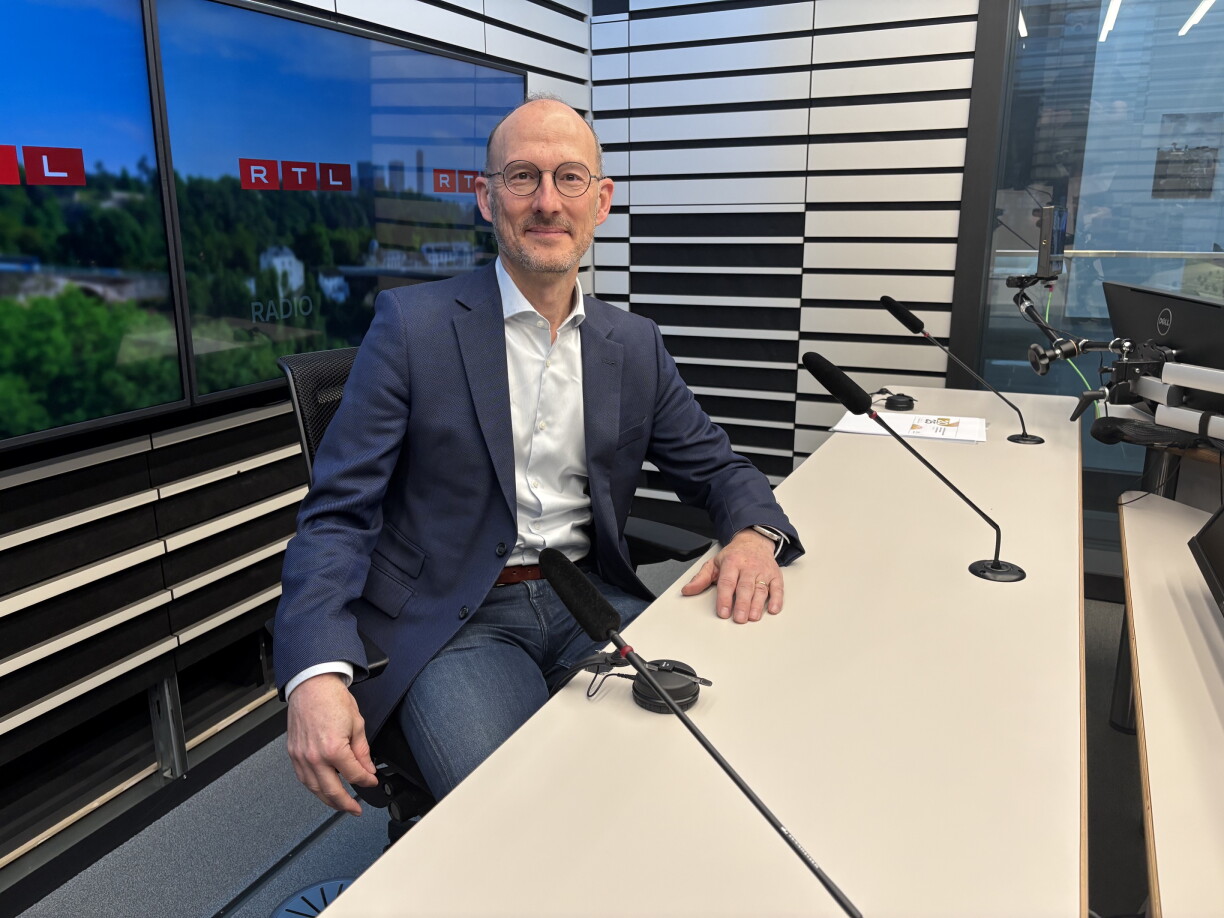
Electricity prices are lower this year than in previous years and there is no reason to raise them at the moment, Seywert declared on Friday.
He explained that the US-Israel war in Iran and the closure of the Strait of Hormuz had affected petrol prices. Although electricity prices rose in the short-term on the market, Enovos, the subsidiary of the Encevo group, had a mid-and long-term purchasing strategy. This involves an estimation alongside a certain amount of risk, as the group purchases electricity "slowly" in line with consumption. If they purchase too much, there is a risk of a loss when selling.
For 2026, the group has "purchased all it needs" and for 2027 it has purchased "a lot", according to Seywert. Encevo is therefore confident that nothing major will happen next year, at least in terms of "residential" electricity. For industry, it could be a different story, as they often operate in a short-term "spot market".
As for gas, however, Seywert was a little more cautious in his predictions, as the company has not yet purchased everything for 2027. Structurally, prices have gone up since Russia invaded Ukraine in 2022. It is hard to envisage a return to how things were before, as Russia exports a lot of gas to Asia, and has to divert it. In the end, it is a political decision by the European Union.
Political decisions in this country are up to the tripartite. Employers are demanding that inflation be curbed, but the director of Encevo said that it is not electricity and gas that are driving up prices today. Encevo could not do much, but if the state wanted to, it would be implemented. The state is already contributing 150 million euros to the network costs for at least another 3 years.
Seywert emphasised that the tripartite must be careful not to adopt any "false incentives" in its measures. Decarbonisation must remain a priority, reducing dependence on fossil fuels and turning to electricity instead. The renewable energies currently available must be used to promote flexibility so people can learn to be more frugal and adjust their behaviour.
He highlighted the example of a new Creos offer – a natural energy drive for cheaper energy to charge electric vehicles – where they noticed that clients opting for this tariff had reduced their consumption by almost half in the hours where electricity is cheaper, as they use less in those periods.
While electricity prices might not increase, investments are becoming more expensive. Seywert said the economy was in crisis due to petrol prices, as it is still largely dependent on petrol. Encevo has noticed this in products used to expand the network for renewable energy.
Two weeks ago, Encevo held its annual presentation on its figures, announcing that the group would pay out fewer dividends in order to invest more in its network. It hopes to increase investments from 300 million euros this year, to 1.5-1.8 billion over the next 3 years. Will that be enough if the population passes 1 million and petrol accounts for 60% of the total energy usage? "In my eyes, Luxembourg will never be autonomous", Seywert said.
The Grand Duchy will continue to import more electricity and likely also more hydrogen, which will require expansion of the connections with other countries. The country could also benefit from producing its own renewable energy and increasing storage capacity, but Luxembourg's small size means it is unlikely to be autonomous, Seywert explained. When asked if the Grand Duchy functions beyond its means, Seywert replied it was no different to other countries in that respect. Even though Germany or France could theoretically balance themselves out, it might not be the most sensible solution economically, hence the efforts made to expand the European energy market.





