
Here are five things you should know at the end of this week:

System overhaul – Alongside the rest of Europe, Luxembourg is going through a sweltering heatwave, with MeteoLux, the national weather service, predicting temperatures of up to 32°C until Saturday. The heat may be a welcome change from the rainy weather, but authorities are cautioning the public of possible heat fatigue in cases of prolonged exposure or physical activity, explaining that when the air fails to cool properly at night, the body is not able to recover properly. Over the past week, MeteoLux has observed five consecutive days above 27°C, with another four forecast to follow. According to meteorologist Luca Mathias, almost eight days in a row above that threshold in May is something not seen in Luxembourg in the past 79 years.
As these extreme weather spells will only become more frequent, MeteoLux announced that a new system will be introduced from summer 2026 to better account for perceived temperature and the health effects of heatwaves. Until now, alerts were based primarily on the maximum recorded temperature and that of the previous day. To more accurately reflect what the human body experiences, MeteoLux's new system will use the Universal Thermal Climate Index developed by international experts and used by the European Copernicus programme. The index takes several factors into account simultaneously: air temperature, humidity, wind and UV radiation, as accounting for temperature alone falls short.
Deadly records – A so-called "heat dome", a mass of warm air trapped by high pressure, has driven temperatures above 30°C across much of Western Europe, with Britain, France and Portugal logging their hottest-ever May days. Spain, Italy, and Ireland also reported unusually high temperatures, with some regions experiencing conditions typically seen at the peak of summer. Several people have died in both Britain and France, mostly in drowning accidents that authorities have linked with the baking heat, while Portugal's Health Minister reported that the heatwave had caused a spike in hospitalisations.
'Fastest-heating continent' – Europe is the fastest-warming continent and UN climate chief Simon Stiell and scientists emphasised that human-driven climate change is making heatwaves more frequent and severe, urging the need to reduce fossil fuel use and adapt infrastructure to cope with rising temperatures. The UN has also warned that global average temperatures are likely to continue at or near record levels this year and for the next foreseeable four years and authorities across Europe are being urged to protect lives, businesses, and economies from the escalating impacts of extreme weather linked to the climate crisis.
Youngest at risk – An ILRES 2025 survey published by the National Health Directorate and the Cancer Foundation reveals that tobacco and nicotine use is particularly high among young adults in Luxembourg. Drawing on answers collected from 16 to 24 year olds, 41% are smokers, with many starting before the age of 18. Nearly a third of Luxembourg residents aged 16 and over, approximately 177,000 people, smoke regularly or occasionally and men are more likely to smoke than women, at 36% compared to 27%.
Cool and stressed out – The use of shisha, e-cigarettes, and nicotine pouches is widespread, and e-cigarettes are often a gateway to traditional cigarette use, according to the Cancer Foundation. Social image and stress are found to be the major drivers of tobacco use, especially among the youngest age group. Over a third of respondents said smoking gives users a 'cool' image, and many smoke during nights out with friends. Stress is another factor for young people, with 39% of 16 to 24 year olds citing it as a reason for smoking.
Phase-out – Despite high usage, many smokers in Luxembourg have a strong desire to quit, with 36% having attempted to do so in the past year and health concerns being the main motivation. New legislation in Luxembourg, in force since January, restricts nicotine content to a maximum of 0.048 mg per unit for nicotine pouches and other new nicotine products. Additionally, the new law bans the use of nicotine products in places frequented by young people.
No stone unturned – The case centres on the death of a 56-year-old woman found in her bathtub in Bereldange in August 2014. Her son, Gilles L., a former police officer, has now been charged with her murder. The prosecutor's office said the judicial investigation was opened in January 2018 after elements emerged during another inquiry and was relaunched in 2025, leading investigators to uncover evidence considered sufficiently serious and consistent to justify charging the woman's son with premeditated parricide by poisoning.
Sentenced to life – Gilles L. is already serving a life sentence for the poisoning deaths of his sister and her husband in 2016, also in Bereldange. During his 2020 trial, he admitted to ordering cyanide on the darknet and mixing it into their drinks, but claimed that he did not intend to kill them, only wanting to ruin a holiday from which he had been excluded. He said he had been delivered the wrong poison. However, a police report presented during his trial established a clear timeline, with Gilles L. starting to research "deadly poisons", "ways to kill someone", and "the perfect murder method" online in June 2016, three months prior to the death of his sister and her husband.
Details revisited – Grizzly details from the case reveal that the former police officer had been testing out poisons several months in advance of the murders in Bereldange. During the trial, two friends and a former partner of the convicted murderer came forward to report similar incidents to those of the day in question. All three stated suddenly falling ill in presence of the former policeman, three months prior to the actual killing, and found themselves in similar conditions of losing control over their motor functions. During the 2020 trial, the prosecution included the death of the police officer's mother as incriminating, having passed away days after his purchase of knockout drops.
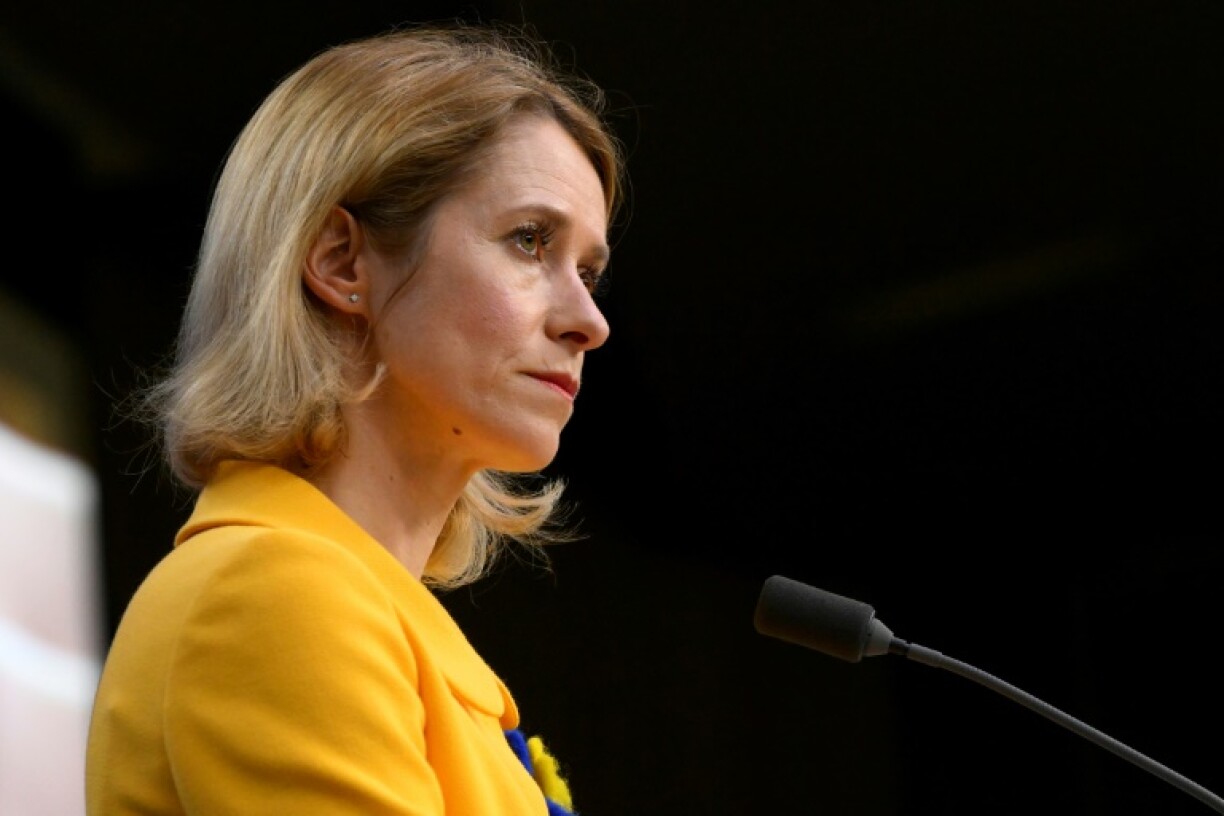
Kremlin's trap – Attending the informal meeting of European foreign ministers in Limassol, Cyprus, Kaja Kallas warned against recent speculations on who the EU should nominate to lead negotiations, and how the bloc can strengthen its role in the talks between the US and Russia on a possible peace in Ukraine. Ukraine has pushed for Europe, sidelined until now by Washington, to play a bigger role and suggested nominating a representative for talks. Kallas argued, however, that this is Russia luring Europe into a so-to-speak trap, hoping to tie Europe's leaders in fracturing arguments on whom to designate.
Entering the fray – This has not stopped Bettel from sharing his thoughts and propose someone for the possible talks. Prompted by a journalist in Cyprus, the foreign minister named Juncker as a potential negotiator between the EU and Russia. Bettel argued that the former commission president's connections to both sides and Luxembourg's reputation for neutrality made him a suitable candidate. He also suggested that a team of negotiators from different regions, rather than a single figure, could be more effective. After saying Europeans should not be represented by a politician from one of Russia's neighbouring countries, Bettel's spokesperson clarified that the minister's comments were not aimed at Kallas, who is from Estonia.
All together now – Kallas, on her end, underscored that negotiations are a collective effort, arguing it is far more important to agree on a strategy than to argue over who will carry it out. She pushed for the bloc to instead focus on setting clear red lines. Additionally, Kallas ruled out a "neutral" EU mediator between Ukraine and Russia: "Europe will never be a neutral mediator between Russia and Ukraine, because we are on Ukraine's side and we are defending our own core security interests". Meanwhile, Russia continues its offensive in Ukraine and has reportedly hit a building in Romania with a drone. Commission President Ursula von der Leyen condemned Russia in a statement on Friday calling it "yet another line" crossed by Moscow and vowing to "keep increasing the pressure on Russia".
Besides the discussions on Ukraine, on Thursday, the EU formally sanctioned seven Israeli settlers and organisations over violence against Palestinians and settlement expansion in the Israeli-occupied West Bank, after agreeing to do so on 11 May. The sanctions consist of travel bans and asset freezes, and EU citizens and companies are also banned from making funds, financial assets or other economic resources available to those listed. The sanctioned individuals included Daniella Weiss, a leading figure in the settler movement. The EU also sanctioned 10 representatives of the Palestinian militant group Hamas.

Deal in sight? – US and Iranian negotiators have agreed on a framework for a 60-day ceasefire extension deal, but it still needs Trump's approval, US sources told AFP on Thursday. The sources confirmed a report by the Axios news outlet that the two sides had reached agreement on a memorandum of understanding to prolong the truce and launch negotiations on Iran's nuclear program. There has been no immediate confirmation from Trump himself, or from Iran.
Under the terms reported by Axios, the agreed framework would ensure that shipping through the Strait of Hormuz is unrestricted, with no tolls or harassment, and would require Iran to remove all mines within 30 days. The US would in return lift its naval blockade on Iran's ports, but only in proportion to how much commercial shipping is restored. US Vice President JD Vance said Iran has been negotiating "at least so far in good faith" and both sides wanted to reopen the Straits of Hormuz, but there was still disagreement on Iran's stockpile of enriched uranium.
Not satisfied – The report follows Trump's vacillating statements on the situation, saying he is "not yet satisfied" with Iran's offers after a cabinet meeting in the White House on Wednesday while having said that a deal was close the weekend before. "Iran is very much intent, they want very much to make a deal. So far they haven't gotten there. We're not satisfied with it, but we will be", Trump said. "Either that or we'll have to just finish the job", he added, referring to threats to resume the military operations that the US and Israel launched on February 28 and paused in April.
Renewed strikes – While negotiators seem to have inched closer towards a deal, on Thursday, Iran's foreign ministry condemned what it called violations by the US following its strikes on the southern port city of Bandar Abbas, and stood in solidarity with US-ally Oman after Trump threatened to "blow them up" due to an Omani proposal to help impose a tolling system in the Strait of Hormuz. US Treasury Secretary Scott Bessent has also threatened Oman, warning of sanctions against any parties involved. Iranian Ministry spokesman Esmaeil Baqaei said Iran would "take all necessary measures to defend its national sovereignty" and condemned "the threatening rhetoric of American officials against Iran and several regional countries".
Your Weekly Recap is published every Friday at noon.
Read earlier versions here.





