Here are five things you should know at the end of this week:

One tax scale – The reform would do away with tax classes 1, 1a, and 2 and replace them with a single 'U' class. Prime Minister Luc Frieden said the change would ensure that a person’s tax situation is no longer affected by marriage, divorce, or bereavement, arguing that the state should remain neutral when it comes to family models.
Transition period – While the majority of taxpayers are expected to benefit, the government acknowledged that a small share of couples, particularly those with a single main earner, could be worse off. A 25-year transition period is meant to ensure that no one loses out immediately under the new system.
Opposition reaction – The LSAP, Greens, and Pirates said they welcomed the end of discrimination between singles and couples but criticised the lack of clarity on how the reform will be financed, warning costs could exceed €1 billion a year. The ADR, however, said the changes go too far and weaken the tax system’s support for families.

Prices adjusting – A market analysis by atHome confirms the downward trend previously flagged by the Housing Observatory, marking a clear shift after prices peaked in mid-2025. For new apartments sold off-plan, the average price per square metre has dropped below €10,000 for the first time since the summer, reflecting growing pressure on sellers to adjust expectations.
End of incentives – Analysts link the decline directly to the expiry of the government’s housing aid package, which had temporarily reignited a stalled market. With wages, interest rates, and purchasing power largely unchanged, prices have become the main adjustment variable, and experts expect the downward trend to continue into 2026 unless new support measures are introduced.
Financing still tight – Figures from the Central Bank of Luxembourg show that borrowing conditions remain challenging. Variable-rate mortgages averaged 3.07% in November 2025, notably cheaper than fixed-rate loans at 3.75%, but they come with greater uncertainty. While sale prices are easing, the persistent gap between loan types continues to shape buyer behaviour in an already fragile housing market.

From diabetes to diet – Originally intended for type 2 diabetes, Ozempic surged in popularity from 2023 due to its weight-loss effects, driven largely by social media and personal testimonies. The resulting shortages prompted Luxembourg to temporarily limit prescriptions to diabetic patients in 2024, a restriction lifted in June 2025 once supply stabilised. While national health officials continue to discourage off-label use, the World Health Organisation has since endorsed the use of similar drugs to treat overweight patients, signalling a shift in international thinking.
Caution remains – Luxembourg’s Health Directorate stresses that Ozempic should still be prescribed primarily according to its approved indications, warning of potential side effects and misuse. Officials point to alternative treatments specifically approved for weight loss and continue to advise against unsupervised use or online purchases, keeping medical oversight central to any treatment plan.
Exercise as prescription – Running alongside this debate, the Ministry of Health has launched a pilot project allowing specially trained GPs to prescribe physical activity to patients with chronic illnesses such as diabetes, cardiovascular disease or obesity. Patients receive tailored exercise programmes and are referred to FLASS for guided activities. Health professionals involved say even modest increases in activity can significantly cut mortality risks and improve both physical and mental wellbeing, reinforcing the message that long-term health extends beyond medication alone.

Overnight assault – Explosions tore through Caracas in the early hours of 3 January as US forces hit military and air bases, including Fort Tiuna and La Carlota, supported by warplanes, helicopters, and naval assets. Trump later hailed the raid as a “brilliant” operation, while Venezuelan authorities accused Washington of an “extremely serious military aggression” and called for an emergency UN Security Council meeting.
Oil at the centre – Trump has made little effort to hide that Venezuela’s energy reserves are central to US strategy, repeatedly stating that Washington is now “in charge”. His administration says it holds maximum leverage over Venezuela’s interim leadership and is selectively easing sanctions to allow crude sales, while insisting revenues will be tightly controlled by the US and funnelled back into American-linked trade.
Maduro in court – Two days later, Maduro appeared in a New York federal court, pleading not guilty and insisting he remained Venezuela’s legitimate president, describing himself as “kidnapped” and a “prisoner of war”. His wife, Cilia Flores, also pleaded not guilty, with both ordered to remain in custody as Venezuela’s former vice president Delcy Rodríguez was sworn in as interim leader in Caracas.
Power vacuum fears – While Trump has said the US will “run” Venezuela for now, senior officials have sent mixed signals on elections, regime change and oil policy. Allies including Russia, Iran, and Cuba condemned the intervention, while analysts warned the removal of Maduro could deepen instability, with rival power figures inside Venezuela and millions of civilians facing an uncertain and potentially volatile future.
Foreign Minister Xavier Bettel condemned the move as a breach of international law, saying that “while it is a relief to be rid of (Venezuelan President) Maduro, it is not acceptable for a country to unilaterally remove a president”. He warned such actions could encourage similar interventions elsewhere, adding: “It sends the signal, ‘when you’re big, you can do whatever you like’.”
Read also – Venezuelans in Luxembourg: 'Sovereignty cannot be a shield for tyrants'
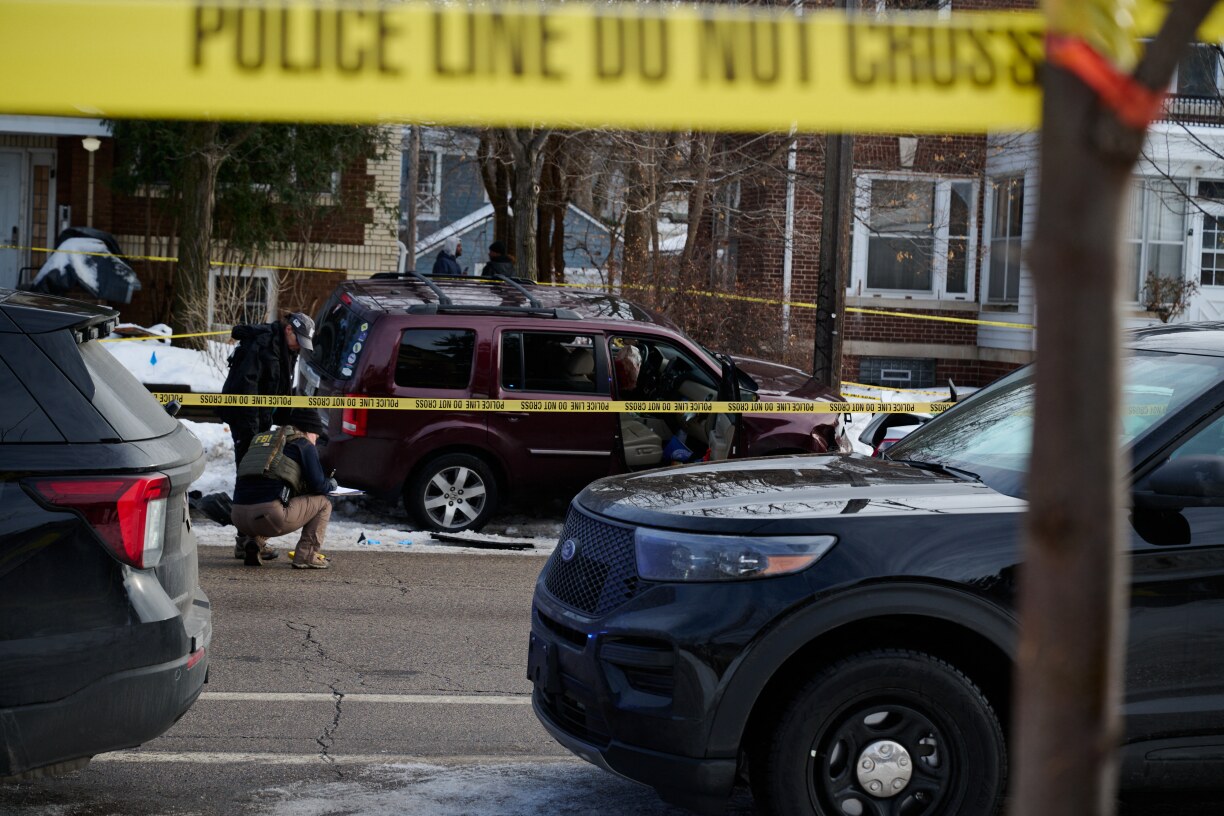
Fatal encounter – Renee Nicole Good was shot at point-blank range on Wednesday when federal immigration agents approached her car in south Minneapolis, reportedly suspecting her of blocking traffic. Video footage shows an officer firing into her moving vehicle as she attempted to leave the scene. A US citizen and not the target of immigration enforcement, Good died at the wheel, leaving behind a wife and a six-year-old child.
Protests and politics – The shooting prompted large demonstrations across Minneapolis, with clashes between protesters and federal agents using pepperball guns and tear gas. President Donald Trump and senior officials claimed agents were under organised attack, a version of events strongly disputed by Minnesota’s Democratic leadership. The incident has revived painful memories of the 2020 killing of George Floyd, deepening fears about policing, protest, and federal force in the city.
Digital fallout – In the hours after the killing, AI-generated images and deepfakes flooded platforms such as X, falsely identifying the masked ICE agent and manipulating images of Good. Disinformation researchers warn the episode highlights a growing pattern in which generative AI is used to fill gaps in breaking news, fuelling outrage, harassment, and confusion at moments of national shock.
Your Weekly Recap is published every Friday at noon.
You can read earlier versions of the Weekly Recap here.





