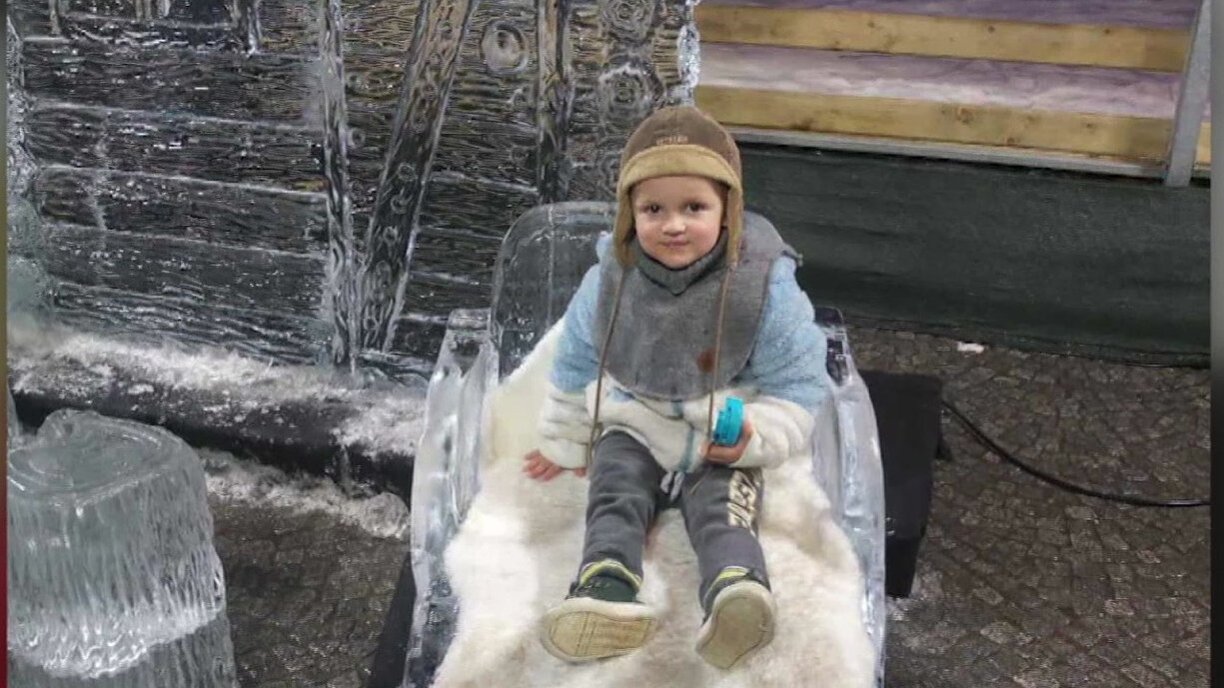
Monday marks the first day of the long-awaited trial into the death of Emran, a boy who was just under three years old, at the Luxembourg City court.
The case relates to a tragic incident in winter 2019, when a two-tonne ice sculpture collapsed at the city's Christmas market, falling onto Emran and causing fatal injuries.
Emran's family has endured years of uncertainty while awaiting the trial. As recently as November 2025, on the sixth anniversary of their son's death, the parents still did not know if or when a trial would take place.
At that time, Emran's father, Ragbet Hamza, told RTL the family wanted clarity about what happened and to meet those involved.
"We want to see the people who were involved. Who made which mistake? We're not looking to point fingers, but we want to understand what happened. I believe that everyone tries their best at work", he said.
Judicial authorities explained that the delay was due to all parties exercising their right to appeal at every stage, significantly prolonging the process.
While initially unclear how many people would ultimately stand trial, a current list names 10 defendants: the Luxembourg City Tourist Office (LCTO), its former director and employees, and several staff from the Luxembourg City administration, including the head of the Public Spaces, Festivals and Markets (EFM) department. Employees of the company that crafted the ice sculpture are also charged.
All face accusations of involuntary manslaughter.
The court has scheduled 12 days of hearings over three weeks.
On the first day of the trial, Luxembourg City mayor Lydie Polfer was among the first witnesses to testify. She described the incident as one of the worst tragedies imaginable and stressed the importance of the trial in helping establish how the accident could have happened.
The hearing focused in part on how responsibilities were divided between the City of Luxembourg and the LCTO, which had commissioned the sculpture. While the tourist office had contracted the sculptor, Polfer indicated that the city ultimately bore responsibility for safety at such events.
She noted that, unlike other large events such as the Schueberfouer, there were no specific standards or inspection procedures in place for ice sculptures.
Details of the accident were also revisited in court. The sculpture, designed as the façade of a wooden chalet, collapsed just hours after being installed. Emran had moved behind the structure, into a narrow space between the installation and the ice rink barrier where his mother was skating, when parts of the sculpture fell on him and pinned him against the fence.
The sculptor, who is among the defendants, told the court that he had wanted to place the structure differently to prevent access behind it, but said he had not been given that option. His lawyer, Antoine Lachenaud, later stated that his client had strongly advocated for an alternative placement that would have significantly reduced the risk of collapse.
The defence also emphasised that the sculptor does not deny responsibility and is aware of the family’s suffering, attending the trial to provide a full and transparent account.
The trial is set to continue on Tuesday, when the sculptor will be questioned further.





