In an interview with RTL Radio Luxembourg in early January, Massen discussed among other things the issue of languages in Luxembourg's school system, and the country's 'outdated' and inequitable school system - but also the rapid growth of international schools in Luxembourg and the impact these have on the system and society broadly.
In discussing the latter point, Massen said that international schools lead to a form of 'ghettoisation' as many students who attend these schools do not come into contact with Luxembourgish society and language. This prompted a response from the Ministry of Education, which noted that international schools remain essential to the future of education in Luxembourg.
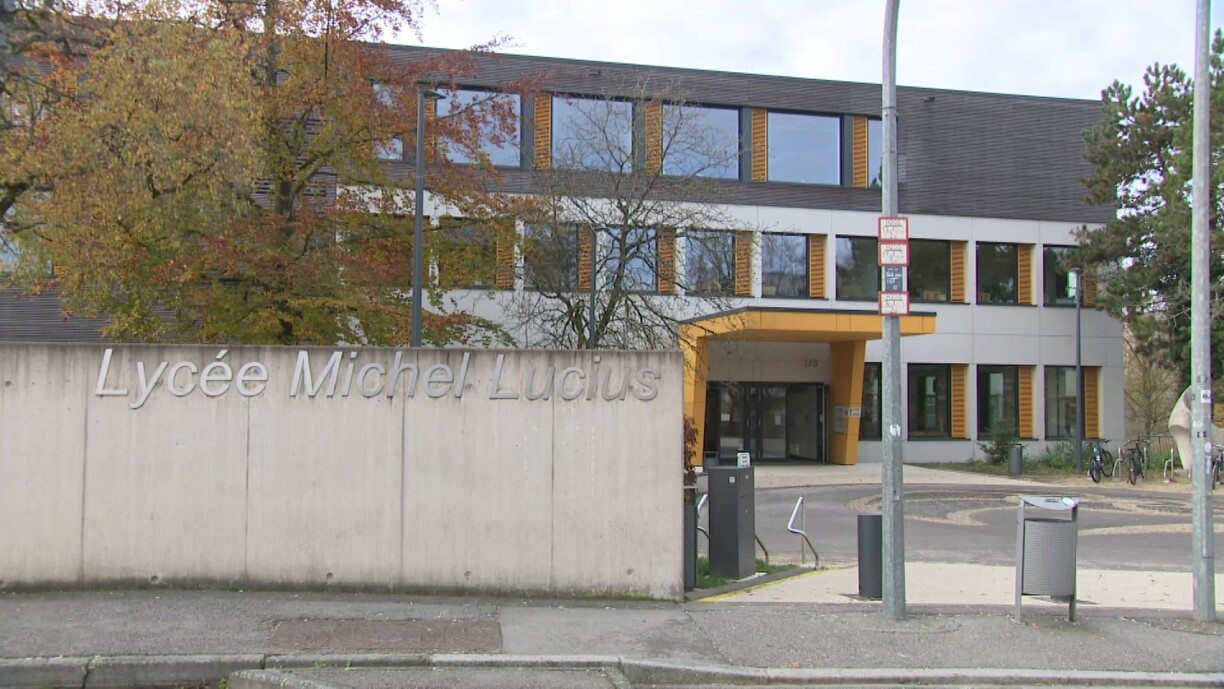
The response from the ministry came in early January, shortly after the interview. More recently the 'ghettoisation' comment also prompted the Parents' Association of the Primary School Michel Lucius to write an open letter in response, which was sent to RTL Today, as well as to Massen himself and representatives of the Ministry.
In their open letter, the Michel Lucius parents' association note their disappointment in reading Massen's "inappropriate" comments on RTL Today - specifically as relates to the growth of international schools.
"In our view, these schools are responding to demands of both Luxembourgish and non-Luxembourgish residents and are not only essential as they stand today, but are very likely to expand over time as a response to the demands of parents. "
They further note that the need for these schools is evidenced in part by the fact that Michel Lucius Primary was over-subscribed in 2022, and thus not able to accept all potential pupils that wished to attend.
We reached out to Alain Massen for comment on the parents' association's open letter, and the criticism he has received following his appearance on RTL Radio and the subsequent article on RTL Today.
Asked to clarify what he meant in stating that international schools lead to a form of 'ghettoisation', Massen expressed that the choice of words was the unfortunate result of being live on radio and not immediately finding the right term. Instead, he said that the term he had been looking for was parallel worlds. He also noted that this might be clearer for those able to listen to the (Luxembourgish) interview as a whole.
Drawing on personal anecdotes, he stated that he has friends who grew up in Luxembourg but attended schools that were not part of the State system, which means that today they can't speak Luxembourgish. "They have lived here for 40 years .. and they've said that throughout their youth they never really came across people outside of that bubble."
And 'bubbles' are the phenomenon that Massen argues should be avoided where possible, rather than exacerbated. In his view, placing too much emphasis on international schools - instead of better serving all manner of pupils and backgrounds within the ordinary system - risks creating or further solidifying a form of segregation within Luxembourg, while schools could instead play an important role as a tool of integration.
While Massen thinks that international and private schools are an enrichment to the system as a whole, offering the opportunity to learn best-practice between various approaches, the problem lies in creating sufficient spaces to meet demand.
To this end, he acknowledged the very same issue raised by the Michel Lucius parents' association: that international schools are oversubscribed. For that reason, "International schools will not give a general solution - only a solution to some kids who can get in," said Massen, explaining further that while there are a few thousand children enrolled in International schools, that leaves tens of thousands of other children who come from diverse international backgrounds who cannot get a spot in one of these schools.
"50% of children don't come from a Luxembourgish or German background. That's what I wanted to say. That the minister or ministry can put up one international school after the other, but it will never be enough, you can't build 50 schools over the next years," said Massen.
That's why it is his stance that we instead need the ordinary Luxembourgish school system to be more flexible, and enable pupils to conduct their studies in various languages. Massen noted that he had visited one of the schools enrolled in the French literacy and alphabetisation pilot programme launched last year - a project for which he had entirely positive feedback.
Massen gave this as one example of the flexibility needed within the system, and in a response also sent to the Michel Lucius parents' association he notes that he has pushed the ministry to "already now begin to prepare, not only for more extensive offer in French alphabetisation, but also for alphabetisation in English."
We also spoke to Ulrik Møller, President of the Parents Association of Primary International School Michel Lucius, to get their view on the issue of the potential segregation caused by the proliferation of international schools diverging linguistically from other state-run schools - as well as Massen's suggestion that emphasis should rather be placed on improving the educational flexibility of standard schools.
Møller found some scope for agreement with Massen, in that several fundamental improvements should be made within the standard school system. To Møller, the considerable demand for the state's various international schools is indicative of the need within our society.
Luxembourg is an exceptionally international country with people of various linguistic backgrounds settling here, many permanently. Møller pointed to the fact that the linguistic situation within the standard local school system places many children at a disadvantage, in part because they may not have a compatible linguistic background, but also in terms of their parents being able to render school and homework support at home.
Møller further stressed that the association is not here to create tension - but rather to ensure that education remains competitive. He sees the establishment of international state schools following various curricula as an important facilitator of setting high educational standards, noting that the differing approaches taken by the international schools are founded in a different mindset.
This, argued Møller, is also important for the momentum and competitiveness of the country.





