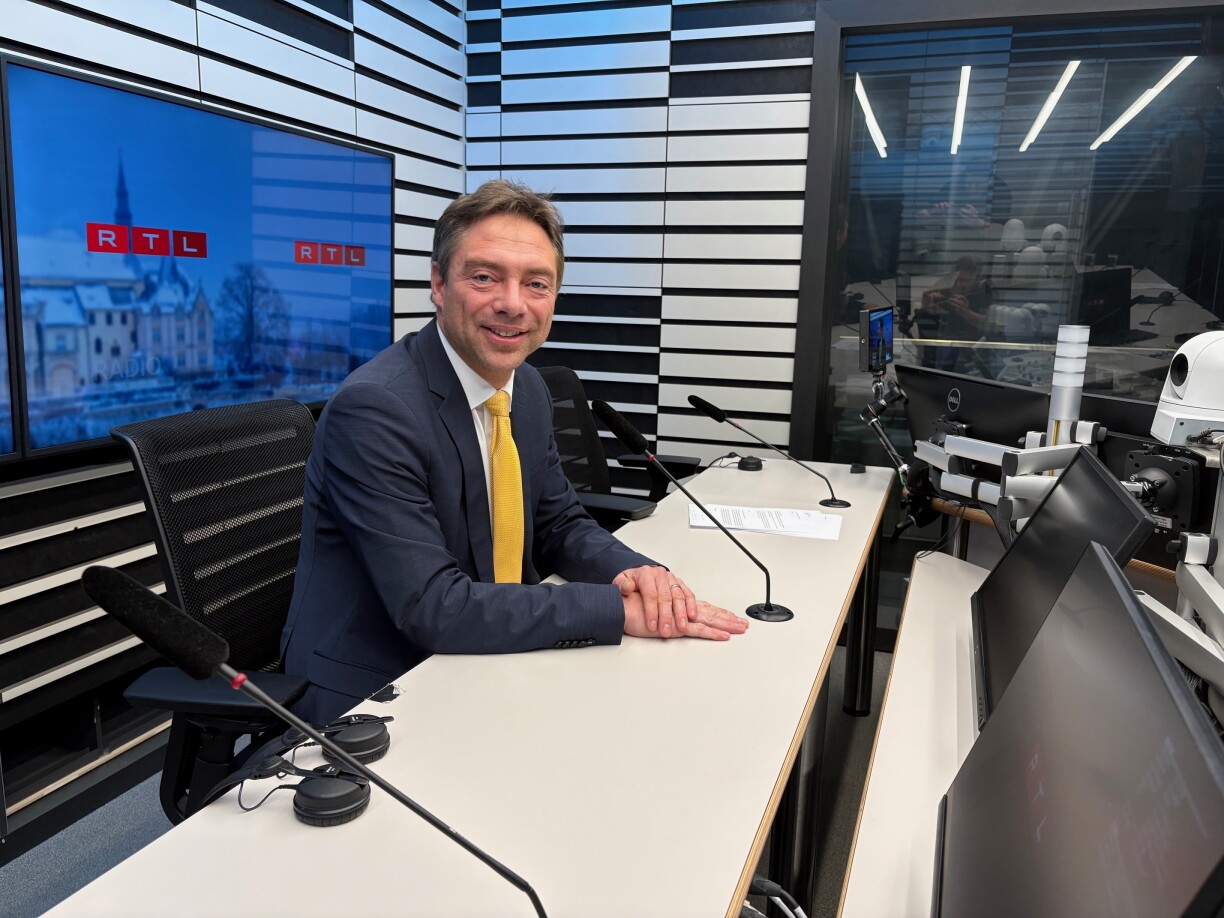
ADR leader Fred Keup refuted claims that the party was responsible for spreading misinformation on the introduction of unisex toilets in secondary schools, as stated by education minister Claude Meisch on Monday.
Speaking to RTL on Friday, Keup said last week's parliamentary committee session clearly outlined that the boys' and girls' toilets in new secondary schools would be replaced with toilets that were not exclusive to one gender or the other. The CSV then spoke out against this and the DP ministers responded that toilets for boys and girls would remain, but neutral toilets would also be added.
Many parents and students expressed concern and criticism towards the project, meaning transparency, and honesty were now vital, Keup added. He called upon Meisch and his colleague Yuriko Backes to openly announce they would withdraw the unisex toilet plans.
Does the ADR agree with the new concept? Keup seemed to think the option was already in existence at many schools. "If there's someone who wants to use a different bathroom for whatever reason, that is already possible in many places."
Neutral schools, no neutral toilets
In response to the arguments that transgender people are harassed in regular toilets and that unisex toilets offer more protection, the ADR parliamentary group leader said: "But if you look deeper, this is also about instilling a certain worldview in children." Everyone deserves respect, he continued, but that does not mean, in his opinion, transferring all social debate to children. Schools should be a place where "neutrality prevails".
But why can schools not have neutral toilets like at home, or on planes? "It's a completely different situation [on a plane]", Keup responded. At home, there is also security and discretion.
He added that he believes those affected had not been consulted on their feelings about neutral toilets.
Minimum wage must be enough to avoid poverty, but increases cannot be too 'abrupt'
When asked for the ADR's position on raising the minimum wage, Keup said he did not have a specific value in mind but that the party agreed minimum wage should be sufficient to prevent people from falling into poverty, which is not currently the case.
Labour minister Marc Spautz is working on establishing reference values with the General Inspectorate of Social Security (IGSS), but has not yet named an amount. Employer representatives are staunchly against raising minimum wage, while the OGBL trade union has demanded a 10% increase.
Keup said one should also distinguish between people who have more or less, and people who live in Luxembourg with higher costs, and cross-border workers. He expressed understanding for employers and said any increase could not be too "abrupt" and should be subjected to discussions between stakeholders.





