
Here are five things you should know at the end of this week:


Luxembourg's pension system is facing financial challenges, leading to a heated debate over reform options. The governing parties oppose increasing contributions or raising the legal retirement age, advocating instead for extending the contribution period.
Coalition stance – The Christian Social People's Party (CSV) and Democratic Party (DP) prioritise employer competitiveness, opposing increases in pension contributions or a rise in the legal retirement age of 65. Instead, they suggest extending working years beyond the current average retirement age of 60 while maintaining supplementary periods such as 'baby years'. In essence, the proposal encourages individuals to work until the legal retirement age rather than retiring up to five years earlier.
Secondly, one proposal under consideration is to expand tax incentives for private pension contributions. However, private pensions pose a significant limitation: they are more accessible to higher-income workers, raising concerns about equity. The governing parties avoid addressing the issue of minimum pensions, which are seen as too low by many, suggesting instead more targeted social assistance programmes.
Opposition push – The Luxembourg Socialist Workers' Party (LSAP) and The Left (Déi Lénk) are advocating for increased revenue to support the pension system’s sustainability, with the primary suggestion being the abolition of the contribution cap, which is currently set at five times the minimum wage. The Left Party, aligning itself with trade unions, calls for an increase in contributions to 9% and a more progressive approach to ensuring everyone has a fair share in contributing to the pension system. The Alternative Democratic Reform Party (ADR), meanwhile, proposes delaying early retirement by one year, and gradually increasing contributions, although they have not provided concrete figures for their proposals.
Unresolved issues – While the CSV and DP have expressed determination to act on pension reform, they are not yet aligned with opposition parties on key aspects, particularly concerning civil service pensions. Despite the extensive debate, key points of contention include the balance between increasing revenues and maintaining employer competitiveness, the extension of reforms to the public sector, and the challenge of ensuring equity within the pension system.
Read also: Majority of youths feel uninformed about pension system, survey finds

Luxembourg property owners with African-sounding names receive offers 3-4% below market value, translating to an average loss of €20,000 per sale.
The study, conducted by LISER with international partners, used experimental methods to assess property valuation biases.
Older participants and those with lower education levels exhibited stronger biases, suggesting statistical discrimination rather than overt racism.
Study findings– A LISER study, published ahead of the International Day for the Elimination of Racial Discrimination, highlights racial bias in Luxembourg’s housing market, with properties linked to African names consistently undervalued.
Study methodology – Researchers presented participants in Luxembourg with fictitious real estate ads and asked them to appraise the properties. Some participants were shown sellers' surnames, strongly framed to indicate their origins. Sellers with sub-Saharan African surnames were systematically offered lower prices, with an average appraisal penalty of €20,000 – rising to €58,000 for older and less-educated participants.
Economic impact – Researcher Dr Giorgia Menta warns that these "hidden prejudices" hinder wealth accumulation for minority property owners, deepening existing racial disparities.
Discrimination patterns –The study found biases persisted regardless of attitudes toward migration, indicating a structural issue in property valuation rather than explicit prejudice.
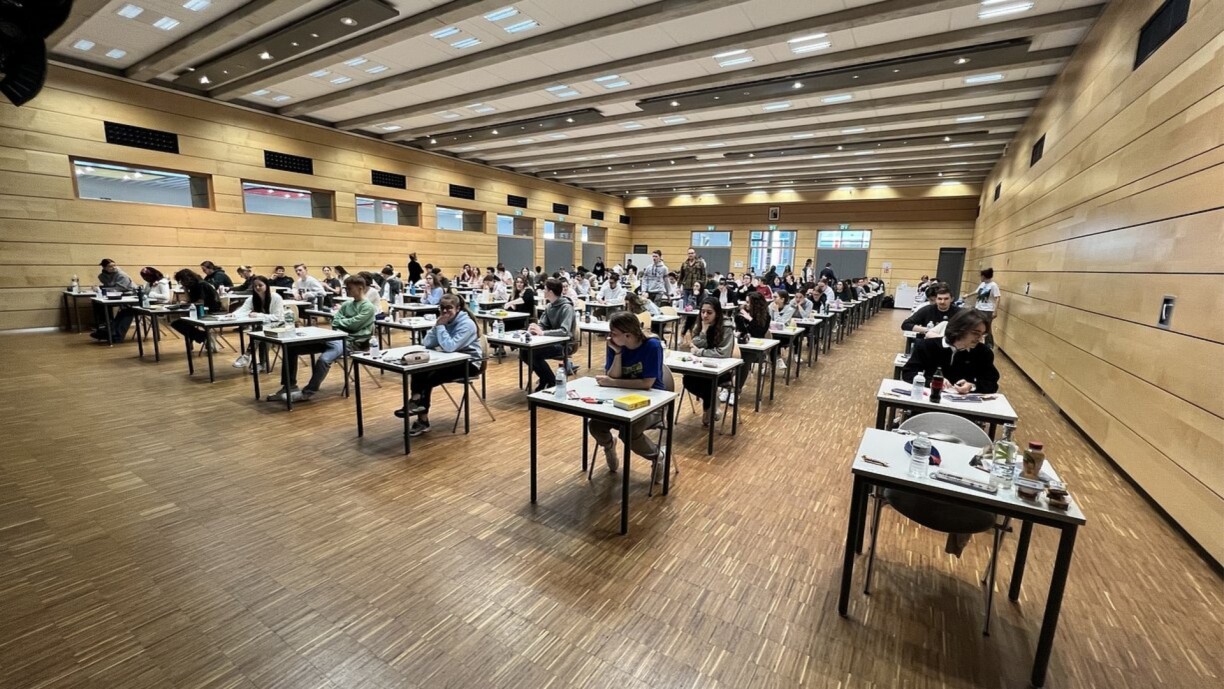
The number of early school leavers in Luxembourg has risen slightly, from 7.0% in the 2019/2020 school year to 8.2% in the 2023/2024 school year.
Despite the increase, Luxembourg remains below the EU Commission's early school leaver target of under 9%, with the European average currently at 9.8%.
Three services are in place to support early school leavers, including psychosocial assistance, follow-up by SCRIPT (Coordination Service for Pedagogical and Technological Research and Innovation), and encouragement from the National Youth Service to pursue professional development.
Growing trend – The slight increase in the number of early school leavers in Luxembourg reflects a growing trend, though it remains within acceptable limits according to the EU Commission’s guidelines. Education Minister Claude Meisch pointed out that the rise is not alarming, and the figure still aligns with the EU's goal of keeping the rate under 9%.
Follow-up support – The reasons for early school departure are diverse, with students either seeking different educational opportunities or struggling to find traineeships. To address this, the government provides extensive follow-up support, including psychosocial assistance and professional development encouragement through various services like SePAS and the National Youth Service.
Vocational education –Vocational training initiatives are also being bolstered, as part of a broader effort to engage students in professional pathways. Meisch emphasised that ongoing campaigns aim to highlight the benefits of vocational education in collaboration with social partners. An upcoming report in May will provide further analysis of these trends and the reasons behind students leaving school early.

Donald Trump and Vladimir Putin held a 90-minute phone call on Tuesday, 18 March, discussing a ceasefire plan in Ukraine, with Trump pushing for a potential division of territory between Ukraine and Russia.
Kyiv has agreed to halt fighting for 30 days, but Russia's conditions for a ceasefire include barring Ukraine from NATO and rejecting Western peacekeepers in Ukraine.
Despite the ceasefire talks, Putin insists that a ceasefire would benefit Kyiv and not Russia, and Moscow continues its military offensive in Ukraine, with both sides preparing for further escalation.
Energy truce – Trump and Putin agreed to a 30-day halt on Russian attacks against Ukrainian energy infrastructure, but broader ceasefire discussions remain stalled, with key differences over territorial concessions and military support for Ukraine. While Trump has voiced optimism about reaching a truce, the challenges are clear, especially with Putin's reluctance to compromise.
Ukrainians remain deeply doubtful of a ceasefire, with many believing Russia will not honour agreements. Ukrainian soldiers and civilians expressed frustration and distrust, with some feeling that Russia is unwilling to negotiate in good faith.The temporary pause on energy strikes is seen as beneficial to Putin’s military operations rather than a genuine step towards peace. Despite the US-led ceasefire proposal, many believe Ukraine’s best guarantee for survival is continued military support and readiness for further conflict.
Nuclear power plant proposal – On Wednesday, Donald Trump suggested the United States could take control of Ukraine’s nuclear power plants, including the Zaporizhzhia plant, a proposal that Ukrainian President Zelensky discussed but did not feel pressured to accept. Taking control of Ukraine's nuclear power plants, are part of Trump's broader strategy to end the war, although they are met with skepticism from allies and some international observers.
Global implications – The ongoing discussions between Trump and Putin have sparked concerns among NATO allies, as the ceasefire plan could shift the balance of power in Europe, potentially altering the course of the conflict and impacting international relations.
Read also: Frieden stresses need for a 'lasting and just' peace in Ukraine

Ekrem Imamoglu, Istanbul's mayor and President Erdogan's main rival, was detained in connection with two investigations into corruption and alleged support for terrorism.
The detention of Imamoglu, just days before his expected nomination as the opposition’s candidate for the 2028 presidential race, has sparked outrage, with critics claiming the move is aimed at stifling his candidacy and undermining democracy.
The move against Imamoglu caused a sharp decline in Turkey's financial markets, with the lira falling by 14.5% against the dollar, as investors voiced concerns over the political motivations behind his detention.
Political coup –The arrest of Imamoglu has ignited fierce protests and anger among opposition groups, claiming that it marks a significant escalation in Erdogan’s crackdown on dissent. Critics view this as a direct assault on Turkey’s democratic processes, further polarising the political landscape. With several investigations pending, this action could have profound consequences for both Imamoglu’s political future and Turkey’s broader political trajectory. Hundreds of protesters took to the streets, despite a heavy police presence and a protest ban, decrying the move as a political coup. Many citizens voiced frustration, describing the situation as a dictatorship and drawing parallels with past military coups.
Revoked degree – Just days before his detention, Istanbul Mayor Ekrem Imamoglu had his university degree revoked by Istanbul University on the grounds that it was falsely obtained. This move, which could have disqualified him from running in the 2028 presidential race, was widely seen as an attempt to block his candidacy. Imamoglu described the decision as unlawful and vowed to challenge it in court, while his party insisted it would not deter them from naming him as their candidate.
Concerns about democracy –The arrest occurred amid a broader crackdown on opposition figures in Turkey, with authorities removing over a dozen opposition mayors and targeting perceived opponents to stifle dissent. Political analysts have described the actions as a "coup" against the main opposition party, with significant implications for Turkey's political future. Amnesty International called it a "massive escalation" in the authorities' efforts to suppress peaceful dissent, citing the weaponisation of vague anti-terrorism charges against critics. This crackdown has drawn international condemnation, with the EU and Germany expressing concern about the growing erosion of democratic freedoms in Turkey.
Business & Tech – Starbucks has been ordered to pay $50 million to a customer who was burned when hot tea spilled on his lap at a California drive-through.
Science & Environment – A tourist buried by an avalanche in northern Norway was pulled out alive in a "miracle" rescue on Wednesday, after spending seven hours trapped beneath the snow, local media reported.
Entertainment – Laura Thorn prepares to conquer Eurovision with La Poupée monte le son
Slight drop – The latest World Happiness Report ranks Finland as the happiest country, while Luxembourg drops to ninth and the US sees a decline due to rising loneliness.
Sharp rise – In 2023 alone, 606 cases of syphilis were reported in Luxembourg – nearly 30% more than the previous year.
Excessive consumption – Luxembourg has seen more than 3,600 alcohol-related hospitalisations between 2018 and 2023, with a notably low rate of cases involving minors, new figures reveal.

Your Weekly Recap is published every Friday at noon. Read earlier versions.





