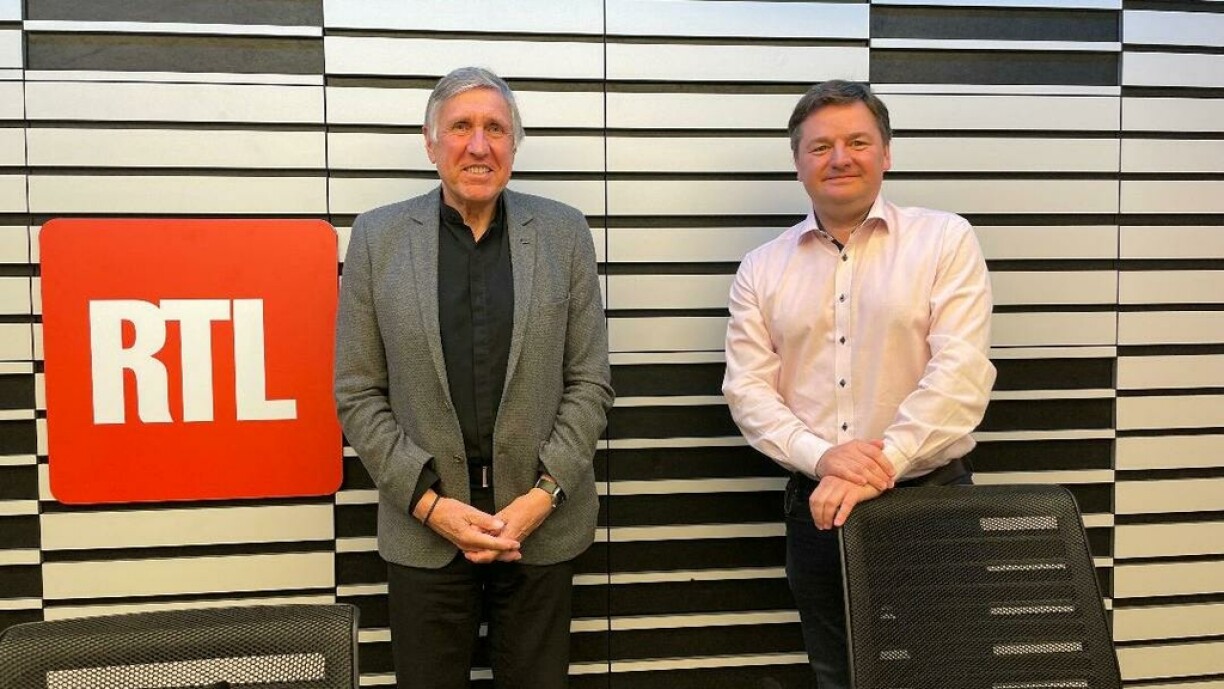
Speaking to our colleagues from RTL Radio on Saturday, Deputy Prime Minister François Bausch from the Green Party (déi Gréng) said that "we need to get through this winter first, but then we also need to see what happens next".
Because of the uncertain future, Bausch believes the state should be cautious not to exhaust all of its current financial resources. According to the Deputy Prime Minister, the present situation is "as bad as the crisis in the 1980s".
Read on: Tripartites - the Luxembourg Social Model
Bausch said the government is aware that many households and companies, "especially the middle classes," are facing significant difficulties.
As a result, Bausch contends that the state should prioritise targeted financial assistance in order to protect the most vulnerable.
Measures should be introduced "in the short term," before people and companies are unable to pay their energy bills.
However, Bausch also thinks that the state "cannot just do whatever it wants," because the country's businesses "have to remain competitive".
According to the Deputy Prime Minister, times of crisis are not an appropriate moment to discuss taxes. However, Bausch concedes that after the crisis it should be possible to talk about potential reciprocal financing.
While the Green Party politician stressed that he stands behind the wage indexation system, he argued that if three or five indexations are triggered, "we would have to stick together for the sake of the national good".
Read also: Ahead of the tripartite: Bettel meets with unions and employers
Bausch declined to comment on the topics and proposals on which the government will focus during the tripartite negotiations, which start on Sunday, but merely reiterated that "nothing should be off the table".
The main goal of the tripartite should be to "slow down inflation". Bausch also made it clear that, once the crisis is over, he is open to a general discussion about the indexation system. "I certainly don't need a 2.5% increase in my salary," Bausch admitted.
The Deputy Prime Minister anticipates that the next election campaign will focus on social justice issues, including taxes.
However, for the time being, the country must concentrate on "putting out the fire that is raging right now," Bausch stressed.
In a "terribly unpredictable situation," the tripartite must convene "as often as necessary," the Green Party politician stated, "even in the run-up to the elections, if necessary". The primary objective is "to get out of the crisis, regardless of whether elections are coming up or not".
If the tripartite is unable to reach an agreement, the government will have to assume responsibility and pledges to do so, Bausch declared. While the government is going into the negotiations as a united front, Bausch thinks that it is normal that different people have different ideas.
The minister declined to comment on the way in which the state may interfere with energy prices. Other countries have already introduced price caps.
The fact that the Green Party did not like the fuel discount had nothing to do with the climate, Bausch clarified.
The main issue for his party was that the measure "was not socially targeted in any way". If it had been up to him, Bausch explained, he would have preferred to give more to a person "who lives high up in northern Luxembourg and needs a car than to someone who drives a big Porsche."
The Deputy Prime Minister conceded that the climate would certainly not be saved in the next few months. "We Green Party politicians are not that stupid," Bausch said.
According to the Minister of Mobility, there are no "magic solutions" in the mobility sector. Infrastructure should be prioritised so that more people may benefit from other means of getting around, such as cycling, according to Bausch.
If the current crisis has taught us anything, it is that "some things that have been delayed for a long time now proceed more quickly." Working from home, according to the minister, is also part of the solution.
In terms of lighting and energy saving, the Deputy Prime Minister pointed out that, except at the interchanges, there are never any lights on.
Meanwhile, the ministry is still discussing the lighting on national roads. However, Bausch conceded that there are also security considerations at play when it comes to national roads.
Bausch called for a "total rethinking" of mobility policy, stressing the need for "massive investments" in trains, buses, and trams to reduce car journeys.
"We have sinned, and as a result, we must now take action," the minister stated, adding that lowering the speed limit "is also on the table." When asked about the criticism levelled at the citizens council's climate suggestions, Bausch vowed not to make "any more statements in the future that can be taken out of context."
The minister also stated that he is not opposed to a discussion about reduced working hours but argued that this should be decided "within individual sectors and companies".
The Deputy Prime Minister considers soil use, biodiversity protection, and climate change to be "primordial challenges of the future." The difficulty, according to Bausch, is to develop "sensible strategies for the country's underused lands."
Regarding the backpedalling of Minister for the Environment Joëlle Welfring, after the ruling of the Administrative Court, Bausch confirmed that the Nature Conservation Law will be amended.
Speaking about his political future, the Green Party politician said that he has not yet decided whether he will face the voters. In any case, François Bausch will no longer be available as a minister in a new government – but does not exclude taking up the role of an MP.





