At a time when the A3, Luxembourg's main motorway, is reserving its brand new third lane for buses and car-sharing, and when the future Luxembourg-Bettembourg line is taking ever more concrete shape along the A3, a small revolution is underway in the vast Moselle region that runs along the border. The focus is on how best to encourage cross-border commuters to use public transport rather than their cars. A "battle plan" has been drawn up, with a first proposal opening the possibility of turning the situation around before the end of the summer.
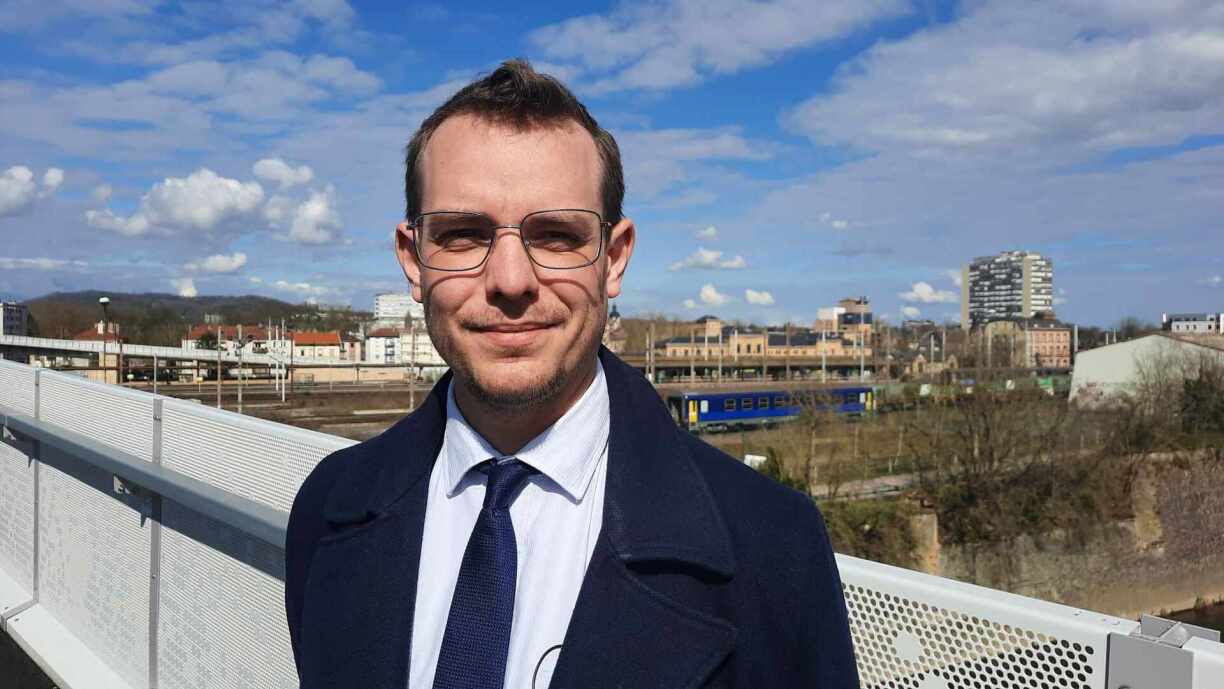
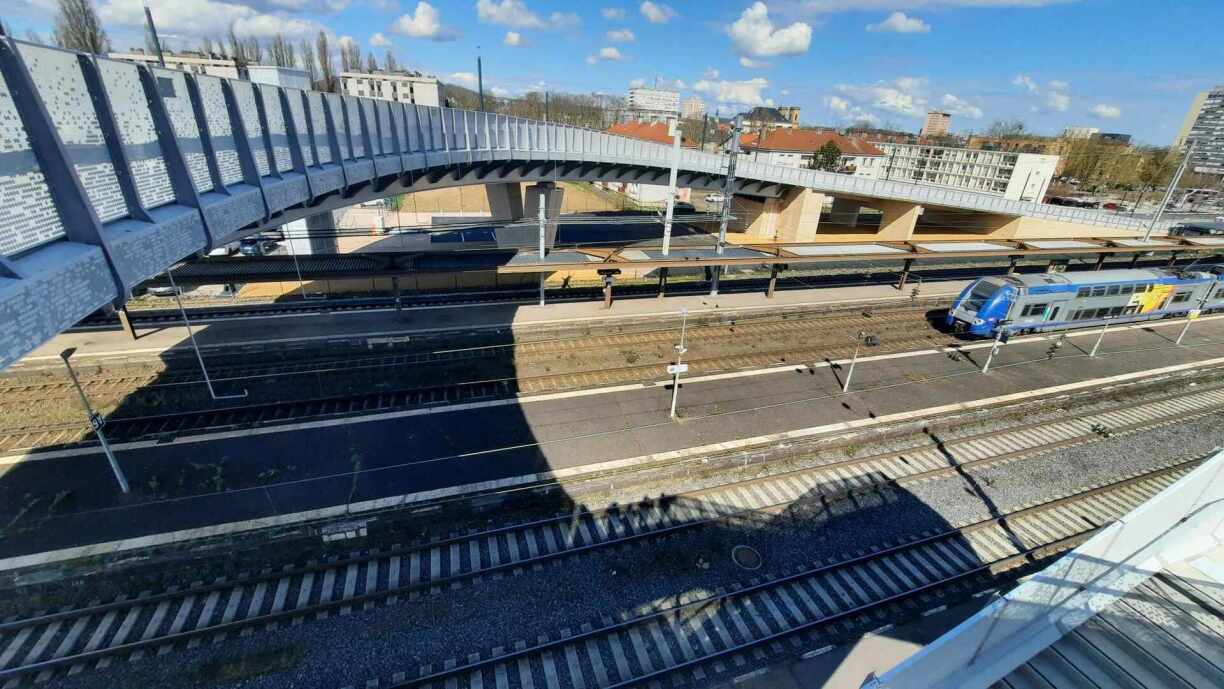
The president of the transport union responsible for mobility in the North Moselle area (TeMo), Rémy Dick, explains that by 1 September at the latest, the new Konrad Adenauer bridge over the Thionville railway line and the Alcide de Gasperi bridge over the Moselle, 800 metres down, will “enable buses to bypass the road traffic on the Pont des Alliés, which is totally saturated at peak times”. Thionville station will then be the first to have totally secure access for collective mobility, according to Dick.
TeMo is the new name of the transport union that manages mobility in the north of Moselle, stretching from Guénange to the Luxembourg border. Previously limited to the Thionville area and the Fensch Valley, the area was enlarged on 1 January 2025 to include the whole of Cattenom and the entire Esch-sur-Alzette border region, including Audun-le-Tiche and Aumetz, for a total of 54 communes. The area is set to expand further to create the image of a "Luxembourg border" block and organise mobility along the border, explains Rémy Dick. Discussions are underway with elected representatives from the Bouzonvillois and Arc Mosellan areas.
The opening of the two new bridges means that access to Thionville station will be much easier. Dick details that cross-border commuters will have the certainty of being able to take the bus to Thionville station in the morning and evening, with a line running directly from Yutz, Basse-Ham, Thionville, Terville, and the Fensch area, thus allowing commuters to avoid traffic jams.
This represents a major change for users and a cornerstone in the vast plan to restructure mobility that TeMo wants to implement in the area it is responsible for. After the completion of the urban development plans in the immediate vicinity of Thionville station, Uckange and Hettange-Grande stations will follow. These three stations are set to become multimodal hubs for work-related transport. The TeMo president admits that an enormous amount of work needs to be done in order to achieve this.
Work will soon be carried out in Uckange to ensure access to the station. Although buses are currently unable to get to Uckange station, Dick assures that this will be possible from September or October. In Hettange-Grande, TeMo is currently working with the City of Cattenom and the local council community on the development of exclusive right-of-way transport, which would function as a bypass around Hettange-Grande to provide access to the station by bus in the morning and evening.
The idea is to link these three future multimodal hubs by a Bus Rapid Transit (BRT) system, with the aim of making mobility more attractive for commuters. Dick states that a BRT system with a predictable timetable would be particularly helpful for cross-border commuters, which would allow them to reach Luxembourg or Metz more easily.
The BRT system will be built progressively until 2028-2029. From September, the BRT will pass over the two new bridges at Thionville. It will then link Hayange, Serémange-Erzange, and Florange, which will be completed between this year and the next. Access to Uckange station is scheduled for 2026-2027.
Given the rush-hour flows to Luxembourg, but also to Nancy-Metz, Dick insists that only the train can absorb the traffic. The main challenge is the last kilometre between the station and home, that is, to convince people to walk to the bus stop and to continue their journey to Luxembourg in public transport.
To transport employees to the nearest station without them having to wait in traffic jams or worry about parking their cars, TeMo is planning a new service dedicated to cross-border commuters with express coaches. Easy access to stations from most towns in the region could be achieved within five or six years, Dick estimates.
The second service to be developed is day-to-day transport, which is based around La Santé and the main shopping areas of Bel-Air, Linkling, Metzange and Thionville city centre. These four focal points will be linked by a common line.
Dick indicates that the aim of TeMo is to ensure that anyone can access one of these convergence points as quickly as possible using a single connection, regardless of where the user is in the transport network. In this context, the regional government has decided to discuss the reopening of new stations and new rail stops. He explains that the idea is to open a station at Florange, optimise Hayange station, open a station at Fontoy, Audun-le-Tiche, and possibly around Yutz, Bouzonville, Metzervisse, and Kedange-sur-Canner. This would be a new network of rail hubs that could emerge over the next ten years, he explains.
Dick states that he commissioned two studies from the Nancy-based company Urbanloop. Its rail-mounted capsules carry two to six passengers on a circular route, consuming very little energy per kilometre.
One of the studies focuses on Audun-le-Tiche, particularly the Fensch valley and the steel basin. The other study concerns the right bank of the Moselle, on the side of Thionville, Yutz, Kuntzig, and nearly reaching the Bouzonvillois community.
Rémy Dick explains with enthusiasm the potential of the two studies to think about an alternative mobility offer in an urban environment, which can be experimented with within a 5-year timeline. He concludes that one of the intentions is to create a semi-tram system, that is, a "light tram", in a highly urban space.
Report in French:
Read also:
Eco-friendly and fast rail transport might be solution for A31 motorway





