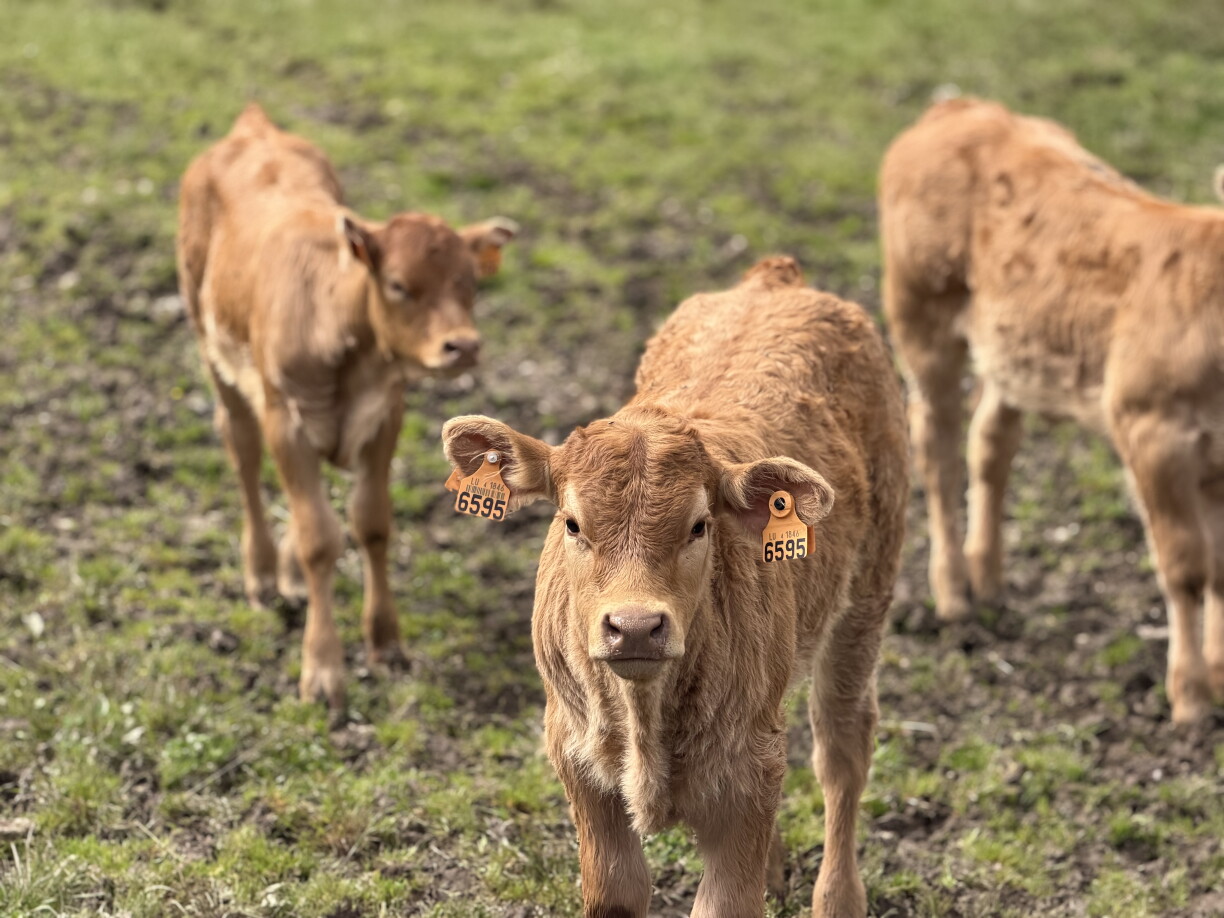
Since last week, four calves have been killed in northern Luxembourg. The Nature and Forest Agency is still analysing samples, but local farmers are convinced that not just one, but several wolves were behind the attacks between Brachtenbach and Eschweiler.
When farmer Georges Schmit went to feed his herd of cows between Brachtenbach and Eschweiler last week, he immediately noticed that while all 10 cows were present, only seven calves remained. He found one of the missing calves on a nearby hill. It appeared mostly "peaceful", aside from some injuries near its mouth – but it was dead. Schmit found the second calf some distance away. This one had been mauled.


He found the third only the following morning. Some days later, the number of calves had dropped to six. While the affected farmers have expressed a wish for the images to be shown uncensored, they are too gruesome for those of a sensitive nature. What can be reported is that the remains of a fourth calf have been found.
Two of the four calves had been largely consumed. According to one farmer, a fox would not be able to eat that much, which is why he is certain it must have been a wolf. Upon enquiry, Laurent Schley of the Nature and Forest Agency said he does not wish to speculate at this point but prefers to await the official results. The agency will make a statement once the findings are available, he added.
In March, the presence of two female wolves was confirmed in northern Luxembourg. In the area around Wincrange, a wolf had mauled several sheep.
Neighbours and local politicians have expressed solidarity with Schmit. Wincrange councillor Carlo Weber said that local residents have become anxious because of the events and are wondering whether it is still safe to go for a walk with their dogs or children. Weber also noted that there is a forest crèche in the area and that horse owners are hesitant to let their animals out. Locals are expecting clear guidelines from the Nature and Forest Agency.
On that point, Schley sought to reassure the public, stressing that the wolf does not represent a danger to humans. A national action plan has been in place since 2015 to accompany the return of the wolf, including provisions for compensating farmers for damages. However, Weber argued that the issue is not about receiving compensation. He questioned why wolves must be protected to such an extent, adding that it almost seems to him as if wolves are valued more highly than humans.
While farmers often focus on the damage they suffer, Schley takes a broader view, arguing that wolves have a role to play in nature, mainly in regulating game populations. Beyond that, Schley pointed out that Europeans watch television and expect India to protect tigers and African nations to protect elephants because they are such beautiful animals. "And you're telling me that we who are living in prosperous Europe are unable to protect a few wolves?", he said.
For now, it remains to be seen whether wolves are indeed to blame for the recent calf deaths in northern Luxembourg.





