
Here's 5 things you should know at the end of this week:


Minister for Home Affairs Taina Bofferding announced at a press conference on Tuesday morning that the Luxembourg City ban on begging lacks legal grounds and cannot come into force.
Following the veto imposed by the Minister for Home Affairs on Tuesday, the mayor and the municipal executive board ('Schäfferot') have responded to the decision.
Who is fighting who? - The ban on begging in Luxembourg's capital has become a contentious issue between the municipal executive (Democratic Party – DP, Christian Social People's Party – CSV) and the government (DP, Luxembourg Socialist Workers' Party – LSAP, Green Party – déi Gréng).
Why the veto? - According to Minister Bofferding, the Luxembourg City council can only issue a ban via police decree if there is a threat to the public. Begging does not constitute such a threat, she noted.
Nevertheless, aggressive begging and polluting public places remain part of the penal code, assured Minister Bofferding
The City reacts - "This morning," after receiving the official letter from the ministry, "we decided to hire a lawyer and appeal against this decision," Mayor Lydie Polfer announced on Tuesday afternoon.
The mayor expressed the belief that Bofferding's decision appeared politically motivated, seeing as it coincides with the start of the municipal election campaign.
Lack of definitive action - The intention behind the police decree issued by the municipality "is not to kick out people who (beg and) are experiencing hardship" but to denounce a "real market" of organised human trafficking.
Polfer stressed that "we wanted to show that something must finally happen, including to save people," adding that "we even saw children on the street."
Amid this contentious issue, the mayor lamented that the problem of organised begging in the city continues to escalate due to a lack of definitive action.
Read also: What's next? Banning people from being poor?
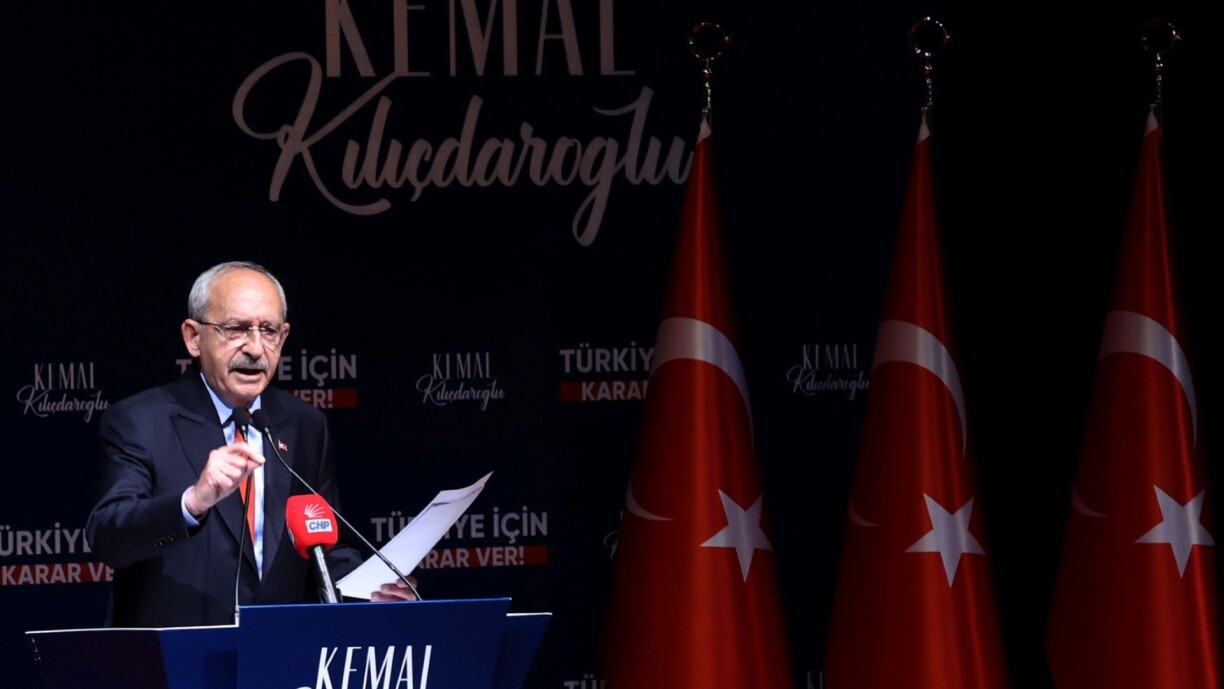
Kemal Kilicdaroglu who few outside Turkey have heard of has pushed President Recep Tayyip Erdogan into an election runoff.
Nearly complete results showed Erdogan picking up 49 percent of the ballot and the secular opposition leader collecting around 45 percent.
Turkey's secular opposition leader may have succeeded in forcing President Recep Tayyip Erdogan into his first ever runoff, but his chances of winning on May 28 are remote.
Seemingly impossible - Kemal Kilicdaroglu was predicted to perform well in Sunday's first round but ended up with just under 45 percent while Erdogan fell fractionally short of the 50-percent threshold required for an outright victory.
His six-party alliance now needs to accomplish seemingly impossible electoral gymnastics to unseat Erdogan, who needs just a sliver of extra support to extend his two decades in power to 2028.
But it still marked a historic achievement for the 74-year-old leader of the strongest opposition alliance to face the man who has never lost a national vote over his two-decade rule.
The 74-year-old has revamped his campaign team since Sunday and toughened his message to win over Turkey's right-wing voters in the May 28 runoff.
Complete opposite - The soft-spoken Kilicdaroglu is a study of contrasts to the brash and bombastic Erdogan -- a populist whose gift for campaigning has helped him become Turkey's longest-serving leader.
Some analysts are portraying the vote in terms as stark as the difference between the two candidates.
"Either Erdogan will lose, giving Turkey a chance of restoring full democracy, or he will win and likely remain in power for the rest of his life," Washington Institute senior fellow Soner Cagaptay said.
'It's the economy, stupid'- Kilicdaroglu's support has been helped in no small part by a cost-of-living crisis that analysts -- and plenty of Turkish voters -- pin on Erdogan's unorthodox economic beliefs.
Erdogan entered the election battling Turkey's worst economic crisis since the 1990: The official annual inflation rate touched 85 percent last year. The unofficial one calculated by economists -- and trusted by most Turks -- approached 200 percent.
'They abandoned us'- Victims of the earthquakes that hit Turkey and Syria have not a lot of faith in Erdogan anymore. In the first three days, no one came to their aid and these elections present a glimmer of hope for them as well.
Praise from Asselborn -In conversation with RTL, Luxembourg's Foreign Affairs Minister praised both lead candidates in Turkey's presidential election for accepting a runoff after a close first-round result on Sunday.
While Turkey expresses a desire to move closer to the European Union, the country has also been a source of frustration for the continent. Furthermore, Turkey's increasing relations with Russia and China position it as a significant player on the geopolitical stage.
Read also: Erdogan - Turkey's irresistible election force set for final test
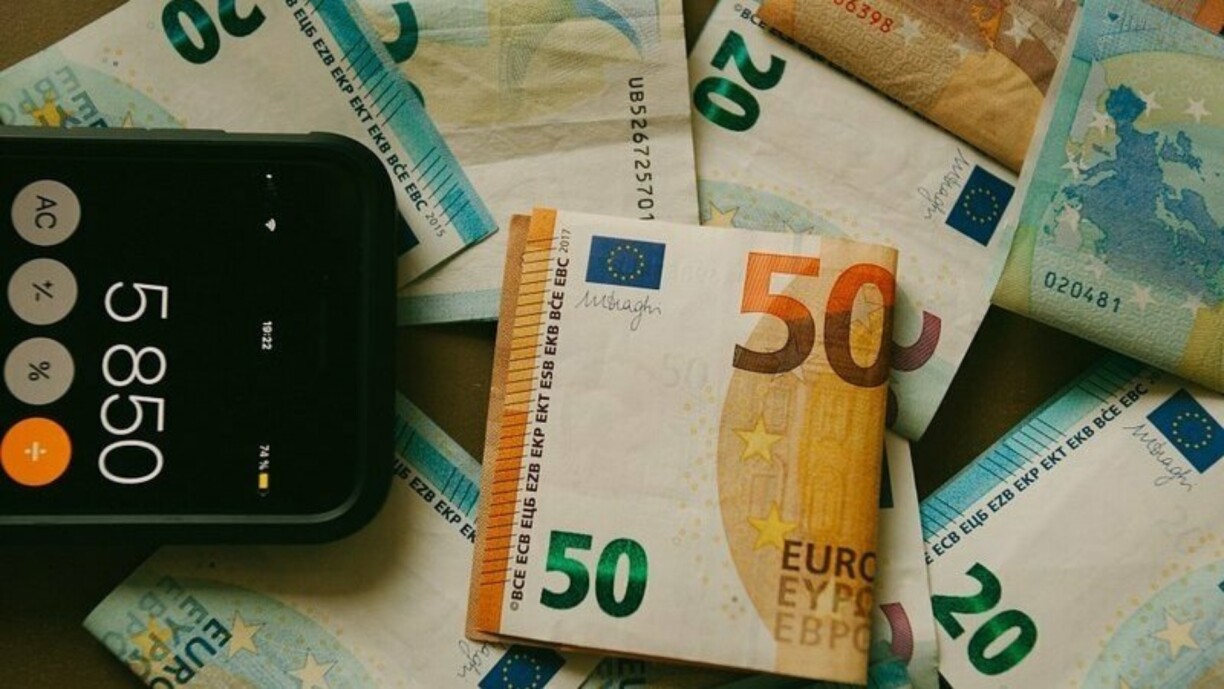
This change is a result of the agreement reached between the government, trade unions, and employers to enhance purchasing power and address the issue of "cold progression."
For this year, the government will introduce a temporary "conjuncture" tax credit. Although temporary, it will replicate the effect of two indexes on the tax scale, resulting in a tax reduction of approximately 5%. This tax credit, retroactive to 1 January, will apply for the entire year.
What is cold progression? - With increasing income, you move up the tax scale, which results in higher taxes. Since 2017, the tax scale has remain unchanged while the index, which combats inflation and protects purchasing power has risen. As a result, a portion of the income increase is eroded by taxes. For example, with a 2.5% increase, the taxpayer may only receive a net increase of 1.7%.
Wanted outcome - The adaption of the tax scale has been on the wishlist of many Luxembourg residents since the indexations.
How will it affect the people? - Click here for a more detailed version on how the temporary tax credit, as well as the real adaption of the tax scale will affect different situations. Be aware, that these are estimations by the government and may vary.
Room for improvement- While the OGBL union has welcomed this initial progress, it emphasised its expectations for further tax reforms that were promised by the coalition but have been abandoned for this legislative period.

There seems to be no end to it: interest rates on property loans in Luxembourg continued their upward trajectory in March.
Homeowners and prospective buyers are therefore taking another hit as interest rates on property loans continue to rise in Luxembourg.
Who is affected? - Experts in the Luxembourgish real estate business agree that fixed rates have been the norm in recent years. This is good news for affected borrowers because it means that they did not have to endure the successive interest rate hikes in recent months.
For those who took the risk of borrowing at variable rates, the situation has changed dramatically. Some have seen their rates rise from 1% to 5% in less than a year.
Variable rates- On average, households that took out a mortgage in March obtained a variable rate of 3.61%, compared to 3.53% in February.
However - Fixed rate loans experienced a similar trend, averaging at 3.93% in March compared to the previous month's 3.77%. The BCL points out that rates can be "substantially higher" on long-term loans.
Saving money - Here's a little guide on how to reduce your monthly payments.
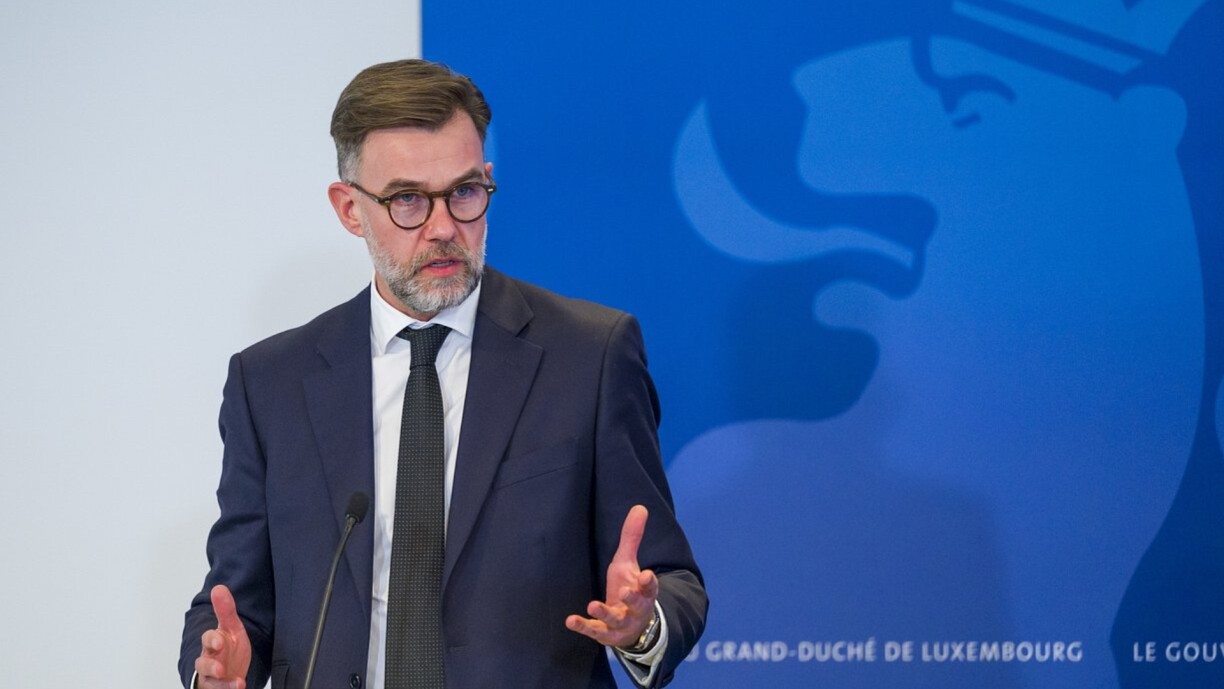
Investigative news site Reporter.lu published an article detailing several instances where Fayot reportedly used taxpayers' money to pay for expensive meals and wine during government trips.
Fayot initially declined to speak to the press on Tuesday.
Responding to the allegations - In a press release published on Tuesday, the Directorate for Development Cooperation and Humanitarian Action of the ministry of Franz Fayot contested these accusations and provided explanations.
In his written response published later that day, Fayot explains that these are all work-related meals. Whether with foreign delegations or his own staff, as a briefing or debriefing dinner, his staff would be invited on State costs. To dispel doubts, Fayot has decided to personally cover the expenses of the New York meal.
Regulated - The issue of business expenditures for food and accommodation is regulated by the grand-ducal regulation of 14 June, 2015, which sets maximum daily amounts. The regulation allows staff to fly business class on flights lasting over four hours.
Article 10 states that government members are entitled to reimbursement of their actual travel and accommodation expenses, provided they provide proof and a motivated declaration. This provision also applies to members of the Council of State during official travels.
Speaking about his case, Fayot said: "I think this was all within the lines. But it is clear there aren't many rules in this area, leaving ministers to decide what is reasonable and what not."
Private expenses, even during a business trip, are not covered by the state. Ministers must provide supporting documents, such as invoices, to have eligible expenses reimbursed.
What about partners? - Reporter.lu also highlighted that Fayot's partner accompanied him on several trips. Fayot clarified that their travel expenses were privately paid.
The Ministry of State explained that there are no specific rules regarding government members being accompanied by their partners. However, if partners are part of the official delegation and their fees are borne by the public, an official partner programme must be in place.
Shedding light - Reporter.lu requested the business expenditures of other ministers as well.
Business & Tech - Montana on Wednesday became the first US state to ban TikTok, with the law set to take effect next year as debate escalates over the impact and security of the popular video app.
Science & Environment-At least nine people died in Italy's northern Emilia Romagna region as heavy rains flooded rivers and submerged entire neighbourhoods and farmland Wednesday, prompting the cancellation of this weekend's Imola Grand Prix.
Entertainment - The latest edition of smash-hit video game franchise "Zelda" sold more than 10 million copies in its first three days, Japanese firm Nintendo said on Wednesday.
Interviewing a jihadist leader - French forces tried to use a journalist's visit to northern Mali to track a jihadist leader but failed to prevent the reporter from being kidnapped by the militants, French media reported Wednesday.
Extensive analysis - After Luxembourg's ban on glyphosate was deemed unlawful, the Luxembourg Institute of Science and Technology (LIST) has been tasked with carrying out a new analysis of glyphosate use in the Grand Duchy.
Dramatic emergency landing - Cargolux has confirmed that an independent investigation is underway by AET, the Administration of Technical Investigations, following an incident involving one of its aircraft at Luxembourg airport on Sunday 14 May.
Incensed reaction- Former UK prime minister Boris Johnson called French President Emmanuel Macron a four-letter obscenity and "Putin's lickspittle" as tempers frayed over the war in Ukraine, according to a former Johnson aide.

Your Weekly Recap is published every Friday at noon. Read earlier versions.
If you have any comments, questions, concerns on improving the Weekly Recap - contact me at alannah_meyrath@rtltoday.lu





