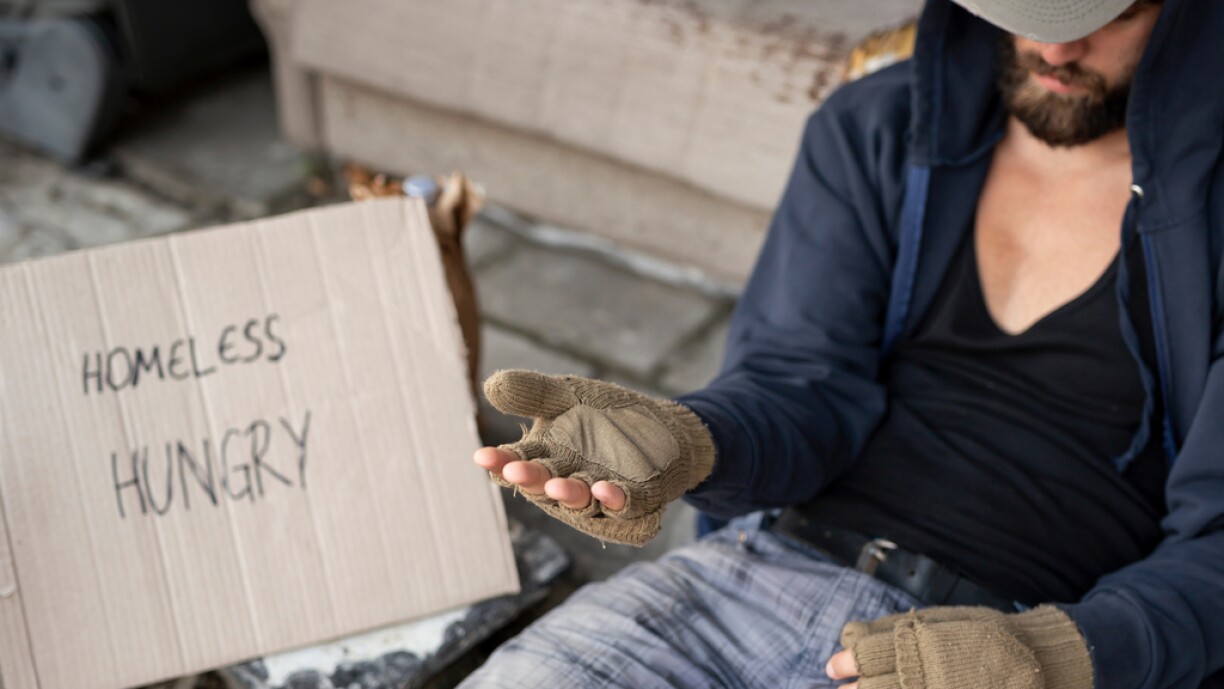
The municipal council amended the divisive regulation in March, prohibiting begging in the Ville-Haute, Gare, and Bonnevoie quarters between 7am and 10pm.
However, the decision did not receive unanimous support, with the opposition parties (Luxembourg Socialist Workers' Party – LSAP, Green Party – déi Gréng, and Left Party – déi Lénk) voting against it. On the other hand, the majority parties (Democratic Party – DP, Christian Social People's Party – CSV) argue that the regulation aims to target organised begging and not ordinary beggars, though no further details on the implementation of this provision have been provided.
On the sidelines of the filming of a future episode of their series Face B, our colleagues from RTL Infos discussed the issue with Alexandra Oxacelay, director of the association Stëmm vun der Strooss, which works for the social and professional integration of disadvantaged people.
Oxacelay expressed her disappointment, stating that the municipality's action was an attempt to "hide the problem" without actually solving it. While it may "solve" the problem for "shopkeepers and some of the customers who go shopping in the city," it essentially "just moves the problem elsewhere." She expressed her shock that the municipality imposed a general begging ban, and questioned whether the next step would be to "ban people from being poor."
She argues that poverty is an increasingly present issue in Luxembourg and should be addressed head-on rather than swept under the carpet. "It bothers me that it bothers people," Oxacelay said, stressing that those in need are part of society and that "we have an obligation as human beings to look after them."
Related
Luxembourg City: Municipality unsure how to implement begging ban
Homeless person on begging: 'I have to force myself to ask for money, food, or cigarettes.'
Reaction by Alexandra Oxacelay (in French):