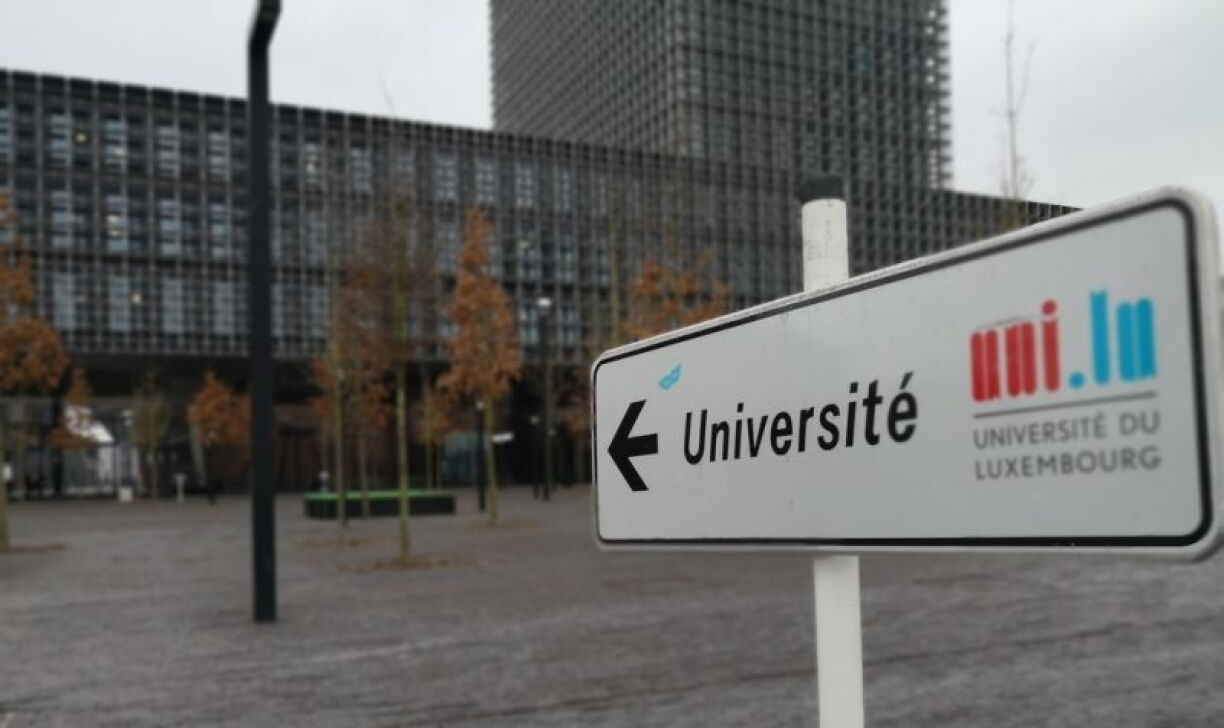
Radio 100,7 had asked whether academic freedom was at risk due to political interference, concluding that there had been an encroachment on the university's autonomy. It was suggested the rectorate had not cancelled the IAS call for projects "of its own initiative", but under "pressure by the ministry", as the implication is that the university's funding is organised by the Ministry of Higher Education.
In the call for proposals for the 2025 Audacity research grant, one of the candidates was on the jury. She submitted an application for the evaluation of her own project, but also participated in the evaluation and ranking of projects in direct competition with her for the research grant. However, the university's code of conduct, which also applies to the IAS, states: "Members of the University's bodies and committees shall refrain from taking part in any discussion or decision concerning matters where there is a conflict of interest on their part."
When asked by RTL, Léon Diederich, the first government councillor at the Ministry and government commissioner at the university said: "On 27 March the rectorate received a recommendation from the governing council to cancel the call for projects."
"As commissioner, I supported this," Diederich continued, but added that he merely has a "consultative voice" on the council. Among the governors are university professors from abroad, as well as staff and student representatives.
The recommendation was issued due to the potential conflict of interest. "If there hadn't been a conflict of interest, the call for projects would not have been cancelled," Diederich explained. The decision was taken by the rector.
Speaking to RTL, the rectorate maintained there had been no violation of internal rules in recent months, but quoted from an outdated version of its code of conduct, which is no longer in force.
Diederich did not deny that there had been discussions with the rectorate. After the call for projects was cancelled, and the question of employment contracts was raised for the selected projects, in early April Minister of Higher Education Stéphanie Obertin told the Chamber committee: "I understand this is not a good situation for public funds. But neutrality is not guaranteed. I think there can't be accusations of a conflict of interest when selecting the projects."
Diederich defended himself against the accusations of an attack on academic freedom. "When a call for projects is stopped, it's not interference with scientific freedom. No one is getting involved in the contents of the research, or pushing for results to go in a certain direction."
In early February, the Ministry and the University of Luxembourg signed a multi-annual financial agreement after the university received over a billion in public funds up to 2026. This was before the controversy over the research grants became public. The budget for the cancelled appeal for projects was around 2 million euros.





