
Here are five things you should know at the end of this week:

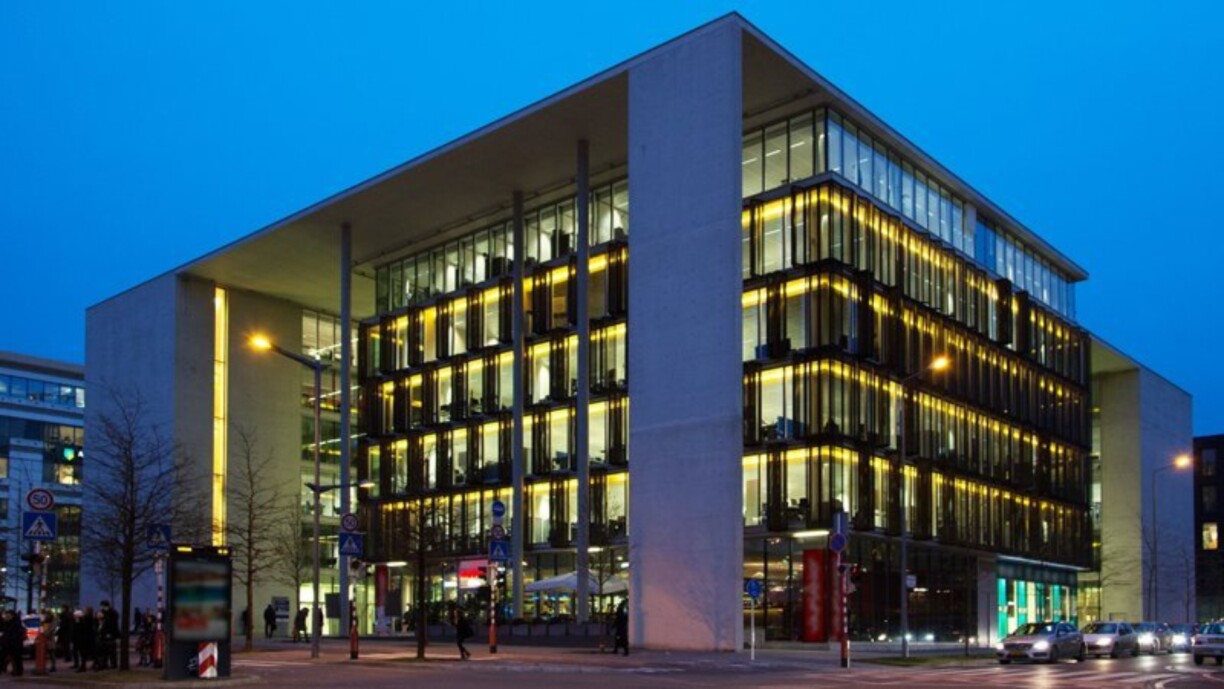
Docler Holding confirmed 115 layoffs in Luxembourg on Wednesday, citing AI integration as the primary driver.
AI restructuring – Docler Holding, a Luxembourg-based tech and adult-content giant, has officially laid off 115 employees as part of a 'significant reorganisation' tied to AI integration.
The layoffs, affecting various departments including HR, IT, and accounting, follow a trend of tech companies leveraging automation to cut costs.
Unions worried – LCGB, one of Luxembourg's main trade unions, was involved in negotiations but said it had limited influence, as Docler's management pushed through layoffs with 'aggressiveness' and little room for compromise.
Union executive member Robert Fornieri expressed skepticism over the company's AI rationale, noting that many of the affected roles were not easily automated. He warned against using digitalisation as a catch-all excuse for downsizing and called for stronger legal safeguards.
Poor strategy caused layoffs, not automation – An anonymous letter from a current Docler employee paints a starkly different picture: years of overexpansion, underperforming acquisitions, and unsustainable financial commitments.
The company reportedly acquired multiple adult platforms and AI startups, spent millions on the iconic sex[dot]com domain, and took a major stake in Playboy's parent group, all while distributing hefty dividends.
With revenues falling short of expectations, the company has now entered a phase of 'damage control,' slashing jobs in Budapest and Luxembourg in a bid to stabilise.

The government unveiled its revised national action plan for the rights of LGBTQ+ people (PAN), presenting it as a 'step forward', but civil society groups warn of its shortcomings.
Key protections for transgender and intersex people – such as depathologisation and a ban on unnecessary surgeries – are missing.
Plan unveiled – On 21 July, the Ministry for Equality presented its updated national action plan for LGBTQ+ rights, meant to replace the 2018 version.
While groups like Rosa Lëtzebuerg and the Human Rights Commission (CCDH) welcomed the effort, they said the plan does not meet the community's legitimate expectations and risks entrenching discrimination.
Major gaps – Activists highlighted two significant omissions: transgender people in Luxembourg still have to undergo psychiatric evaluation before a legal gender change – a process seen as stigmatising and slow – and the government has not banned non-medically necessary surgeries on intersex minors, despite previous commitments.
Rights advocates say both steps are international best practice and were included in the earlier plan.
Missed opportunity – Instead of binding commitments, the PAN sets up new working groups and promises further analysis on issues ranging from parenthood recognition for same-sex couples to non-binary options on ID cards.
Rosa Lëtzebuerg and the CCDH argue this reliance on procedure over progress represents a 'missed opportunity' and even a worrying backsliding of human rights.

Jobseekers rise while vacancies shrink, with over-45s and graduates among the hardest hit.
The construction sector sheds 4,600 jobs in four years due to stagnating growth and increasing costs.
More jobseekers, fewer offers – The National Employment Agency (ADEM) registered 18,396 jobseekers in July, a 2.8% rise year-on-year, with over-45s and university graduates particularly affected. The strongest increases were in accounting, IT, transport, and admin roles.
Employers declared 3,328 vacancies for the month, down over 10% compared to July 2024, while long working hours also declined, with only 6.4% of employees logging more than 49 hours per week, just below the EU average.
Construction loses thousands of jobs –The construction sector has cut 4,600 jobs in four years, driven by rising costs, higher interest rates, and a collapse in real estate demand.
Paul Nathan, Vice President of the Chamber of Trades, said recent public tenders offered a small boost, but long-term recovery depends on regulatory simplification, affordable housing support, and renewed investor confidence.

Ukrainian president Volodymyr Zelensky returned to the White House for the first time since a February clash with US president Donald Trump, aiming to revive stalled peace efforts and repair ties.
Trump announced plans for security guarantees for Ukraine, but proposed territorial concessions that drew pushback from Kyiv and European allies.
A united European delegation backed Zelensky in Washington, with leaders warning against rushed deals and insisting Europe be central to any agreement.
Trump meets Zelensky, take two –Zelensky returned to the White House on Monday for the first time since a February showdown with Trump saw talks collapse on live television. This week's meeting aimed to reset the dialogue and revive hopes of a peace agreement. Trump promised to involve both Ukraine and European allies in any deal, and confirmed plans for a future summit between Zelensky and Putin – their first in nearly six years.
However, hopes for a breakthrough dimmed later in the week, as Zelensky accused Moscow of 'wriggling out' of peace talks and Russia launched its largest aerial barrage in weeks.
Security guarantees announced, but territory remains sticking point – Central to this week's discussions were US-led proposals for long-term security guarantees for Ukraine. Trump ruled out American boots on the ground but suggested potential air support, while reportedly floating a deal behind closed doors in which Russia would gain full control over Donetsk and Luhansk – on the condition of halting advances in other contested regions. Zelensky rejected the idea outright, reiterating that Ukraine 'would not leave Donbas.'
Talks also explored locations for the potential Zelensky–Putin summit, with Trump reportedly favouring Moscow – an option swiftly ruled out by Kyiv. However, Zelensky would only agree to meeting his Russian counterpart once the security guarantees are agreed upon. Geneva and Budapest have since been floated, though Luxembourg's Foreign Minister Xavier Bettel dismissed the latter as 'a slap in the face,' citing Hungary's anti-Ukraine stance.
EU backs Ukraine –The presence of European leaders alongside Zelensky in Washington – including Macron, Meloni, Merz, Rutte, Starmer, and von der Leyen – marked a strong show of unity after months of unity after months of concern over Trump's approach.
Luxembourg's Prime Minister Luc Frieden stressed that no decisions could be made about Ukraine without Europeans at the table, calling the summit a precedent-setting moment. Bettel described himself as 'cautiously optimistic,' but warned that peace negotiations remained fragile and uncertain. He also took an aim at Trump's leadership style, likening Monday's meeting to a 'schoolteacher handing out report cards'.
Civil society groups echoed those concerns. LUkraine’s Olena Klopota said the united European front was a 'step forward,' but warned against ceding territory as part of any deal. 'Giving up land did not stop the war in 2014 – it escalated it,' she said.
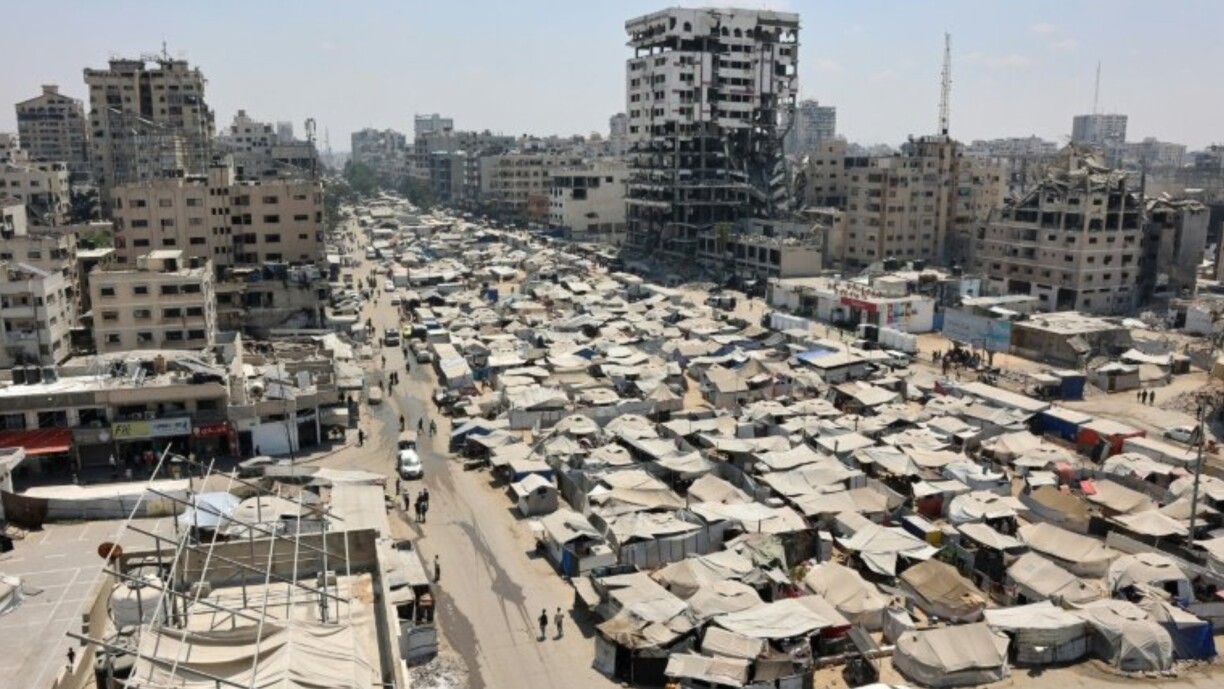
Israel has escalated its Gaza offensive, deploying 60,000 reservists to move into Gaza City just hours after Hamas accepted a truce deal.
Simultaneously, the Knesset has approved another wave of illegal settlements in the West Bank.
Netanyahu's government now faces growing international scrutiny over its illegal proceedings in the Gaza Strip as well as its West Bank settlements – with the UN officially declaring a man-made famine caused by systematic obstruction of aid.
Ceasefire ignored –A diplomatic opening emerged as Hamas accepted a new ceasefire deal brokered by Egypt, Qatar, and the US, offering a 60-day truce and partial hostage exchange. Mediators described Hamas’s response as 'very positive'.
However, instead of responding, Tel Aviv escalated militarily, launching a new campaign to seize Gaza City. 60,000 reservists were called up, and bombardments intensified – a move described by the UN and the Red Cross as 'intolerable'.
Prime Minister Benjamin Netanyahu reiterated demands that all hostages be released upfront, delaying the process. His defence minister, Israel Katz, took on a more aggressive tone, threatening the Gaza Strip capital with a similar fate as Rafah and Beit Hanoun. "Soon, the gates of hell will open upon the heads of Hamas's murderers and rapists in Gaza," Katz posted on social media.
Far-right settlements surge –At the same time, Israel approved construction of 3,400 illegal homes in the controversial E1 area of the West Bank.
The move drew international condemnation for effectively severing the territory and jeopardizing a future Palestinian state. UN Secretary-General António Guterres called it an 'existential threat' to the two-state solution.
International backlash –With aid still severely restricted and malnutrition rising, UNRWA warned that children in Gaza are 'condemned to death' without immediate help. More than 5,000 aid trucks remain stalled at Rafah.
As the humanitarian crisis worsens, allies like Australia and France have announced plans to recognise Palestinian statehood, prompting Netanyahu to lash out and further cutting Israel off from its diplomatic support. Even in the US, which is still proving Israel's strongest ally, senators are demanding accountability for the deaths of over 200 journalists in Gaza.
On Friday, the United Nations officially declared a famine in Gaza caused by Israel's systematic obstruction of aid, a finding Israel immediately rejected as based on 'Hamas lies'
Business & Tech – A German startup has found a way to repurpose used EV batteries into large storage units to capture surplus solar and wind power, aiming to boost Europe’s energy sovereignty.
Science & Environment – Luxembourg City is launching a campaign promoting green façades to improve urban quality of life and boost environmental sustainability.
Entertainment – A violin dating back to 1743, once owned by Paganini, will make its debut at the BBC Proms this year.
Opening night – The beloved Schueberfouer fun fair opens tonight for its 683rd edition.
Snow melting – Scientists worry that recent surges in tourism and research projects are polluting Antarctica.
Servus! – Vienna has been confirmed as the official host city of Eurovision 2026 to be held in May next year.

Your Weekly Recap is published every Friday at noon. Read earlier versions.





