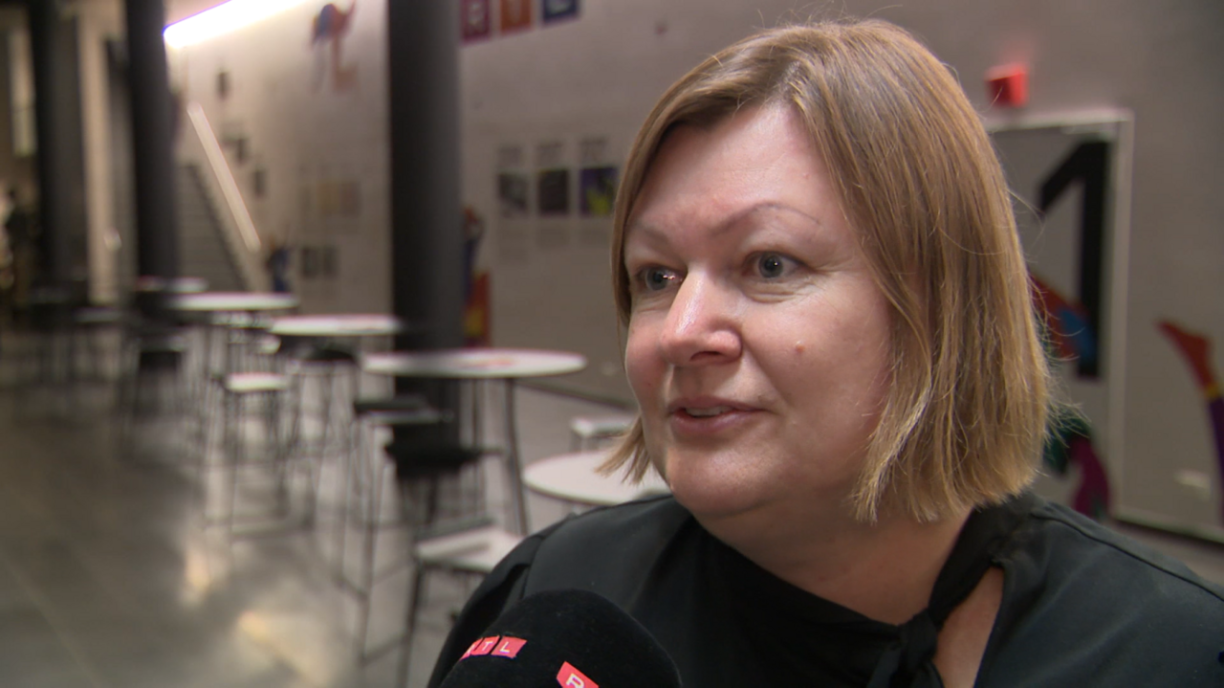
Although there is still no ceasefire and no definitive path toward peace, Klopota said she draws hope not from the recent meeting between Russian President Vladimir Putin and U.S. President Donald Trump in Alaska, but rather from the united European front demonstrated during the summit at the White House earlier this week.
Ukrainian President Zelensky was supported in Washington on Monday by a strong European delegation, says Klopota. In her eyes, they were fully aligned and very open, especially following the interview given by French President Macron, who clearly described how he sees Putin. "This is clearly a step forward and needs to be utilised in full, nurtured and built upon."
Following the summit, discussions are underway about a possible meeting between Putin and Zelensky in the next two weeks. But beyond that, little else has been clarified, and it remains to be seen what further progress the peace negotiations will bring.
Klopota argues that one possible solution lies in the decolonisation of Russia, to rein in Moscow's aggression from within its own borders.
"Just look at all the national identities: the Caucasians, the Tatars, the Udmurts, these are all individual nations, not Russians. These are oppressed people, stripped of their culture, language, and identity," she said.
For Klopota, only a united Europe and Western might can place Russia in a position where it is no longer able to wage war. She firmly rejects the idea of Ukraine ceding territory as part of a peace deal.
"When we began the peace negotiations in 2014, there were discussions about Crimea, Donetsk, and Luhansk. A ceasefire was agreed, with temporary management of the territories. But did that stop the war? No, it escalated."
Giving up territory, she says, would not only be unjust and unconstitutional, but would inevitably fuel further conflict, a painful lesson learned from the past.





