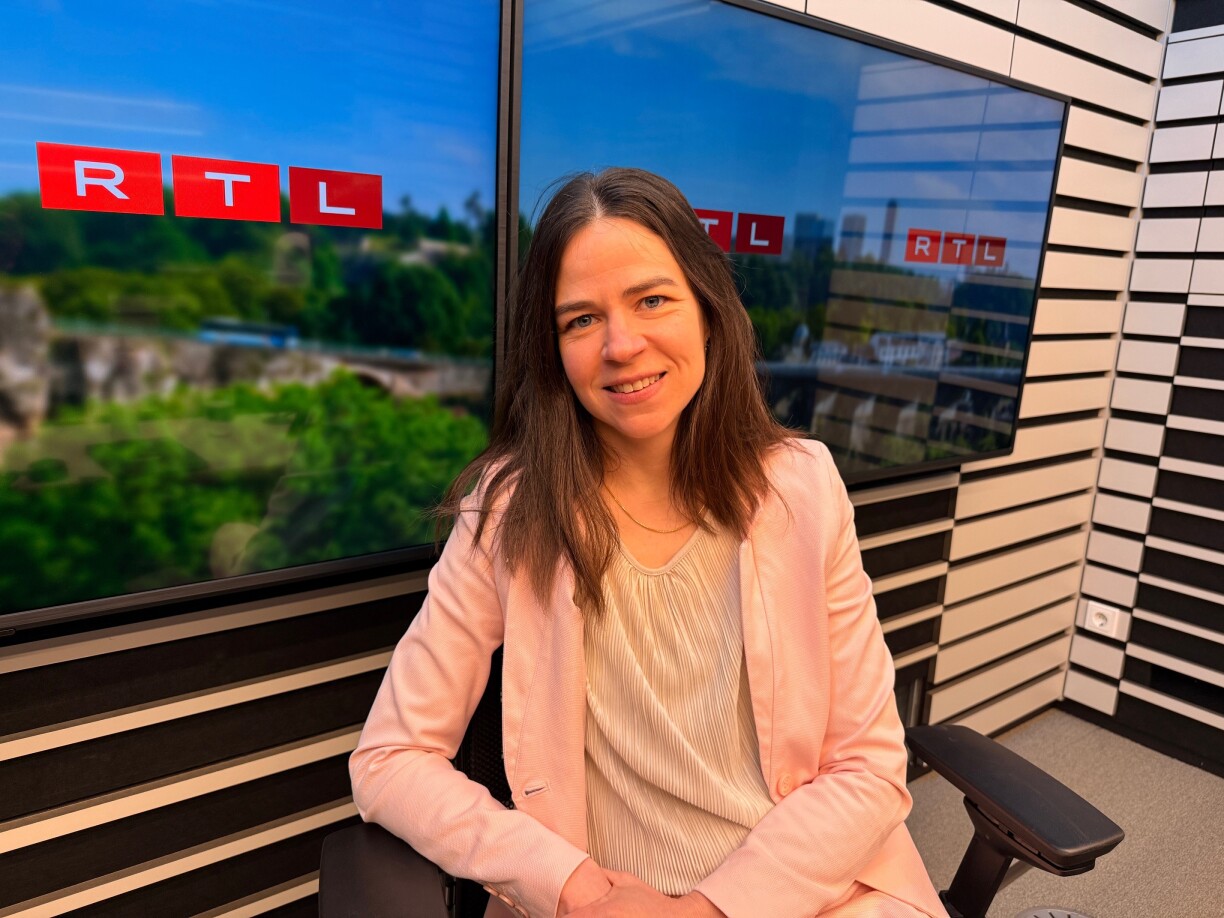
Speaking with RTL Radio on Tuesday, Noémie Sadler, president of the Consultative Human Rights Commission (CCDH), raised concerns about the growing number of minors being placed in adult prisons in Luxembourg.
While the seriousness of recent offences should not be downplayed, the key question remains what should be done with these young people, Sadler said. She pointed out that adult prisons are intended for convicted offenders who have gone through a trial, whereas minors are still presumed innocent and are placed in detention as a precautionary measure.
Even if prison staff make efforts to provide appropriate care, such facilities are, by nature, not suitable environments for children, she said.
In recent years, there has been a clear increase in the number of minors placed in adult prison. There were six such placements in 2024, rising to 24 in 2025, and already 14 since the beginning of this year. A total of 11 minors are concerned, three of whom have been detained for a second time.
Sadler warned that this year is likely to surpass the previous record, noting that placements have increased fivefold compared to 2024, despite violence not rising at the same rate.
The CCDH believes that greater use should be made of diversion measures and that more effort is needed to understand the root causes of such violent behaviour. In cases involving serious violence, Sadler argued that underlying issues must be addressed, suggesting that such acts may often reflect deeper problems or even a "cry for help".
Simply placing young people in prison, she said, is not a solution.
Sadler also criticised the lack of safeguards for minors. Adults suspected of committing an offence are first brought before an investigating judge. There, they are heard, given access to their case file, and then assigned a lawyer.
It is the judge who decides whether they are remanded in custody. Once in detention, they can also request release, and within three days they appear before another judge, the Sadler explained.
For minors, who should in principle benefit from greater protection due to their vulnerability, the situation is quite different. In a recent case in Bonnevoie, the public prosecutor decided to place the young people in prison without them appearing before an investigating judge.
They also generally do not have a lawyer, unless they explicitly request one from the police. In some cases, they may even remain in prison for up to a month without seeing a judge, according to Sadler.
Luxembourg still relies on juvenile legislation dating back to 1992, which, as Noémie Sadler pointed out, was not even considered a real step forward at the time. She explained that the framework is rather vague and tends to lump together very different situations: victims, children in difficult home environments, and offenders.
She added that the country is still waiting for a new juvenile justice law as well as a reform of child protection legislation, both of which have been pending for years and are currently before the Council of State.
According to Sadler, the CCDH has already issued critical opinions on these draft texts, and a number of recommendations could have been taken into account to revise them. However, this is not the case thus far.
Instead, the process is effectively on hold pending the opinion of the Council of State, as a formal objection would require the legislation to be rewritten, she said.
The CCDH is also critical of plans to lower the age of criminal responsibility from 14 to 13. However, Sadler pointed out that Luxembourg currently has no lower limit, meaning that, in theory, even younger children could be placed in adult prison.
She cited a case in which an 11-year-old girl was detained, despite being a victim of human trafficking rather than a perpetrator.
Sadler argued that more emphasis should be placed on support measures rather than punishment, particularly for young people from disadvantaged backgrounds, in order to help them reintegrate and prevent reoffending.
The CCDH calls for the urgent adoption of legislation on juvenile justice and child protection. While a dedicated youth prison may be necessary, Sadler stressed above all the need for more support structures, including psychological and psychiatric care, to properly assist young people and reduce the risk of reoffending.





