
A Luxembourg family is seeking the return of an artwork stolen by the Nazis. More than 80 paintings belonging to the family were looted and disappeared. One of them has now resurfaced: "Die Landpartie" by Ludwig Knaus, painted in 1890 – a work that was once even in the possession of Adolf Hitler.
One of the heirs, Carmella Klestadt – known as Carmie – lives in Luxembourg. She is the great-granddaughter of Moritz Grünthal.
Photo of the painting "Die Landpartie":
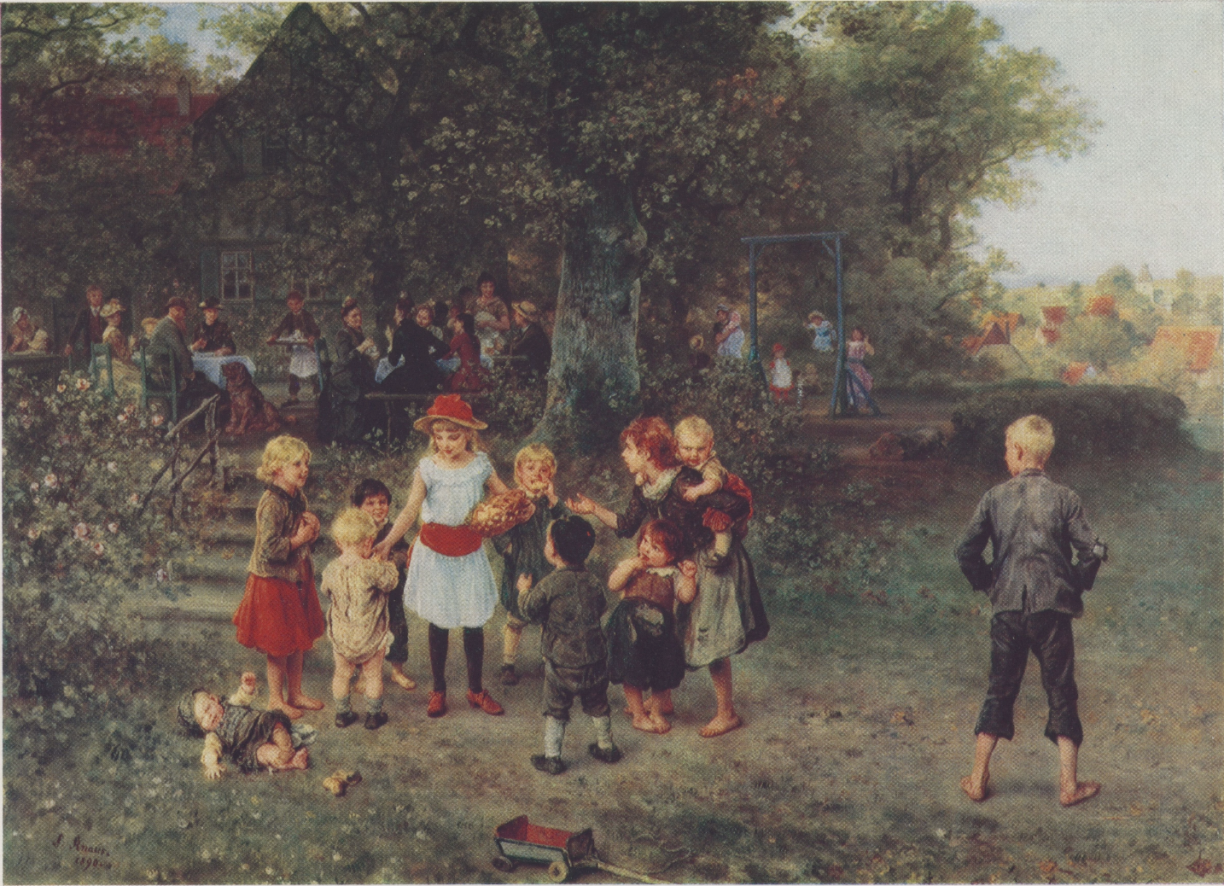
"It's not about the material value", she said, "It's simply about the principle, about the history behind it. There are memories tied to it, and it is also a part of our family."
Carmie’s father, Gerd Klestadt – the grandson of Moritz Grünthal – was a Holocaust survivor. Until his death in January 2025, he worked to ensure that the family’s story was not forgotten, including by giving testimonies about his life in schools.
After being stolen by the Nazis, "Die Landpartie" passed through various auction houses and eventually ended up in the possession of Adolf Hitler, who was collecting art for his planned "Führermuseum" in Linz. The painting was later stored in Altaussee*.
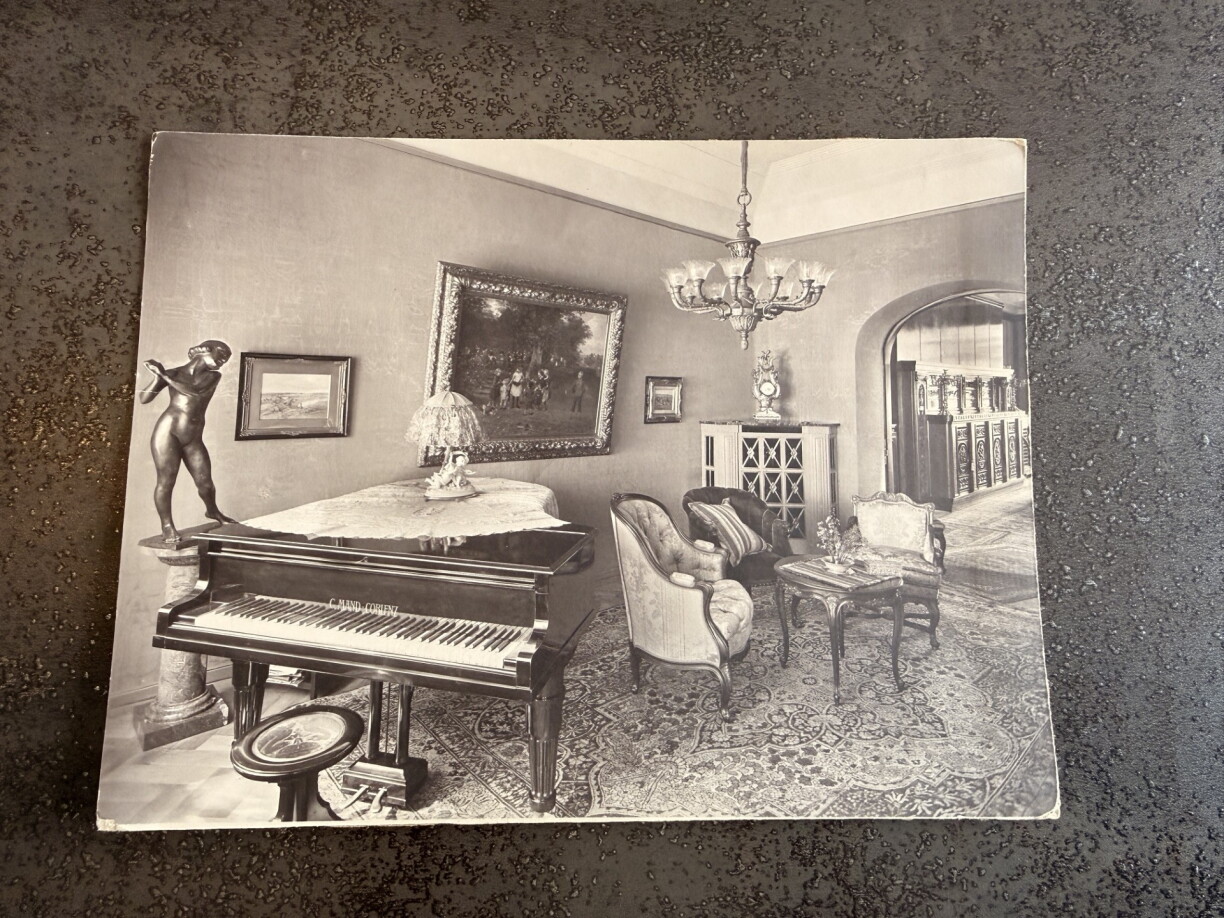
After the war, the trail of the painting went cold – until now. In 2024, historian and writer Kathrin Mess published a biography of Gerd Klestadt. In the summer of 2025, she received an email from expert Willi Korte**, who works on a research project for the Max Stern Institute in Canada, searching for artworks stolen from Jewish families by the Nazis.
Mess explained that members of the project had simply googled the name Klestadt, which led them to her biography. They ordered the book and, in it, discovered an illustration that provided definitive proof. "They can now prove one-to-one via this image that the painting was indeed in the possession of the Grünthal-Klestadt family," Mess said.
The photo shows the painting hanging above a piano in the family’s living room. This evidence made it possible to identify the artwork.
Although it is now clear that the painting qualifies as Nazi-looted art, the family does not automatically regain possession. The obstacle lies in German restitution law, which provides no legal basis for its return.
"In Germany, if you buy something and do not know that it is stolen goods, then you are allowed to keep it," Mess explained.
Because the painting was sold repeatedly over several decades, the current owner is legally considered to be acting in good faith and is therefore protected. As a result, the family is left with public pressure as their primary recourse.
Mess argues that the German state is called upon to act – first, by passing a restitution-friendly law for the return of looted art, and second, by compensating heirs who cannot recover their paintings. She also demands that the issue receive more public discussion.
Klestadt emphasises that the dispute is not about money. The painting was auctioned last year by a Düsseldorf auction house for around €10,000. Its estimated market value is €20,000 to €30,000, but its symbolic significance is far greater.
"Perhaps many people think that it is just a painting. But it is not just a painting. It is the whole history behind it. The fact is that it was simply taken away. If it had been sold, that would be different – then maybe we would still search for it. But in this case, it was taken from us simply because they did not fit into Hitler's picture and were persecuted," Klestadt stressed.
Mess was unequivocal: "We are not giving up."
* The painting "Die Landpartie" was temporarily stored in the Altaussee salt mine in Austria, where the Nazis had hidden art treasures stolen during the Second World War to protect them from bombings. In the event of Nazi Germany's defeat, Hitler ordered the complete destruction of this art collection. However, US special units were able to save the works. The dramatic rescue operation was later adapted into the film The Monuments Men, starring George Clooney.
** Willi Korte is a German-US researcher and expert on Nazi-looted art. He has spent years investigating artworks that disappeared from Jewish ownership and has specialised in the restitution of Nazi-looted property.





