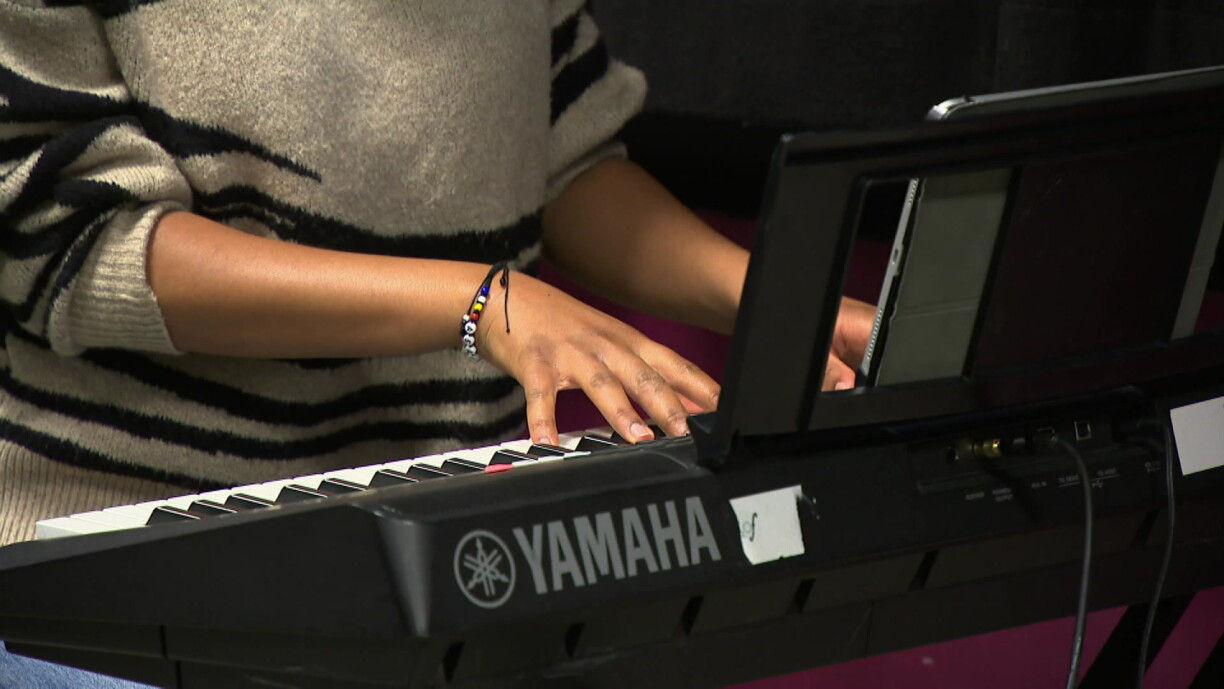
Nine of the 30 weekly hours are given over to highly specialised lessons – not theory, but practice: recording, production, live mixing. These are skills the cultural sector actively needs, says music teacher Ben Konen.
For Asali, choosing this path was an easy decision. "Since I was little I was interested in music", she says – and when she found out about the section, her mind was made up. "Music has always been my favourite thing". Fellow student Jim is equally convinced. A DJ outside of school, he says the programme has real practical value: "It really helps with my own production".
The section grew out of a gap that the industry had been watching widen for years. In events, sound engineering, stage lighting – the shortage of workers is acute across the board. The programme aims to bring students closer to professions they might never have otherwise considered, let alone pursued.
While artificial intelligence is changing the landscape rapidly, Konen's concern is less about the technology itself than about literacy – ensuring students understand how music production actually works, so that when AI is involved, they can judge its output with a critical ear rather than simply accept it. On balance, he does not see the rise of AI as a threat.
Performers on stage and sound engineers, he remains convinced, are still a long way from being replaced.






