Here are five things you should know at the end of this week:

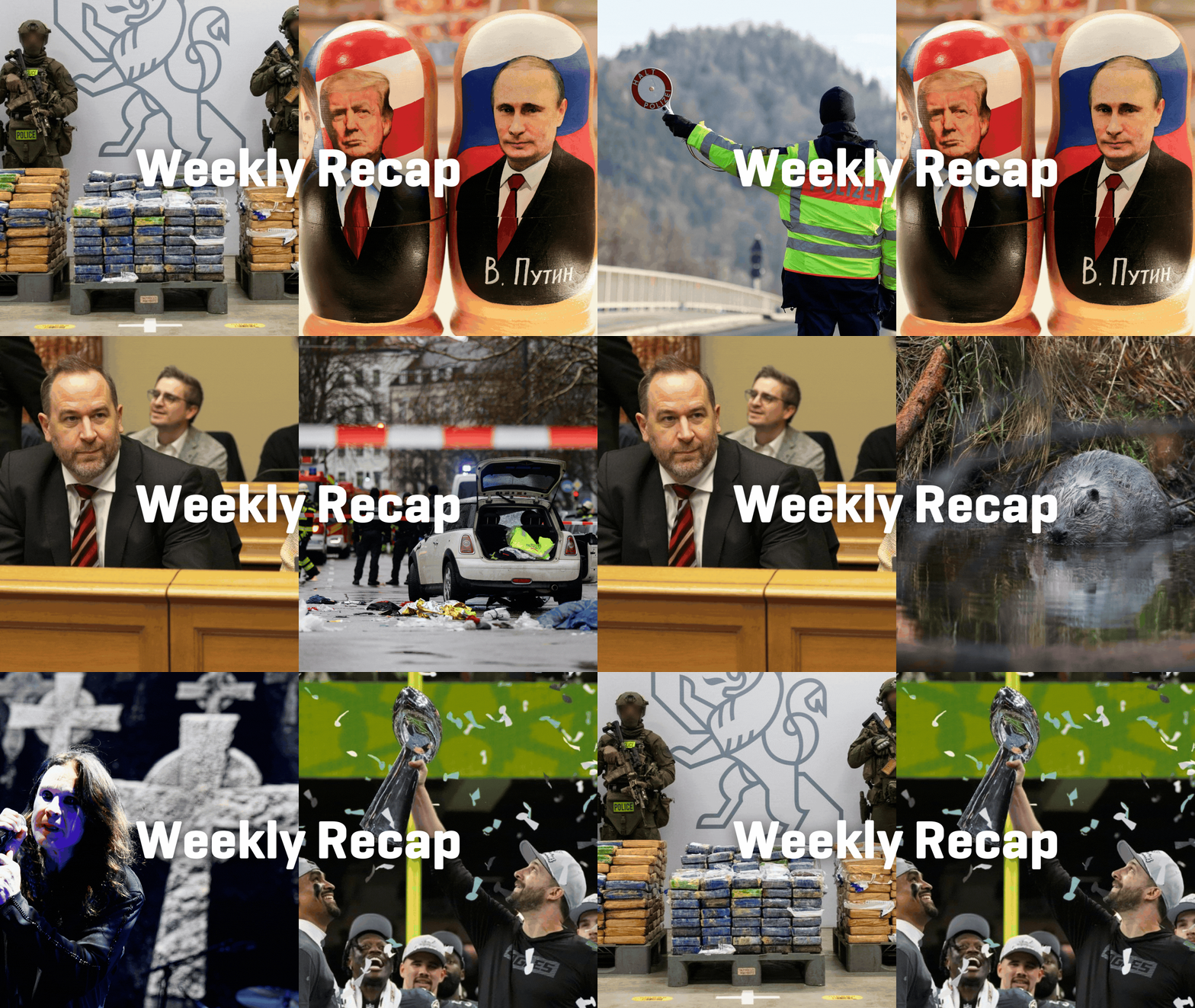
Luxembourg authorities last week seized nearly 900kg of cocaine worth up to €160 million, hidden in an industrial stone-crusher from Colombia, making it the largest drug bust in the country's history.
Historic bust – Luxembourg authorities seized an industrial stone-crusher that had arrived from Colombia, concealing a staggering 889kg of cocaine with an estimated market value ranging from €80 million to €160 million. The discovery, made on 7 February 2025, marks the largest drug bust in the country's history.
The cocaine was hidden inside cylinders within the machine, which was initially detected using a customs scanner before being fully dismantled to reveal the tightly packed bundles. Prosecutors confirmed that the drugs will be destroyed as the investigation continues into the trafficking network responsible.
Details emerge – Two men, aged 38 and 43, were arrested in connection with the case and remain in custody at the Uerschterhaff penitentiary centre. Investigators searched their homes and froze assets linked to them, while officials continue gathering evidence on their exact role in the smuggling operation.
Authorities believe the massive shipment was not intended for Luxembourg's market but was instead part of a larger international drug trafficking network, potentially linked to organised crime. While the full scope of the operation is still being assessed, prosecutors have indicated that further updates on the investigation will be provided in the coming weeks.
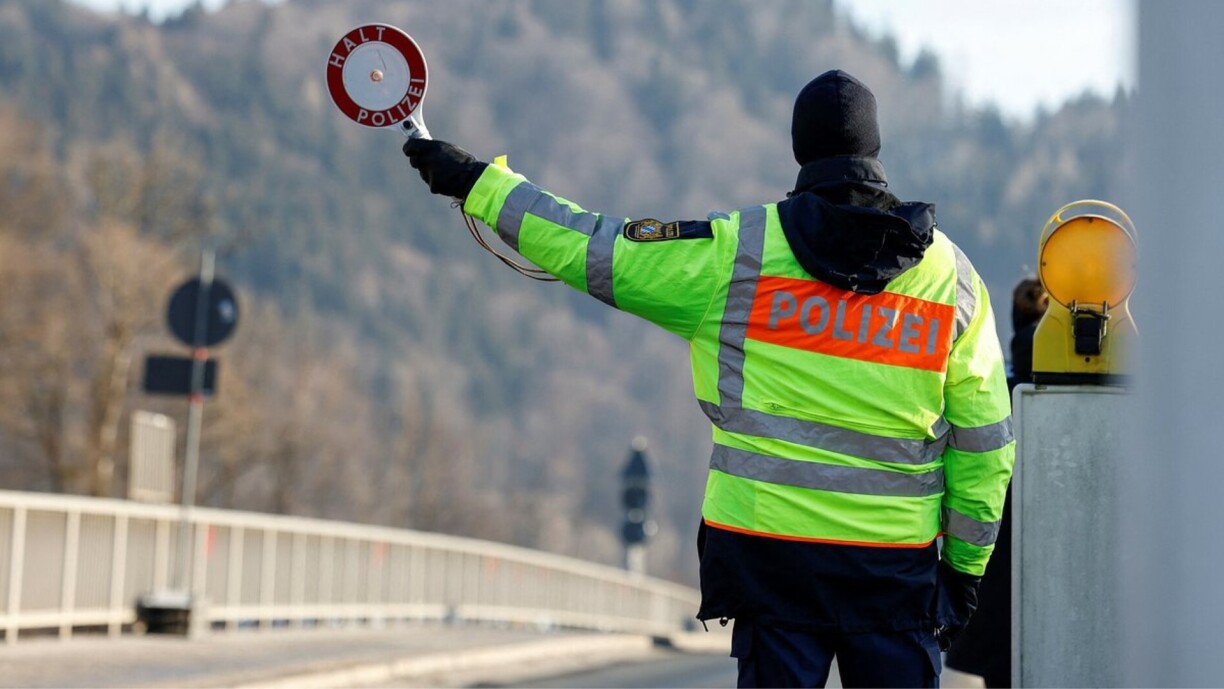
Owner denies involvement – Home Affairs Minister Léon Gloden faced criticism from the Luxembourg Socialist Workers' Party (LSAP) for attending the press conference on the bust, with concerns raised about judicial independence. Gloden dismissed these accusations, arguing that his presence was meant as a gesture of support for law enforcement and denouncing the LSAP's stance as political populism.
Meanwhile, the Bilsdorf farm owner spoke out to deny any involvement, refuting rumours that his family played a role in the crime. He explained that the crusher had only been placed on his property temporarily, emphasising that he was relieved when police removed it from the premises.
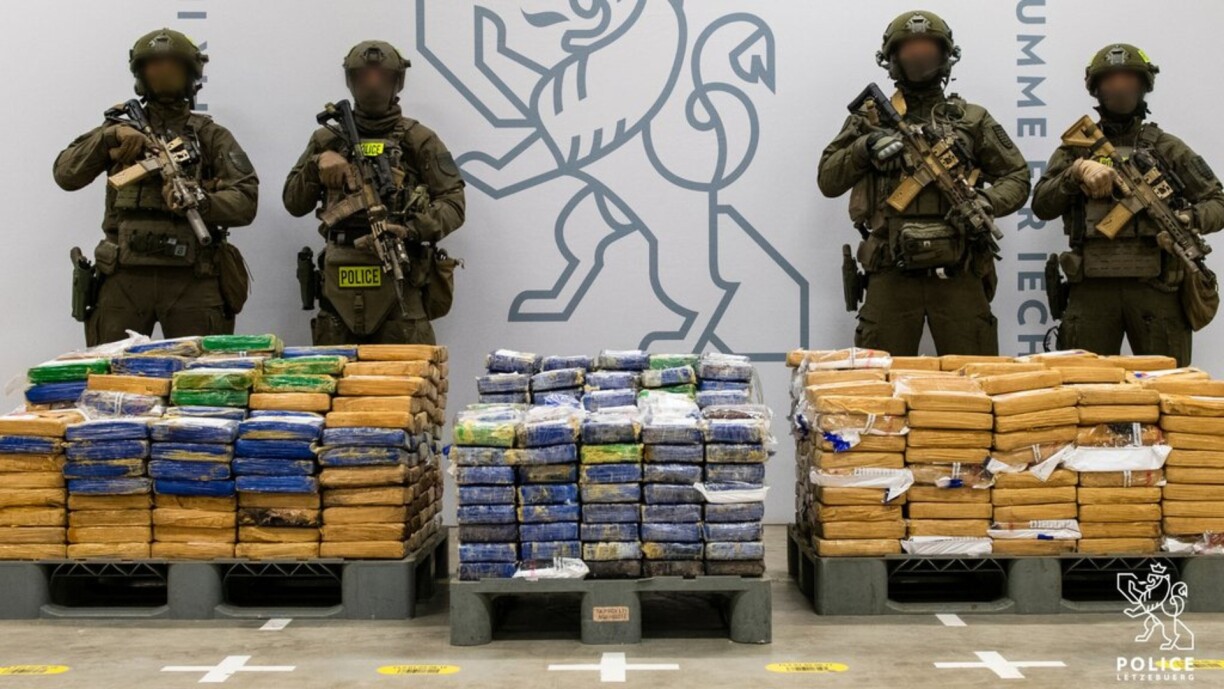
Luxembourg will file a complaint with the European Commission before the end of February over Germany's six-month extension of border controls, as announced by Home Affairs Minister Léon Gloden.
Opposition parties LSAP and Déi Gréng pushed for a stronger response by calling for a lawsuit at the European Court of Justice, but their motion was rejected.
Gloden argued that a legal challenge would be ineffective due to lengthy proceedings, noting that the Schengen Code allows border controls for up to three years in exceptional cases.
Border concerns – Luxembourg's government has decided to formally challenge Germany's six-month extension of border controls by filing a complaint with the European Commission before the end of February. Home Affairs Minister Léon Gloden announced this decision in the Chamber of Deputies, expressing concerns over the prolonged restrictions at the border.
Failed motion – The Luxembourg Socialist Workers' Party (LSAP) and The Greens (Déi Gréng) advocated for a more forceful response, urging the government to take legal action at the European Court of Justice. Their joint motion called for a lawsuit challenging the legality of Germany's border controls, arguing that such restrictions undermine the core principles of the Schengen Agreement.
However, their proposal failed to gain sufficient support in parliament, with 40 deputies voting against it and only 20 in favour, effectively blocking the attempt to pursue legal proceedings at the EU's highest court.
Grey area – Minister Gloden defended the government's approach, stating that a court case would not be an effective solution due to the lengthy nature of legal proceedings. He pointed out that a ruling could take more than three years, making it an impractical response to a temporary border measure.
Additionally, he noted that under the Schengen Code, border controls can be maintained for up to three years under exceptional circumstances, suggesting that Germany's actions, while controversial, may still fall within the legal framework of EU law.
Luxembourg's Chamber of Deputies unanimously passed a resolution condemning hate speech after ADR MP Tom Weidig liked a social media post advocating the "extermination of LGBTQ", for which he later apologised.
LGBTIQ+ advocacy group Rosa Lëtzebuerg filed a police complaint against Weidig and the post's author, calling for his resignation from all political positions.
The ADR initiated disciplinary proceedings against Weidig, with potential consequences ranging from a warning to expulsion, while the party leadership condemned both the post and Weidig's engagement with it as "unacceptable".
Unanimous resolution – In response to Weidig's controversial social media activity, all parliamentary groups, excluding the Alternative Democratic Reform Party (ADR), collectively proposed a resolution denouncing hate speech, discrimination, and violence against minorities. The resolution was ultimately supported by all MPs, including Weidig and his party.
The parliamentary session was marked by strong criticism from other parties, with many expressing deep concerns over the implications of an elected representative engaging with such content. Weidig, for his part, stated that he could not explain how he had liked the post and issued a public apology, though the incident continued to provoke outrage and calls for accountability.
Mounting pressure – Advocacy group Rosa Lëtzebuerg took swift legal action by filing a complaint against both the individual who authored the post and Weidig, who engaged with it. They argued that as a member of parliament, Weidig bears responsibility for his public actions and should be held accountable for amplifying hateful content.
Beyond legal measures, the organisation also urged Weidig to resign from all his political roles, stressing that his continued presence in office would undermine trust in democratic institutions and the protection of minority rights. The complaint adds further pressure on the MP, whose future in the party remains uncertain amid ongoing disciplinary proceedings.
Disciplinary proceedings – Following widespread condemnation, the ADR's executive committee, led by party president Alexandra Schoos and secretary-general Luc Reyter, approved a request to initiate disciplinary action against Weidig. The decision now moves to the national committee, where over 50 members will determine the appropriate course of action.
While the ADR has formally distanced itself from the incident and issued an apology to those affected, the party faces scrutiny over whether it will take decisive action, especially given its history of expelling a member in a similar case eight years ago. Weidig maintains that his engagement with the post was accidental, and Schoos has acknowledged the complexity of the situation, given that he is an elected MP.
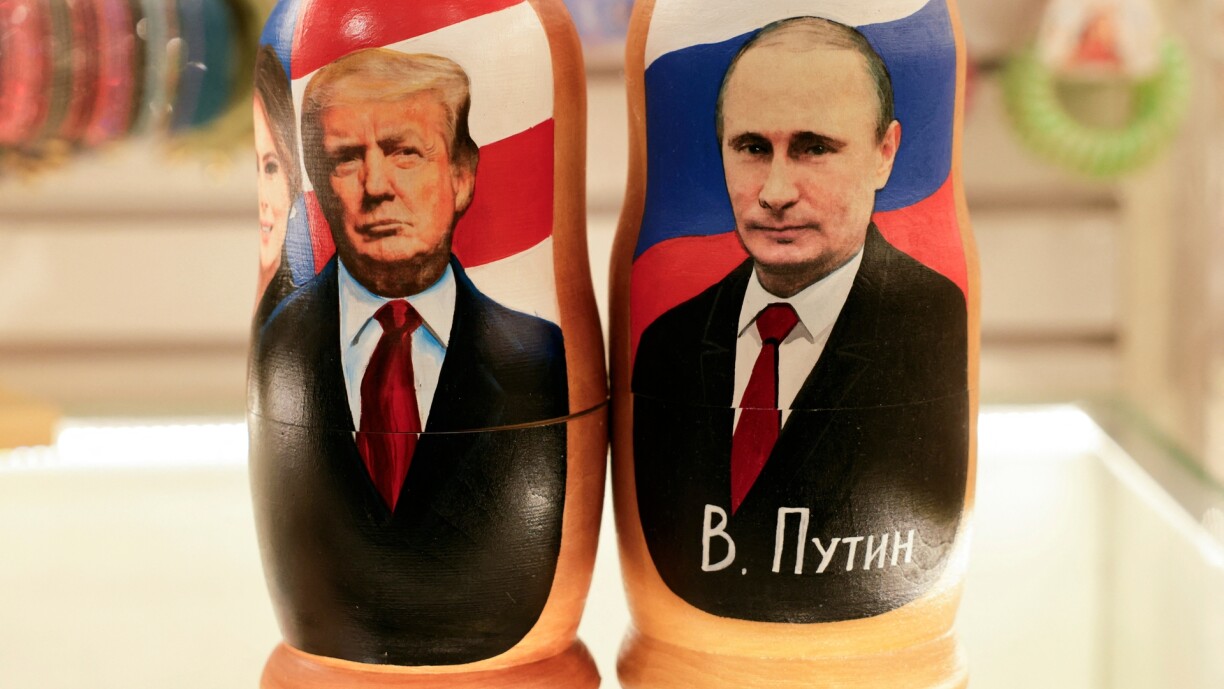
US President Donald Trump announced plans to meet Russian President Vladimir Putin in Saudi Arabia for Ukraine peace negotiations, raising concerns that Ukraine may be sidelined from discussions about its own future.
European leaders and NATO allies, including Luxembourg's Defence Minister Yuriko Backes, strongly opposed any settlement excluding Kyiv, warning that Trump's stance – ruling out Ukraine's NATO membership and hinting at territorial concessions – risks emboldening Russia.
Ukrainian President Volodymyr Zelensky, set to meet US Vice President JD Vance at the Munich Security Conference, urged world leaders not to trust Putin's promises of peace and demanded a concrete US plan to counter Russian aggression before any negotiations proceed.
Phone call – US President Donald Trump revealed that he plans to meet Russian President Vladimir Putin in Saudi Arabia for negotiations aimed at ending the war in Ukraine, a significant shift in diplomatic efforts nearly three years after Russia's full-scale invasion. The announcement followed a lengthy and unexpected phone call between the two leaders, marking their first direct contact since Trump's return to office.
Trump insisted that both he and Putin were committed to stopping the war, but his remarks downplaying Ukraine's NATO aspirations and suggesting that Kyiv's territorial claims were unrealistic sparked concerns. The absence of Ukraine from these initial discussions has fuelled fears that a deal could be brokered over Kyiv's head, with Washington potentially agreeing to Russian demands without fully consulting its allies.
European concerns – Trump's outreach to Putin sent shockwaves through NATO and European capitals, with many leaders voicing alarm at the prospect of Ukraine being sidelined in negotiations. Luxembourg Defence Minister Yuriko Backes, along with officials from Germany, France, and the EU, insisted that any peace settlement must include Ukraine as a central participant.
European leaders warned that prematurely conceding to Russian demands – such as ruling out Ukraine's NATO membership and accepting Russian control over occupied territories – would weaken Kyiv's position and set a dangerous precedent for European security. NATO Secretary General Mark Rutte expressed caution, while European foreign ministers denounced Trump's apparent willingness to make early concessions to Moscow, calling it a move that could embolden Putin further.
Scepticism – Ukrainian President Volodymyr Zelensky, caught off guard by Trump's direct talks with Putin, reacted with concern, stating that any negotiations that exclude Ukraine are unacceptable. He emphasised that Russia's claims of wanting peace should not be taken at face value and urged the US to commit to a structured plan to counter Putin's aggression before moving forward with discussions.
Zelensky will meet US Vice President JD Vance and other high-level US officials at the Munich Security Conference, where he hopes to rally European support and push for guarantees that Ukraine will not be pressured into an unfavourable settlement. Meanwhile, Ukrainian officials reiterated their demands for security assurances and military aid, warning that a rushed or imposed peace deal could lead to further instability in the region rather than a lasting resolution.
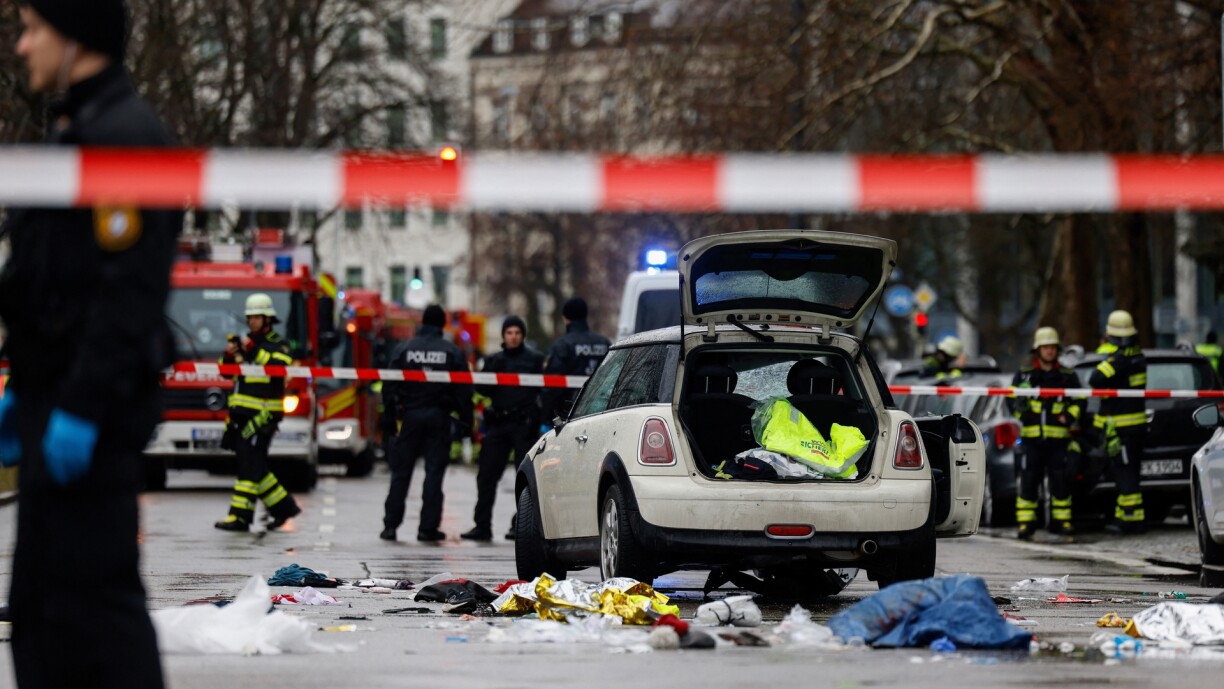
A 24-year-old Afghan asylum seeker was arrested after ramming his car into a trade union demonstration in Munich, injuring 30 people, some critically, in what German leaders called an "attack".
Authorities suspect an extremist motive, with reports that the suspect had posted Islamist content online before the incident, fuelling an already intense political debate on immigration ahead of the general elections on 23 February.
The attack coincided with the arrival of US Vice President JD Vance and Ukrainian President Volodymyr Zelensky for the Munich Security Conference.
Thirty injured – A Mini Cooper on Thursday plowed into a gathering of trade union demonstrators in Munich, leaving a scene of chaos with victims and their belongings scattered across the street. Witnesses reported that the attack appeared deliberate, with police responding by firing a shot at the vehicle before arresting the suspect at the scene.
Some of the injured remain in life-threatening condition, with reports indicating that children were among the victims. The attack comes just before the Munich Security Conference and follows similar violent incidents in Germany in recent months.
Extremism suspected – While the investigation is ongoing, German authorities have handed the case over to the regional prosecutor's office due to suspected extremist ties. Reports from Der Spiegel suggest the attacker had previously shared Islamist content online, raising concerns about radicalisation.
The suspect arrived in Germany during the 2016 migrant crisis and, despite his asylum request being rejected, remained in the country legally after finding employment. The incident has further inflamed Germany's already tense debate on immigration and security, with opposition parties, particularly the CDU/CSU alliance, calling for stricter immigration policies and increased deportations.
Security conference – The timing of the attack has heightened anxieties surrounding public safety, as Munich is hosting the high-profile annual Munich Security Conference, which brings together world leaders and defence officials. Vice President JD Vance had just arrived in the city, and Ukrainian President Volodymyr Zelensky is also set to meet US representatives to discuss potential negotiations with Russia.
Business & Tech – The US State Department backtracked Thursday on a document saying it would award $400 million for electric armoured cars by Tesla, whose chief Elon Musk has been aggressively slashing government spending on behalf of President Donald Trump.
Science & Environment – Beavers have saved Czech taxpayers a cool $1 million by flooding a protected former army training site where a long-stalled dam was planned, a conservation official said on Tuesday.
Entertainment – Fans of Black Sabbath on Tuesday snapped up the first tickets for the UK heavy-metal giants' one-off hometown gig, where the original line-up will perform for the first time in 20 years and frontman Ozzy Osbourne's will bow out.
AI safety–Luxembourg's data protection authority has issued a public warning about DeepSeek R1, a Chinese AI model that fails to comply with EU regulations, prompting a parliamentary inquiry into potential restrictions.
Space programme– The Luxembourg Space Agency has launched the second edition of its 'Astronaut for a Day' contest, offering secondary school students a chance to experience a zero-gravity flight and explore career opportunities in the country's growing space sector.
Luxembourg City–After being closed for renovations following the 2019 fire, Martyrs car park will reopen on 17 March with new features and a reduced number of spaces.

Your Weekly Recap is published every Friday at noon. Read earlier versions.





