
On Thursday, Luxembourg's Minister of Defence, Yuriko Backes, responded to the recent phone call between US President Donald Trump and Russian President Vladimir Putin regarding the Ukraine war. The call, which took place on Wednesday, saw Trump initiating discussions about ending the conflict without prior consultation with NATO allies.
Speaking in Brussels, Minister Backes emphasised that Ukraine must not be excluded from the process, as sidelining the country would make lasting peace unattainable. She mentioned that NATO members had held their first meeting with the new US Secretary of Defence, Pete Hegseth, describing it as "an open and, in parts, very tough" discussion. During the meeting, allies stressed that any negotiations concerning Ukraine must involve Ukraine, and any talks about European security must include European nations. Backes expressed confidence that European countries had sent "a very clear message" to the United States.
Trump's conversation with Putin raised concerns among NATO allies, as he appeared to rule out Ukraine's potential membership in NATO and suggested it was "unlikely" that all territories occupied by Russia, such as Crimea and the Donbass region, would be returned to Ukraine. In response, Minister Backes cautioned that prematurely labelling these territories as lost would weaken Ukraine's negotiating position. She also noted that Trump's statements on Ukrainian membership are in contradiction to the stance previously held by NATO, adding "to make such statements ahead of peace talks that the US President aims to lead is not very expedient".
Despite the challenges ahead, Backes affirmed that European countries are committed to working with the United States to ensure Ukraine's inclusion in the talks and to achieve a lasting and sustainable peace.
Even if negotiations over the war in Ukraine move forward, German political scientist Claudia Major doubts that peace will be achieved quickly.
Major, a security and military expert at the German Foundation for Science and Politics, believes that talks could indeed begin following the phone call between Trump and Putin. However, she pointed out that the US has already made significant concessions to Russia, notably by ruling out NATO membership for Ukraine and signalling openness to allowing occupied territories to remain under Russian control. Despite this, Major remains sceptical about the prospects of a swift resolution.
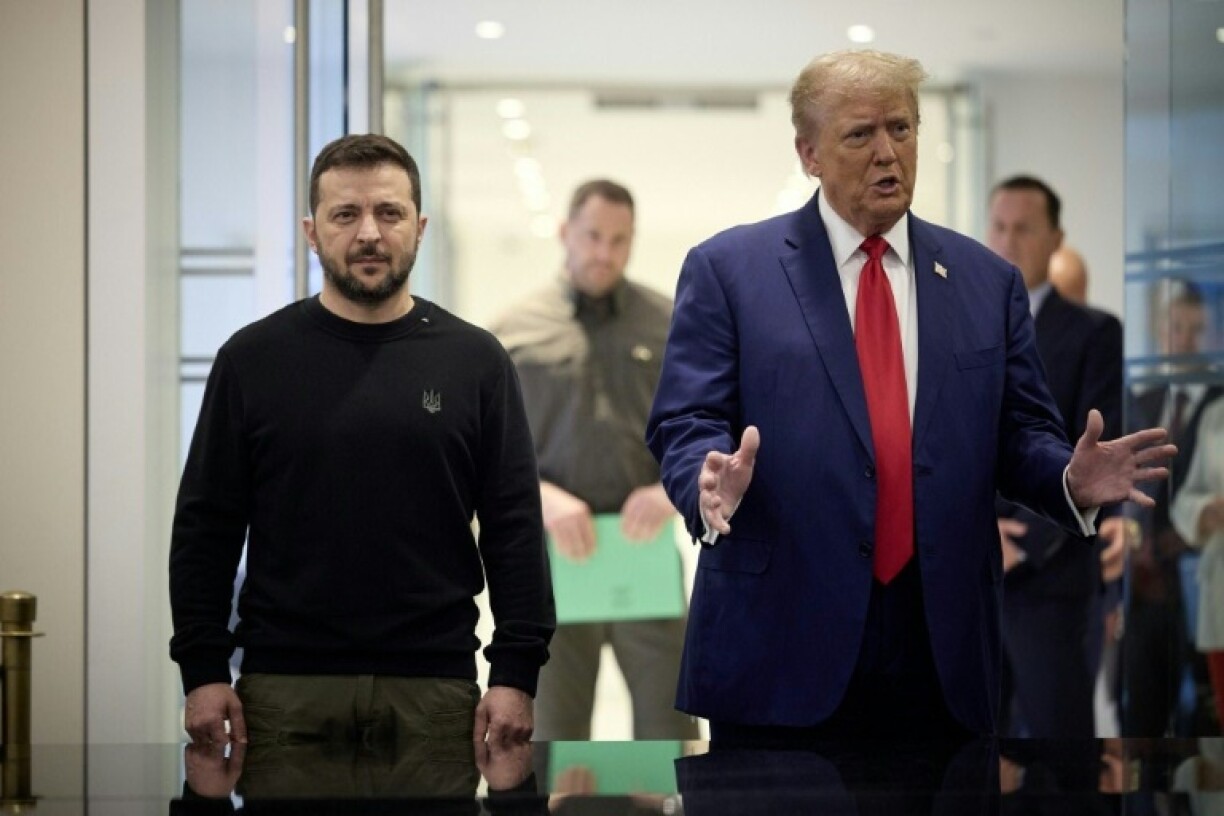
In an interview with Deutschlandfunk, Major acknowledged that negotiations might lead to a ceasefire, though she emphasised that even this outcome is uncertain. "Why should Ukraine, why should Zelensky, accept an agreement that sacrifices Ukraine" she asked, "and how would such an agreement be enforced?" Major argued that while a ceasefire might halt the fighting, true peace requires addressing the root causes of the conflict – namely, Russia's territorial claims. "I don't see that happening yet" she said, stressing that peace is fundamentally different from a mere cessation of hostilities.
Major expressed concern that Russia now feels emboldened by the US, while Ukraine and European nations risk being presented with a "fait accompli". She highlighted that while Ukraine was at least informed about the Trump-Putin call, European allies were left in the dark and only learned of it through media reports.
Based on Trump's statements, as well as those of the US Secretary of Defence, Major fears that Ukraine may have to accept, at least for the foreseeable future, that the territories currently occupied by Russia – including Crimea and the four other regions annexed in violation of international law – will remain under Russian control.
From Major's perspective, the US no longer appears to act as an ally to Ukraine but rather as a simple mediator.
NATO Secretary General Mark Rutte offered a cautious initial response to Trump's statements. Speaking after a meeting of NATO foreign ministers in Brussels, Rutte said it remains to be seen how the situation will develop. He stressed, however, that Ukraine must be closely involved in all decisions affecting its future.
Zelensky sidelined?: Trump and Putin set to meet in Saudi Arabia on Ukraine





