The next local elections in Luxembourg take place on 11 June 2023. Here is a summary of everything you need to know about the elections and the voting process.
Municipal elections in Luxembourg are held every six years. During these elections, residents elect members of the municipal councils in all of the current 102 municipalities. While these elections typically take place in October, this year they have been scheduled for June, due to the legislative elections being held in October as well.
The outcome of the elections determines the composition of the municipal council and, subsequently, the individuals responsible for shaping the future of their respective municipalities over the next six years.
To make informed choices, voters are encouraged to familiarise themselves with the election programmes and the candidates. The importance of voting has also been the subject of a series of videos by the Centre for Political Education.
Residents between the ages of 18 and 75 who hold Luxembourgish nationality are obligated to vote on 11 June, as voting is compulsory in Luxembourg. If you are older than 75, you can still vote, but there is no longer an obligation. For non-Luxembourgers, the conditions for voting have changed this year. There are no longer any restrictions on residency, i.e., you no longer have to have lived in Luxembourg for five years to vote.
In addition, non-Luxembourgers could register on the electoral rolls up to 55 days before the election. In fact, a non-Luxembourger has to register in order to vote in municipal elections in Luxembourg.
However, once you have registered, you are subject to compulsory voting and must vote.
Those who are unable to vote on the day of the election due to appointments or being abroad must apply for postal voting.
This request must be submitted up to 25 days before June 11, or up to 40 days in advance if the letter is to be sent abroad. It is worth mentioning that all registered voters can request a postal vote without providing a reason.
Failure to comply with compulsory voting can result in penalties. A first offence may incur a fine ranging from €100 to €250. Repeat non-voters within the following five years after conviction may face a fine of €500 to €1,000.
Voting takes place in the municipality where you are registered. For instance, if someone's permanent residence is in Luxembourg City, they must cast their vote there.
If you live abroad but are registered at an address in Luxembourg City, you must vote in Luxembourg City.
A few days before 11 June, registered voters will receive a letter from the municipality indicating the designated polling location and the corresponding time period.
On the day of the election, voters are required to present their identity card at the polling station. Afterward, they receive their ballot paper and proceed to the voting booth.
The format of the ballot paper varies based on the population size of the municipality. In municipalities with less than 3,000 inhabitants, voting operates on a first-past-the-post system. Voters must place the corresponding number of votes directly behind the names of the candidates.
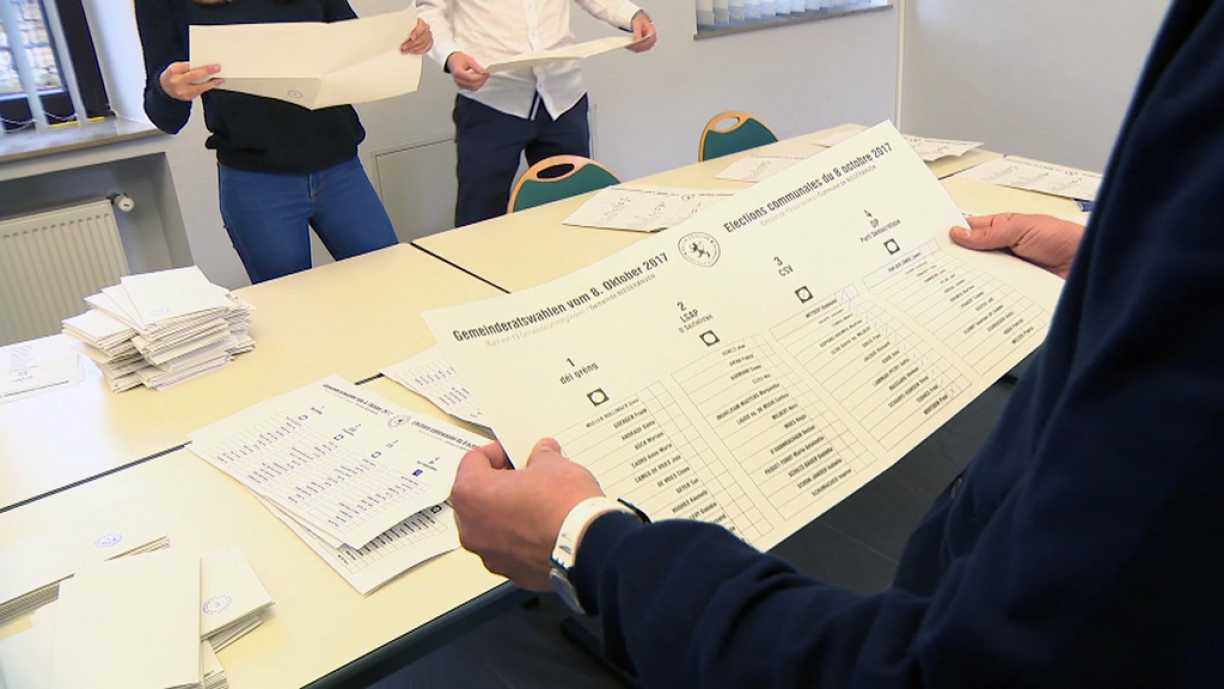
Municipalities with more than 3,000 inhabitants employ the proportional representation system. In this case, voters can allocate up to two votes per candidate from different parties or directly vote for an entire party list.
The number of candidates elected depends on the municipality's population, with the range spanning from 7 to 27 seats. For instance, the municipality of Saeul, with fewer than 1,000 inhabitants, will have seven seats available on the municipal council. On the other hand, Luxembourg City will elect 27 candidates.
It is important to note that voters are only permitted to cast as many votes as there are available seats on the municipal council.
Read also: All you need to know about the 2023 municipal elections





